

Travel advice for Namibia
Namibia is one of Africa’s easiest and safest countries to explore on your own. Roads are generally excellent, traffic is light, and the country is known for its friendly people, political stability, and spectacular open landscapes. Distances, however, are much greater than they appear on the map, so a little preparation goes a long way. With a few practical tips in mind, you can simply sit back, enjoy the endless horizons, and focus on the adventure ahead.
Take your pills (depending on where you’re going)
There are no compulsory vaccinations for Namibia, and there is no yellow fever in the country. You only need to present a yellow fever vaccination certificate if you are arriving from (or have recently travelled through) a country where yellow fever occurs.
Malaria is limited to the far north of Namibia, including areas such as the Zambezi Region (formerly Caprivi Strip), Kavango, and parts of Etosha National Park during the wet season (roughly November to May). If your itinerary includes these regions, consult your doctor about malaria medication before travelling. Long sleeves after sunset, insect repellent, and sleeping under mosquito nets (usually provided) are also sensible precautions.
Visa requirements
Since 1 April 2025, many international travelers – including visitors from most European countries, the United Kingdom, the United States, Canada, Australia, and New Zealand – require a visa on arrival or an e-visa to enter Namibia. The visa can be applied for online before departure (check our tips for the application process in our FAQ) or obtained upon arrival at the airport. The visa fees are around NAD 1,600 (USD 85) per person for non-Africans.
Your passport must be valid for at least six months beyond your return date and contain at least three blank pages. You should also carry proof of your return or onward journey and your accommodation details, as immigration officials may ask to see them.
English will take you a long way
English is Namibia’s only official language and is used in government, education, and tourism. You’ll have no trouble communicating in hotels, lodges, restaurants, and national parks. But at the same time, it’s spoken as a first language by less than 5%. Oshiwambo is the most common home language, Afrikaans remains widely spoken in daily life, and you’ll still hear quite a lot of German in towns such as Swakopmund and Lüderitz. Learning a few basic Oshiwambo phrases is always appreciated, as a friendly greeting takes you a long way.
- Hello / How are you? : Ongiini?
- I am fine : Onawa!
- Good morning : Walelepo
- Goodbye : Kalei po nawa (plural) or Kala po nawa (singular)
- Thank you : Tangi or Tangi unene (thank you very much)
- Take care : Shilwii po nawa
Stay safe
Is Namibia safe to travel to? Absolutely! Namibia is considered one of the safest travel destinations in Africa. Crime is relatively uncommon, particularly in the country’s national parks and popular travel regions. As in any part of the world, use common sense: don’t leave valuables visible in your vehicle, avoid walking alone at night in unfamiliar areas, and keep an eye on your belongings in busy places.
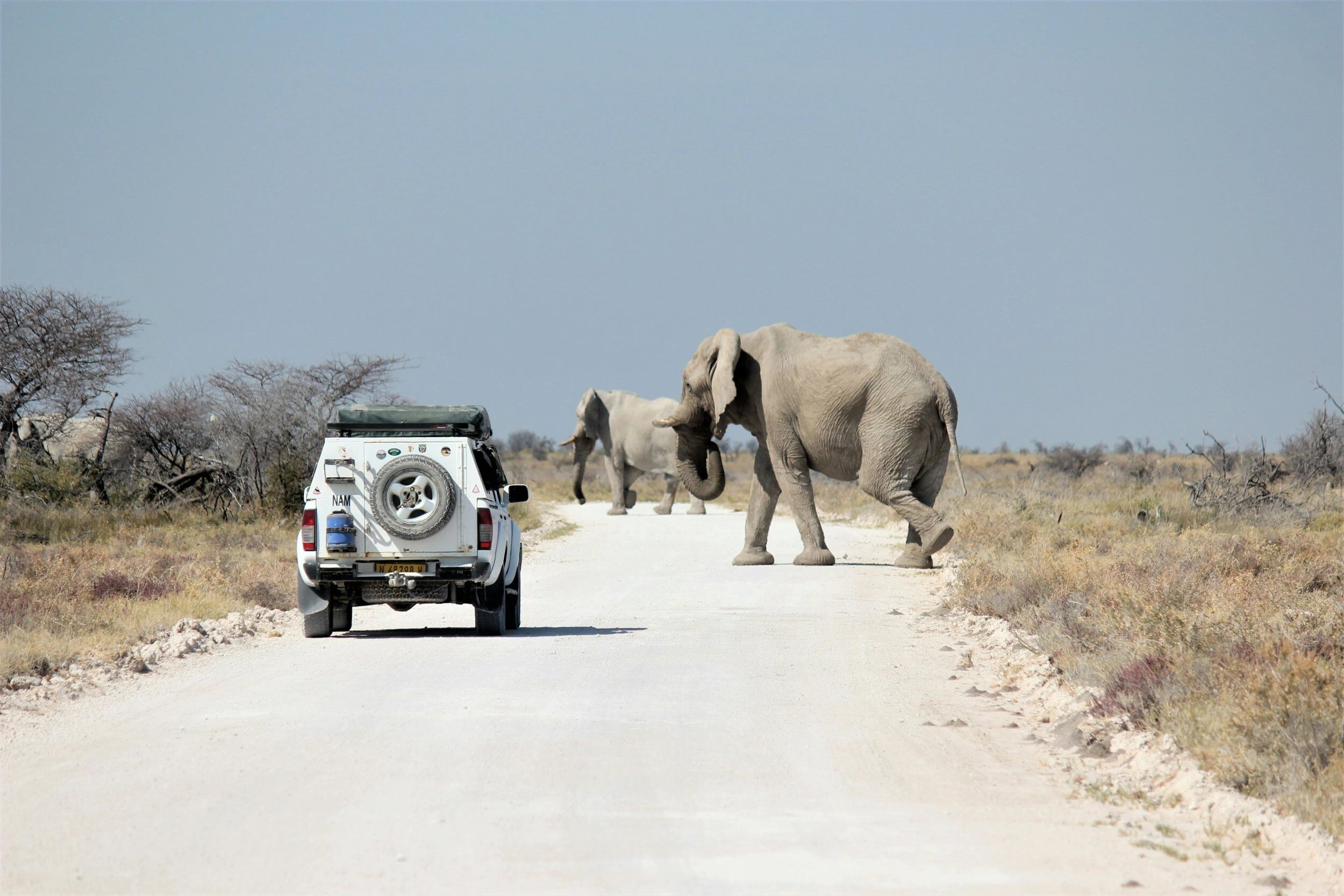
One thing many first-time visitors underestimate is the distance. Fuel stations can be hundreds of kilometres apart, especially in remote regions, so never let your fuel tank get too low. Take your time, stick to the speed limits, and avoid driving after dark when wildlife frequently wanders onto the roads.
Money in hand
The official currency is the Namibian Dollar (NAD), which is linked one-to-one with the South African Rand (ZAR). Both currencies are accepted throughout Namibia, making travel between the two countries particularly convenient.
Credit and debit cards are widely accepted in hotels, lodges, restaurants, and larger shops. It’s still a good idea to carry some cash for fuel stops, small purchases, local markets, and tips. Tipping is customary for good service: around 10% in restaurants is common, while safari guides, lodge staff, and petrol attendants also appreciate a gratuity if you’ve received excellent service. ATMs are available in most towns but become scarce in remote areas, so withdraw cash before heading into the wilderness.
Know the time difference
One of the great advantages of travelling to Namibia from Europe? Forget the jet lag! Namibia operates on Central Africa Time (CAT), which is UTC+2 throughout the year. During the European winter, Namibia is generally one hour ahead of Central European Time. During the European summer, there is usually no time difference at all. More time to enjoy your safari, less time recovering from your flight!
Safety First: Don’t forget your Travel Insurance
When it comes to embarking on your dream adventure to Namibia, your safety is our top priority! That’s why we strongly recommend comprehensive travel insurance before departure. While Africa Safari Trips doesn’t provide travel insurance directly, we’re delighted to recommend Chapka Travel Insurance for your journey.

With Chapka, you’ll be covered for unexpected medical expenses, cancellations, and other unforeseen events, allowing you to explore Namibia with complete peace of mind. Simply take out your policy directly on the Chapka website. All that’s left then is to pack your camera, binoculars, and your sense of adventure.
Let us create your tailor-made trip
Receive a free, no obligation quote
Start planning your dream trip