Desert Animals
Namibia is a paradox: on the one hand, it's home to a great variety of African wildlife, on the other the country's arid terrain is hard to survive and almost impossible to thrive in. Against all odds, Namibia's desert animals have found a way by developing fascinating and truly unique skills.



- Tailor-made safaris by true Africa specialists
- 5-star customer reviews
- Fair prices. Exceptional quality.

Life against all odds
With the Namib and the Kalahari sweeping across Namibia, around 85% of the country’s surface is either a desert or a semi-arid desert. Not exactly the ideal conditions for any living being to survive in, given the lack of water, nutritious food, and the extreme heat. Still, nature has found a way, equipping wildlife with extraordinary skills to get by in this otherwise inhospitable landscape. Let’s have a look at four regions and the desert animals who roam them.
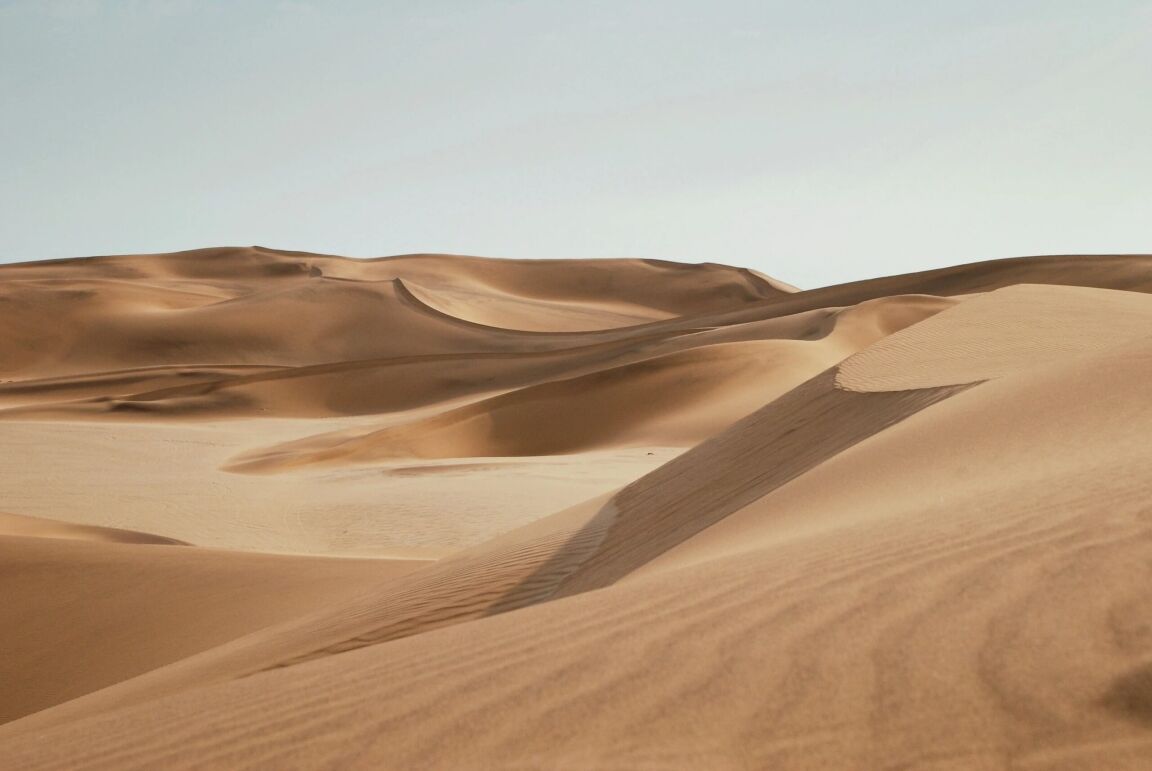
The Namib
At the ripe age of 55 to 80 million years, the Namib is one of the oldest deserts in the world. It shouldn’t come as a surprise that some animals have managed to make it their home over the years.
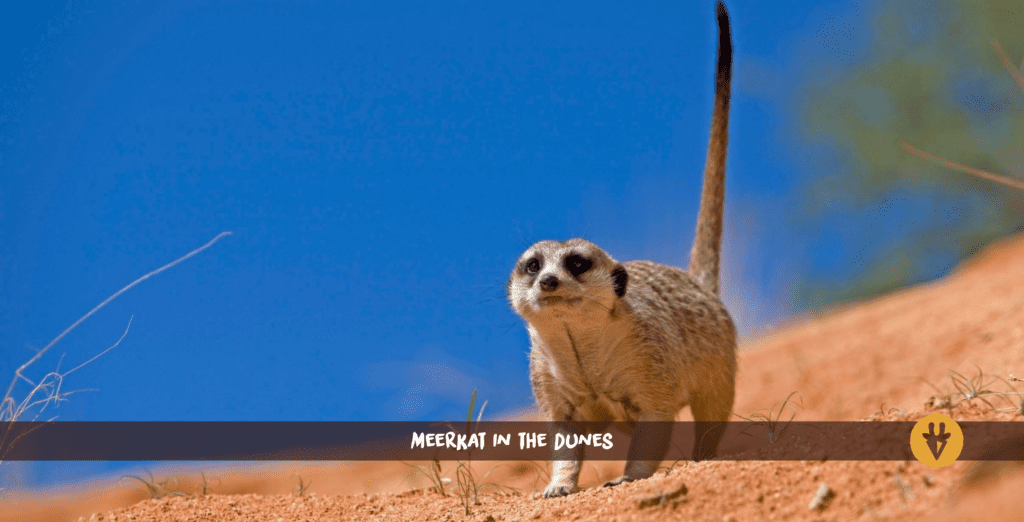
- Smaller cuties like meerkats, mongooses, and hyrax
- Antelopes like springboks, steenboks, and klipspringers
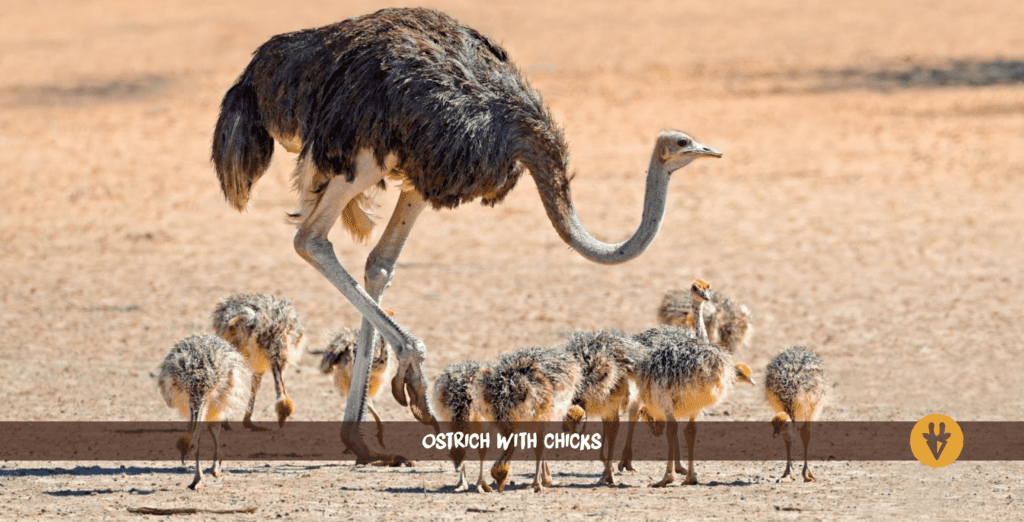
- Birds like ostriches and weavers
- Carnivores like black-backed jackals, cheetahs, and spotted hyenas
- Various snakes and scorpions that glow at night
They are all to be found in the sandy and rocky landscapes, plus the Welwitschia plant: true, not an animal, but worth mentioning as one of the world’s longest-living plants, with some being thousands of years old.
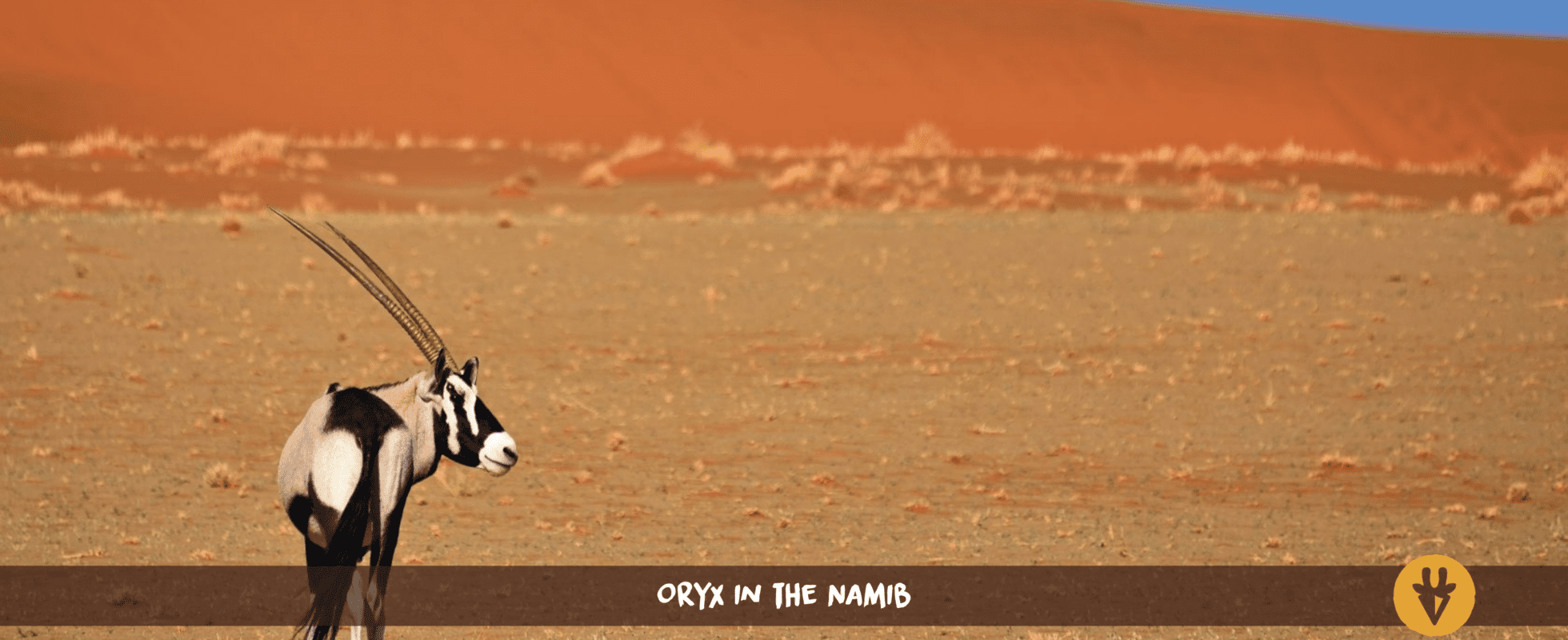
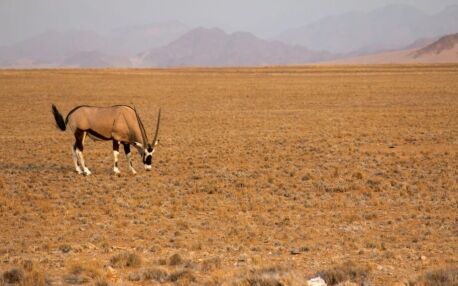
Gemsbok
With its long horns and monochrome coat, the gemsbok, or oryx, cuts quite a figure in the dunes of the Namib. Despite its striking look, it’s the characteristics that amaze the most. The animals can go for weeks without drinking, mainly because they get most of their water from succulent plants and roots, but also because their kidneys can store water. While the white coat reflects the sunlight, special blood vessels in the nose cool their brains. And they can raise their body temperature to 45 °C to avoid sweating.
Namib Desert Beetle
Namib Desert Beetles are small, but oh so clever. So clever, in fact, that humans have stolen their habit. When the fog comes from the coast in the morning, they climb on top of a dune, lift their abdomen, spread their wings, and drink the fog’s moisture that trickles down into their mouths. Inspired by this engineering ingenuity, scientists now collect water in deserts throughout the world with nets positioned just like the beetle in the dune.
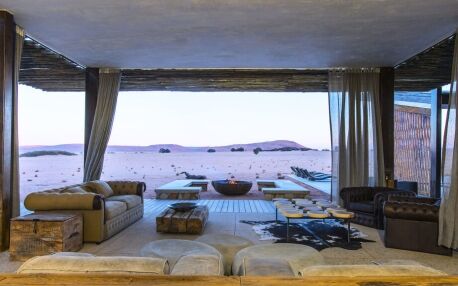
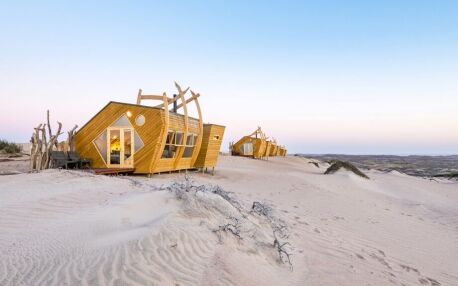
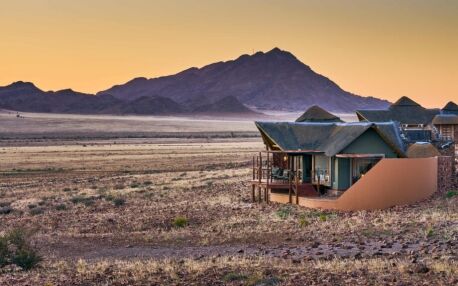
Accommodations in the desert
Surrounded by nothingness: these lodges create a home away from a home amidst landscapes that seem out of this world.

Kunene & Damaraland
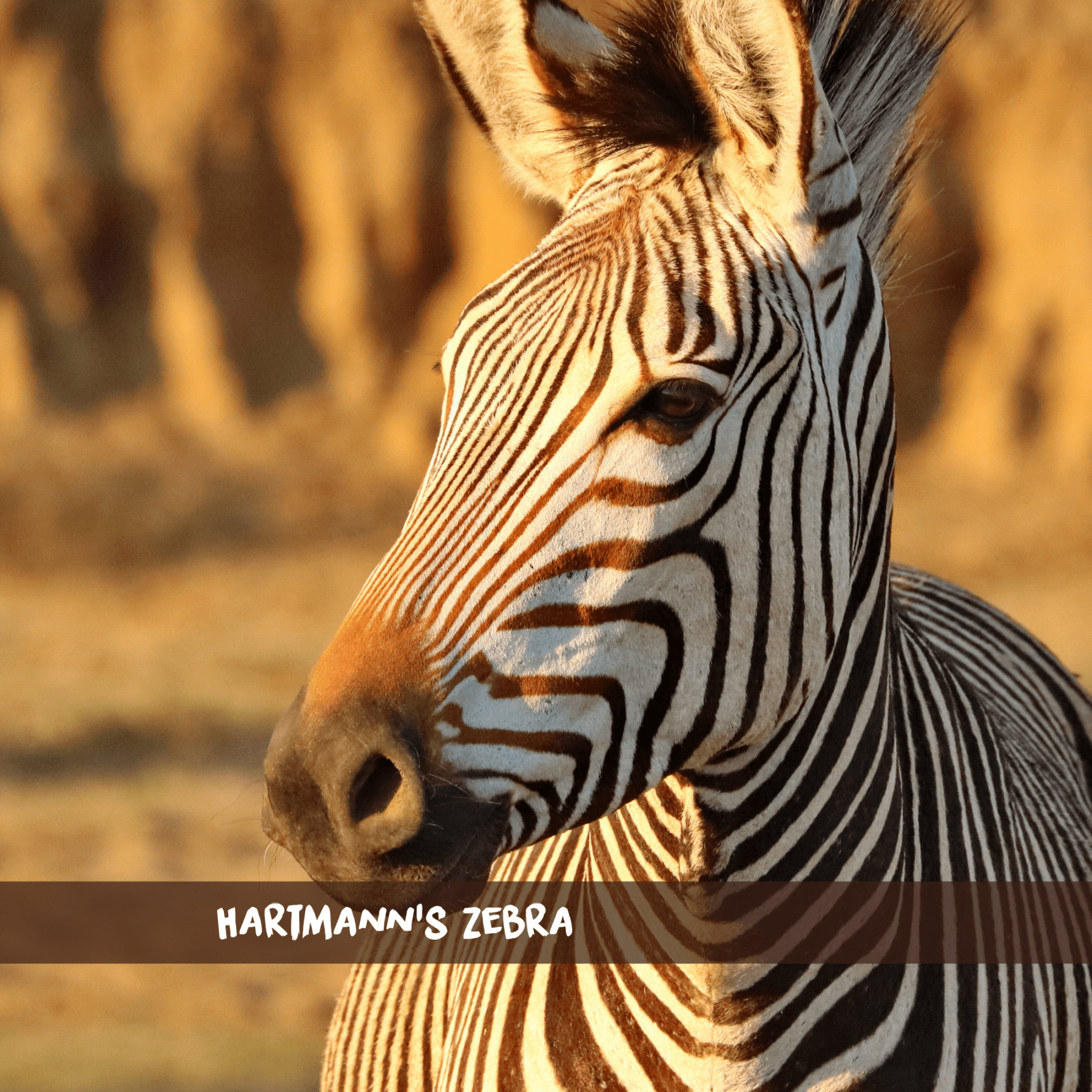
From gigantic mountains and deep gorges to lava fields and greenery along the river, this region in the northwest of Namibia has it all. Predominantly, however, it’s a rocky desert and part of the Namib. It’s so dry, in fact, that it’s often described as Namib’s skeleton. And still, wildlife manages to get by here. It’s home to leopards, cheetahs, giraffes, Hartmann’s mountain zebras, and many more. The stars, however, are them.
-
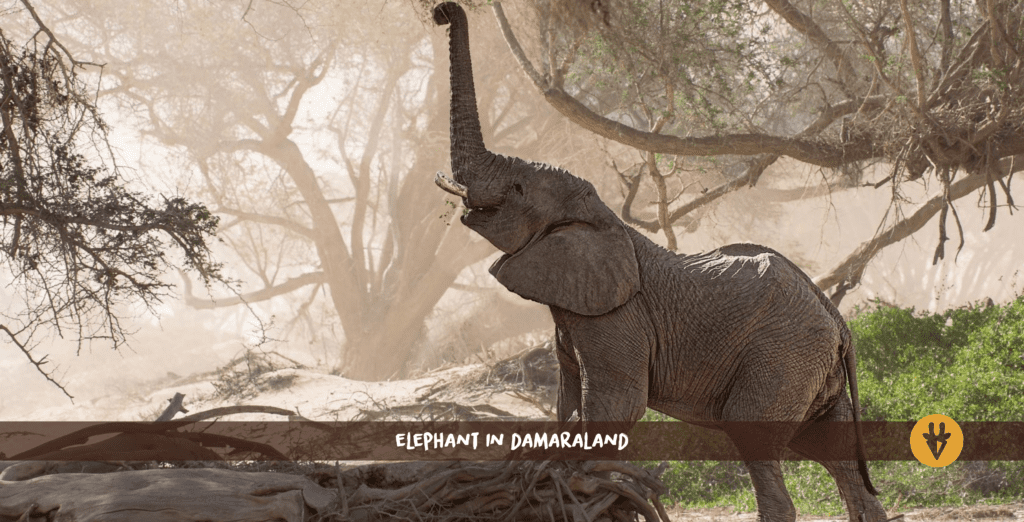
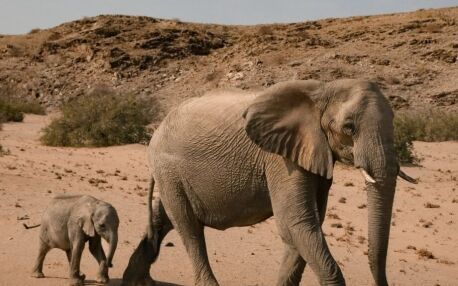
Desert Elephants
The elephants of Damaraland have smaller bodies, broader feet and longer legs to roam the stony plains of Kunene. They can live up to three days without water and with only around 350 individuals left, they are special sight.
-
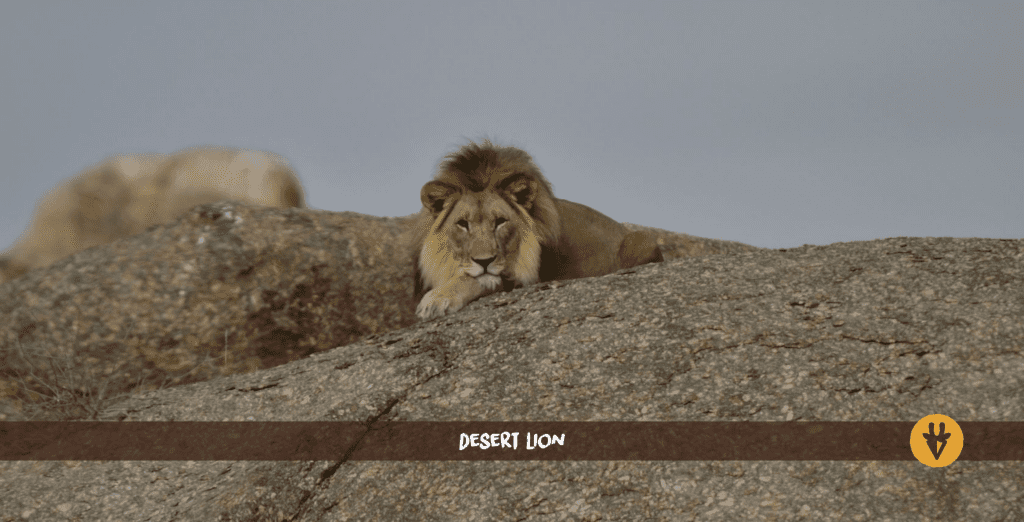
Desert Lion
The 150 desert lions left in the world walk up to 70 km in search for food and water. They know the area by heart and pass that knowledge on to cubs. They are leaner, and their manes are smaller to better manage the heat.
-
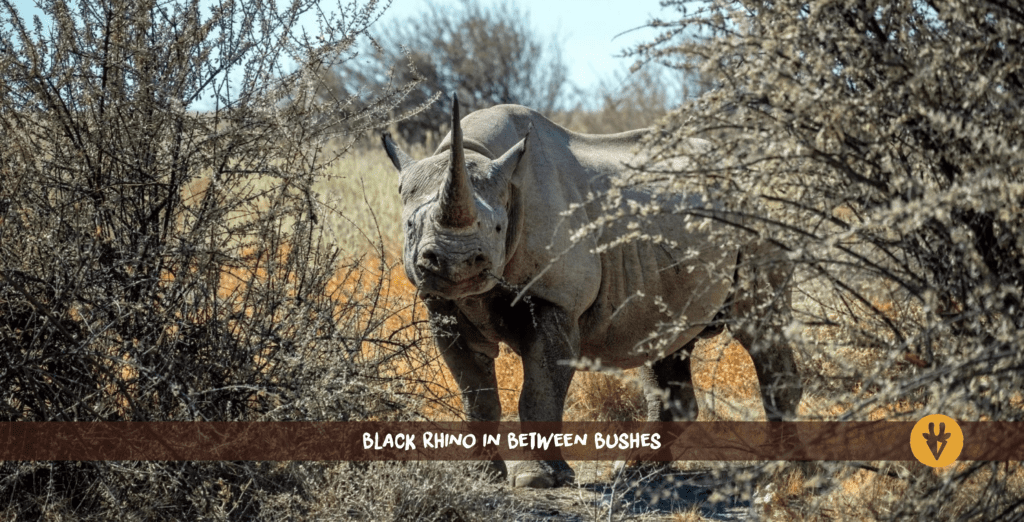
Black Rhino
Kunene is home to the world's largest population of free-roaming black rhinos. They don't need water every day, since they extract moisture from desert vegetation. Just like the lions, they know the landscape inside out.
Namibia’s Little Five
There are the Big Five, the Little Five, and there are Namibia’s Little Five: very small but very special desert animals that deserve their spot in the limelight.
Namib web-footed gecko
With their webbed feet, these translucent geckos scurry over sand and bury themselves inside. You might say they were made for the desert, but then… they don’t have eyelids. To get sand out of their eyes, they lick their eyeballs.
Dancing white lady spider
Since it takes two to tango, there are two dancing spiders in Namibia’s desert. The larger one taps its front legs on the sand to communicate with other spiders. The smaller one cartwheels down the dunes to escape enemies.
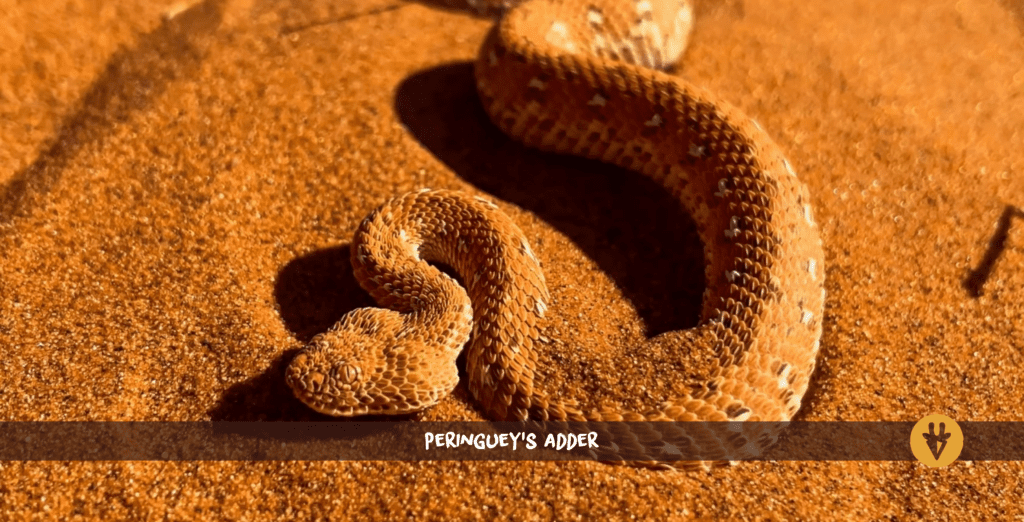
Peringuey’s adder
These little fellas glide over the dunes sideways and use the desert to hunt. They bury themselves in the sand with only their eyes and the tip of the tail popping out. Their prey believes it to be an insect, and when they get close, they bite.
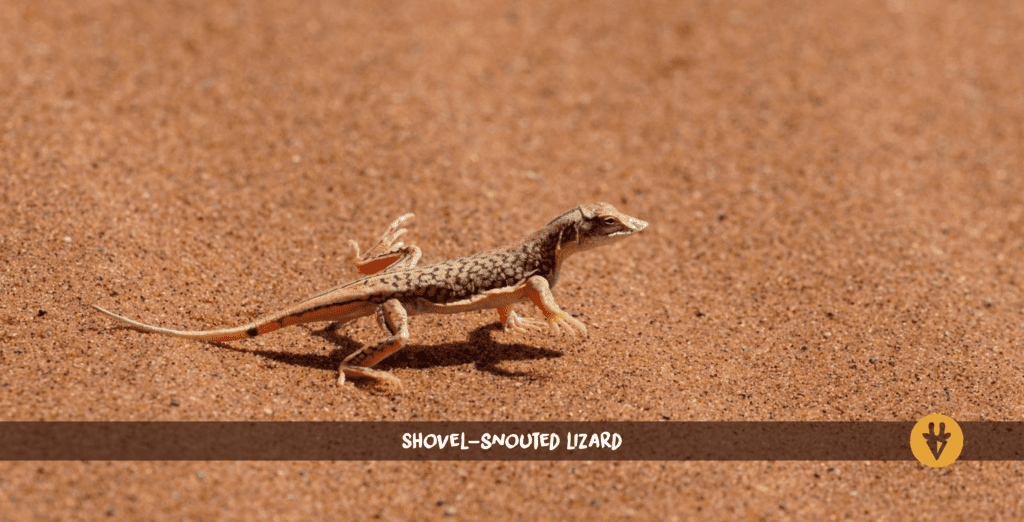
Shovel-snouted lizard
This lizard is the Fred Astaire among desert animals. To keep cool on the sand, they lift their feet in an alternating pattern, appearing to dance. They also have a special organ that stores water, which they collect from morning fogs. With these special skills, they can tolerate temperatures of up to 44 °C.
Namaqua chameleon
The Namaqua chameleons change their colours for thermoregulation. While the pale belly deflects heat from the sand, they take on five different shades depending on temperature, lighting, and mood. Like the beetle, they get water from the coastal fog by flattening their body, tilting sideways, and licking the droplets off their skin.
The unique of the unique
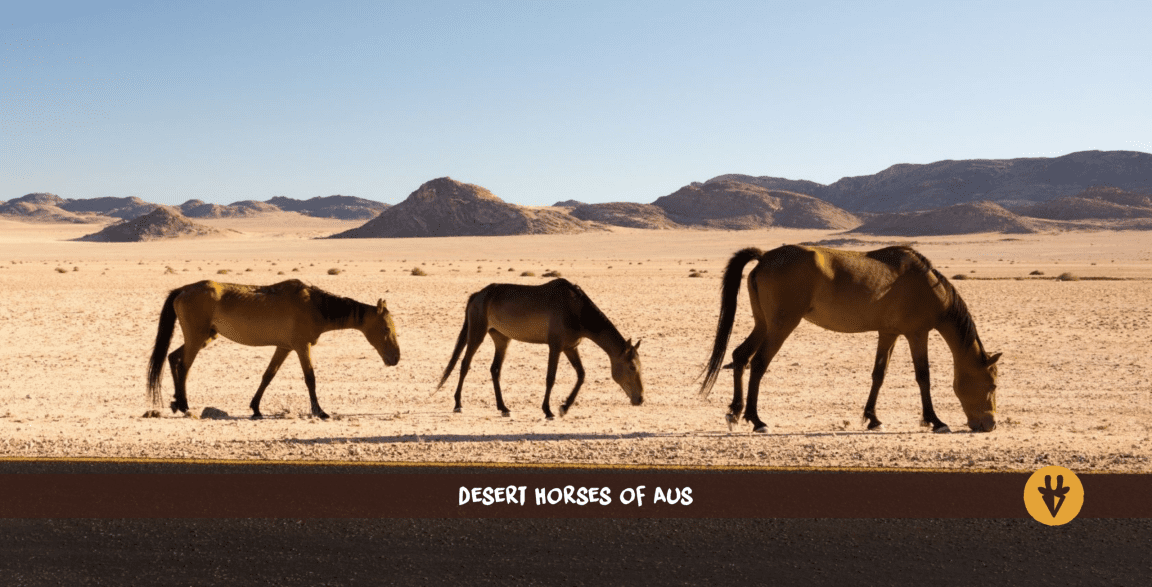
Desert Horses of Aus
To this day, nobody really knows where these horses came from.
- Theory #1: A German plane bombed a South African military camp near Garub, leaving 1,700 horses in the desert.
- Theory #2: They’re a mix of escaped South African military horses and Namibian-German horses from World War I.
- Theory #3: A German baron built a castle in the desert, imported European horses, and died during World War I, with 300 horses left to fend for themselves.
No matter how they ended up between Aus and Lüderitz in the Namib Desert, they’re remarkable. In dry times, the 90 to 150 individuals who left today switched to work mode. At a slow pace, they cover vast distances, feed whenever possible, and put off trips to the waterhole for as long as possible since they can go without water for 72 hours. In rainy times, it’s time for leisure mode, staying close to the water, playing, and resting.
Brown Hyena
Namibia is home to many hyena species, but with its long brown fur, the brown hyena is a special one. 50% of the population can be found at the coast, from the Skeleton Coast down to Lüderitz. That’s why it’s also called strandwolf, Afrikaans for beach wolf. With only one competitor for food in the area, the black-backed jackal, it usually has plenty to eat – and it plays a vital role in the ecosystem while doing so.
As a scavenger, it cleans the beach of carcasses and carries marine nutrients inland to feed the cubs: a unique connection between the ocean ecosystem and the desert. Even though it has direct and daily access to water, it doesn’t need much, since it gets all the fluids from food. As nocturnal animals, they definitely are a special sight. So we’re crossing our fingers that you see one during your safari in Namibia.
Thrilling Activities
If you want to increase your chances and see these fascinating animals during your Namibia journey, these are the right activities for you.

Let us create your tailor-made trip
Receive a free, no obligation quote
Start planning your dream trip