
10 August 2026
Planning your first trip to Namibia? Discover expert advice on 4x4 self-drive routes, packing essentials, budget tiers, and local logistics for a seamless, unforgettable desert adventure.


10 August 2026
Let’s be honest: preparing your first safari in Namibia can quickly lead to information overload. Between endless debates on self-drive vs. guided tours, gravel road safety, and lodge availability across vast distances, the excitement often gets lost in logistics.
We get it. Namibia’s dramatic landscapes look vast and complex, but here is the secret: once you have the right keys, it is simple.
Our ground team lives and breathes the Namibian desert and wilderness. Let’s clear the air, bust a few myths, and get you ready for your adventure smoothly, elegantly, and stress-free.
The biggest rookie mistake in Namibia is trying to rush across the country in a few days. You end up spending more time staring at your dashboard than watching red dunes turn purple at sunset. Namibia is best experienced at a steady, relaxing pace.
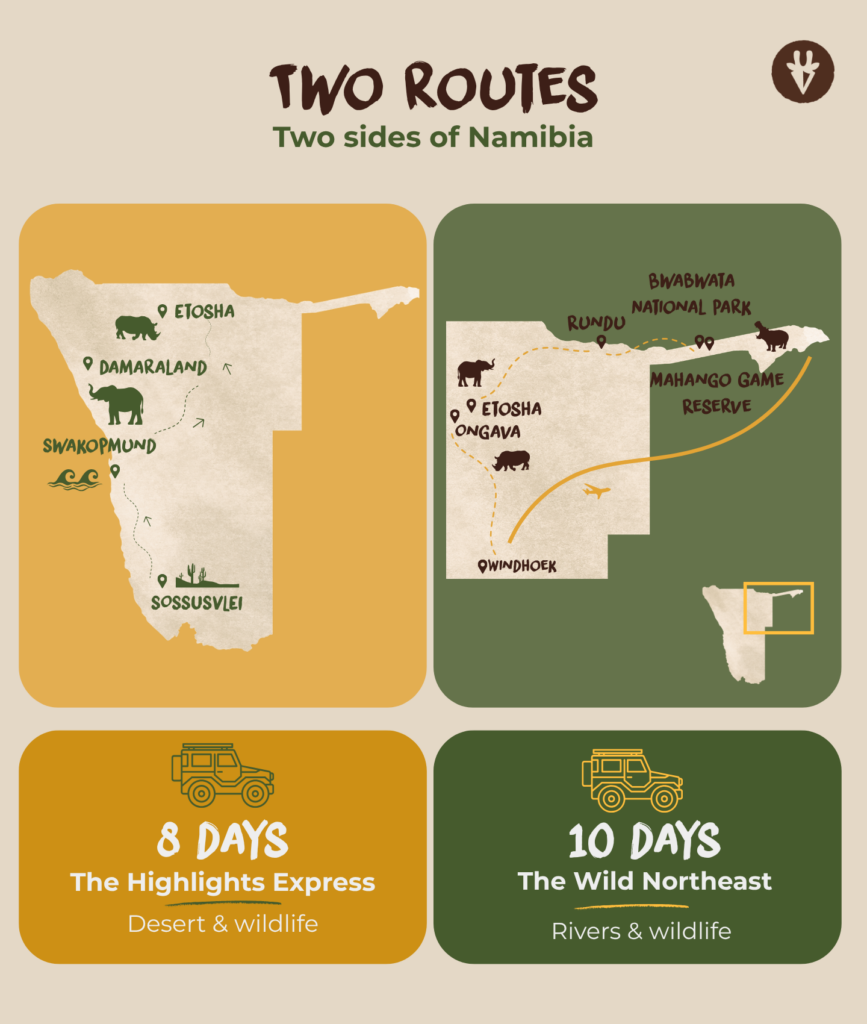
To keep your choices simple and deeply rewarding, our local team recommends two classic formats depending on your timeframe:
🏎️ Option 1: The Highlights Express (8 Days / 7 Nights)
🍃 Option 2: Wildlife & Lush Landscapes (10 Days / 9 Nights)
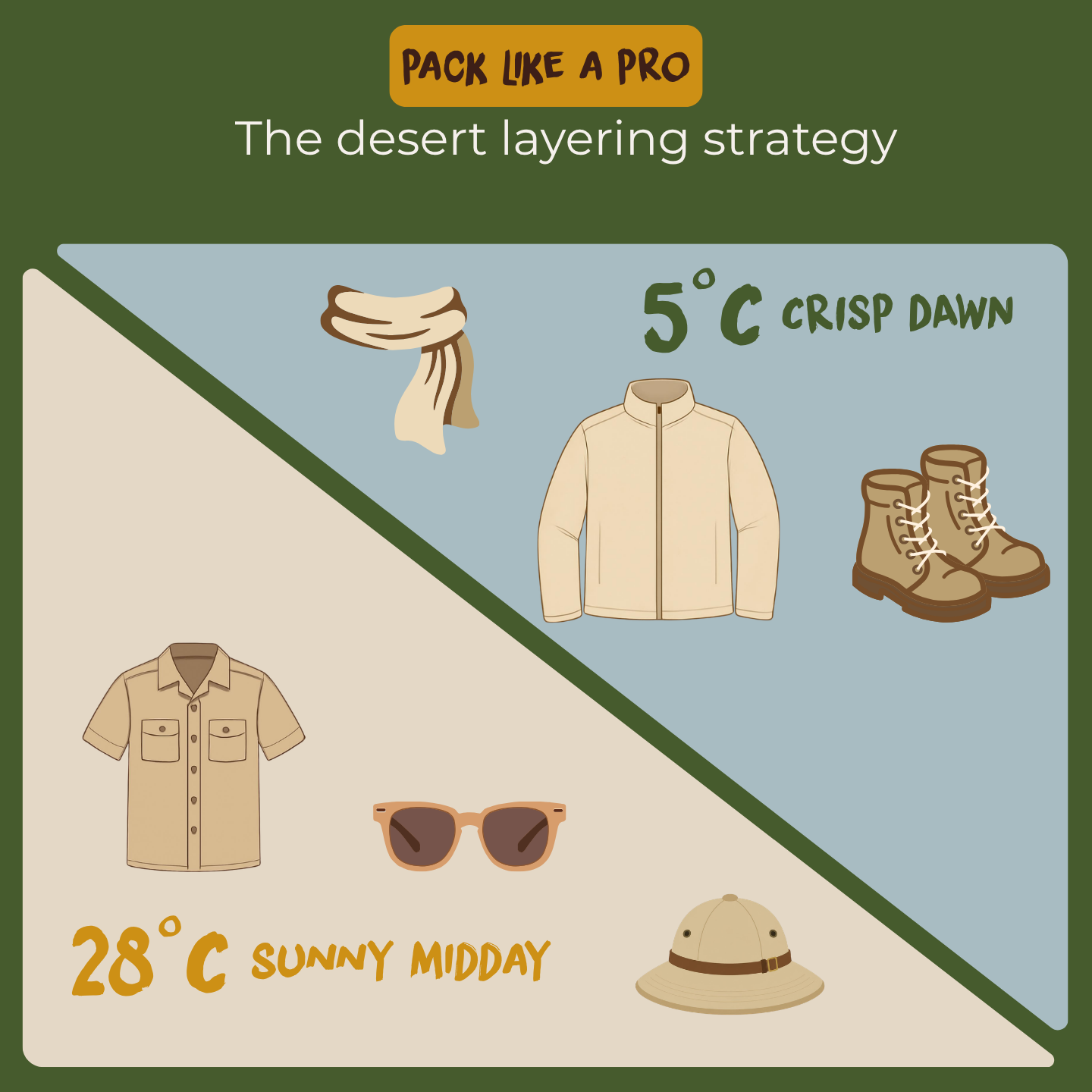
The desert loves drama when it comes to temperatures. Days are warm and bright, while nights can be surprisingly crisp.
Clear blue skies and daily temperatures around 20 to 28 degrees Celsius. Early mornings and nights in the desert can drop to a chilly 5 degrees Celsius.
Warmer weather, dramatic afternoon thunderstorm clouds, and brief rains that turn the desert green and bring newborn animals.
Bring versatile layers. A warm fleece for dawn drives, lightweight shirts, comfortable walking shoes, sunglasses, a hat, and a soft scarf for gravel dust.
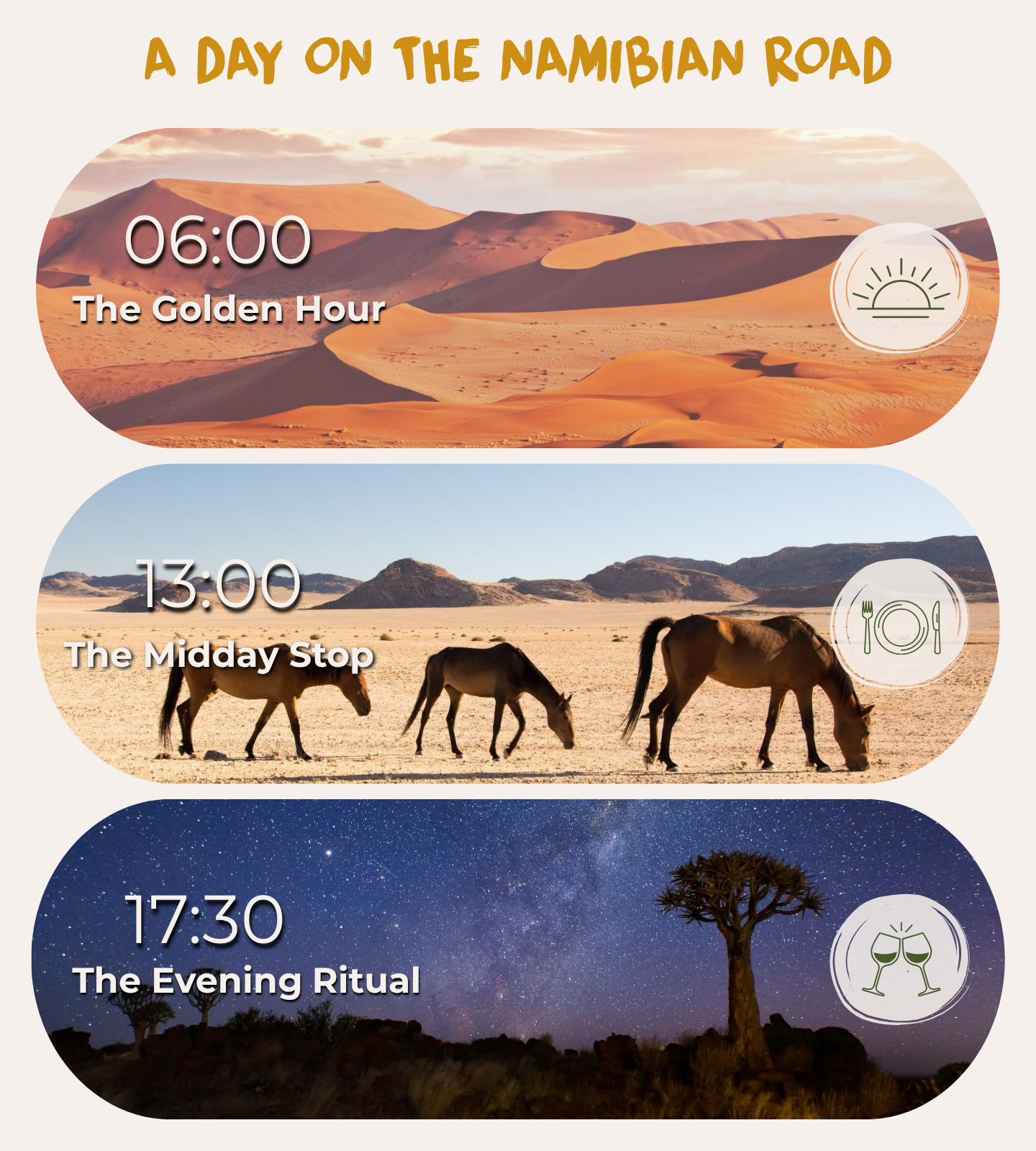
Life on the road in Namibia follows a calm, cinematic rhythm.
Awaken to cool morning air. Early light paints the dunes in crimson and soft gold. This is the prime time for climbing dunes or spotting wildlife.
A quiet lunch at your lodge, a pastry stop at the famous Solitaire bakery, or fresh oysters by the ocean in Swakopmund.
Return to your lodge terrace as the sun drops. Order a cold drink and watch the desert floor turn deep purple under a sky filled with stars.
Distances in Namibia look huge on paper, but driving here is part of the magic. Drives between main highlights usually take around 4.5 to 5 hours (including stopovers) through changing, cinematic landscapes where you might not cross another car for an hour.
Typical drive times between main hubs:
By planning a minimum 2-night stay per location, morning drives are balanced with long, peaceful afternoons.
Yes, you can easily drive yourself! You do not need to be a Dakar Rally veteran to enjoy a Namibian road trip.
Main routes in Namibia are wide, well-maintained gravel roads. Driving is on the left side, traffic is virtually non-existent, and navigation is refreshingly straightforward.
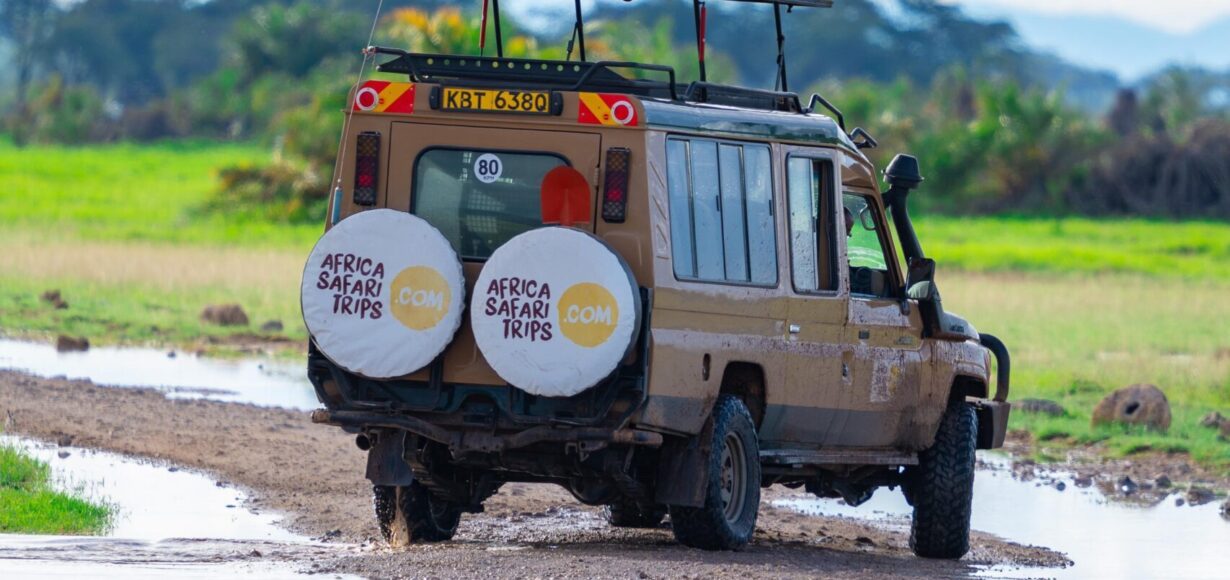
We recommend a robust four-by-four with high ground clearance. It gives you maximum visibility and absorbs road vibrations effortlessly.
Your vehicle comes fully equipped with reinforced tires, two full spares, a fridge for cold drinks, and a detailed GPS unit for total peace of mind.
You are never on your own. You have a direct WhatsApp line with our local team on the ground for any questions along the road.
If you prefer to relax completely without holding the wheel, we easily arrange private guided safaris or scenic fly-in transfers.
The vast majority of Namibia, including Windhoek, Sossusvlei, and Swakopmund, is entirely malaria-free. Precautions are only relevant in the far north near Etosha during the summer rainy season.
Windhoek and Swakopmund boast modern, high-standard private hospitals and professional emergency services.
Lodges feature reliable Wi-Fi in common areas, and local mobile signal works surprisingly well near towns—giving you the perfect excuse to do a partial digital detox.
Because Namibia offers everything from cozy guest farms to ultra-exclusive desert sanctuaries, the budget depends on your desired style.
Around 150 to 250 US Dollars per person, per day. Warm local hospitality, private rooms, four-by-four vehicle hire, and raw nature.
Around 350 to 550 US Dollars per person, per day. Beautiful private suites, swimming pools, and gourmet dinners under starry skies.
From 900 US Dollars per person, per day. Skip the roads entirely, glide over the Skeleton Coast in light aircraft, and land at private wilderness sanctuaries.
(Note: Quotes include lodging, four-by-four hire, and 24/7 ground assistance).
Many tourists travel safely through Namibia, but you need to stay mindful of both crime and road safety. Theft, robberies, and credit card fraud occur mainly in Windhoek and other cities. Use registered transport from the airport, keep valuables out of sight, and never leave your vehicle unlocked or unattended (at gas stations, for example).
During a self-drive trip, traffic is one of the greatest risks. Gravel roads can be slippery and uneven, so keep your speed down, always wear a seatbelt, and avoid driving at night. Also, bring extra water and two spare tires when traveling through remote areas.
On certain stretches, there can be long distances between towns, gas stations, and mobile coverage. That remote feeling is a big part of the experience, but it requires thorough planning. Our local team is here to assist you with your route, vehicle, and clear instructions before each leg of the journey.
We live, work, and drive these horizons every day. We know the exact condition of every gravel track and lodge.
Enjoy the full freedom of a self-drive journey backed by a local support team that is always just a quick WhatsApp message away.
Want to combine the Namibian desert with Victoria Falls or Botswana? We link neighboring destinations into one smooth, fluid itinerary.

Always wondered why Pumbaa from The Lion King was so happy? Because of Hakuna Matata—a worry-free life. That is exactly what we want you to experience.
Gravel roads should inspire wonder, not worry. That is why our exclusive Hakuna Matata Package is built to guarantee a completely zero-stress holiday. Flat tire on a mountain pass? Flight schedule adjustment? Our local team resolves details instantly on the ground at no extra cost. You keep your eyes on the horizon.

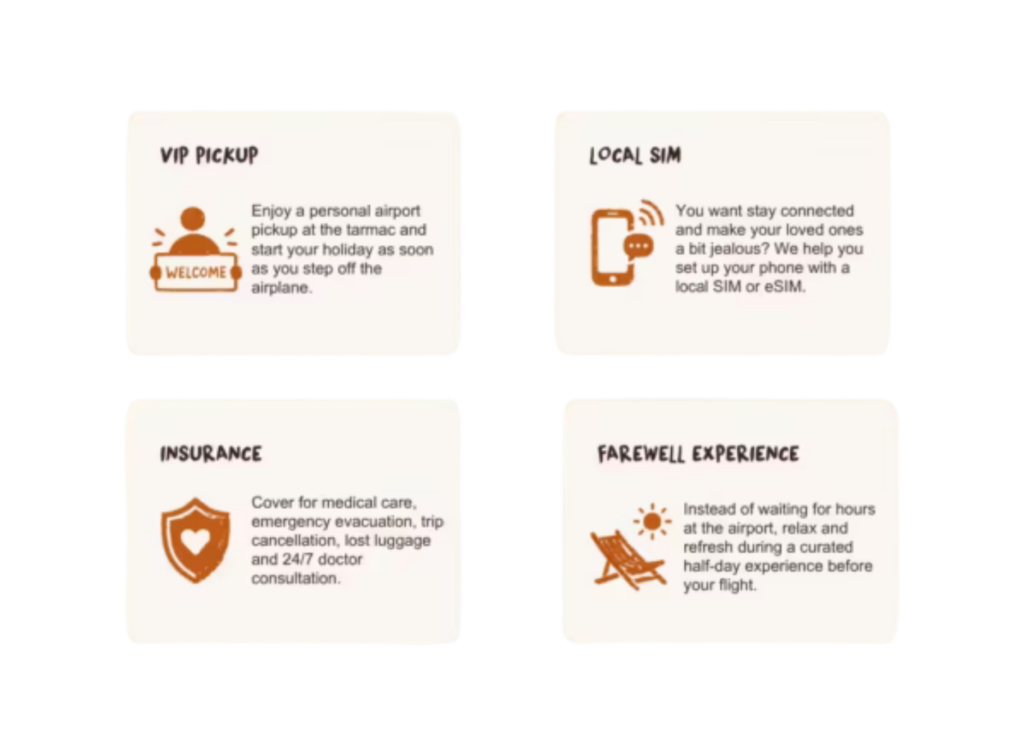
You can spend another forty hours reading forums about tire pressure, or you can let people who actually live here map out your route. The moment you start the engine, watch the town fade in your rearview mirror, and see red dunes rise ahead, the spreadsheets disappear.
Let us handle the details. Reach out to our local team today, tell us what you are dreaming of, and let’s map your Namibian story.
Receive a free, no obligation quote
Start planning your dream trip