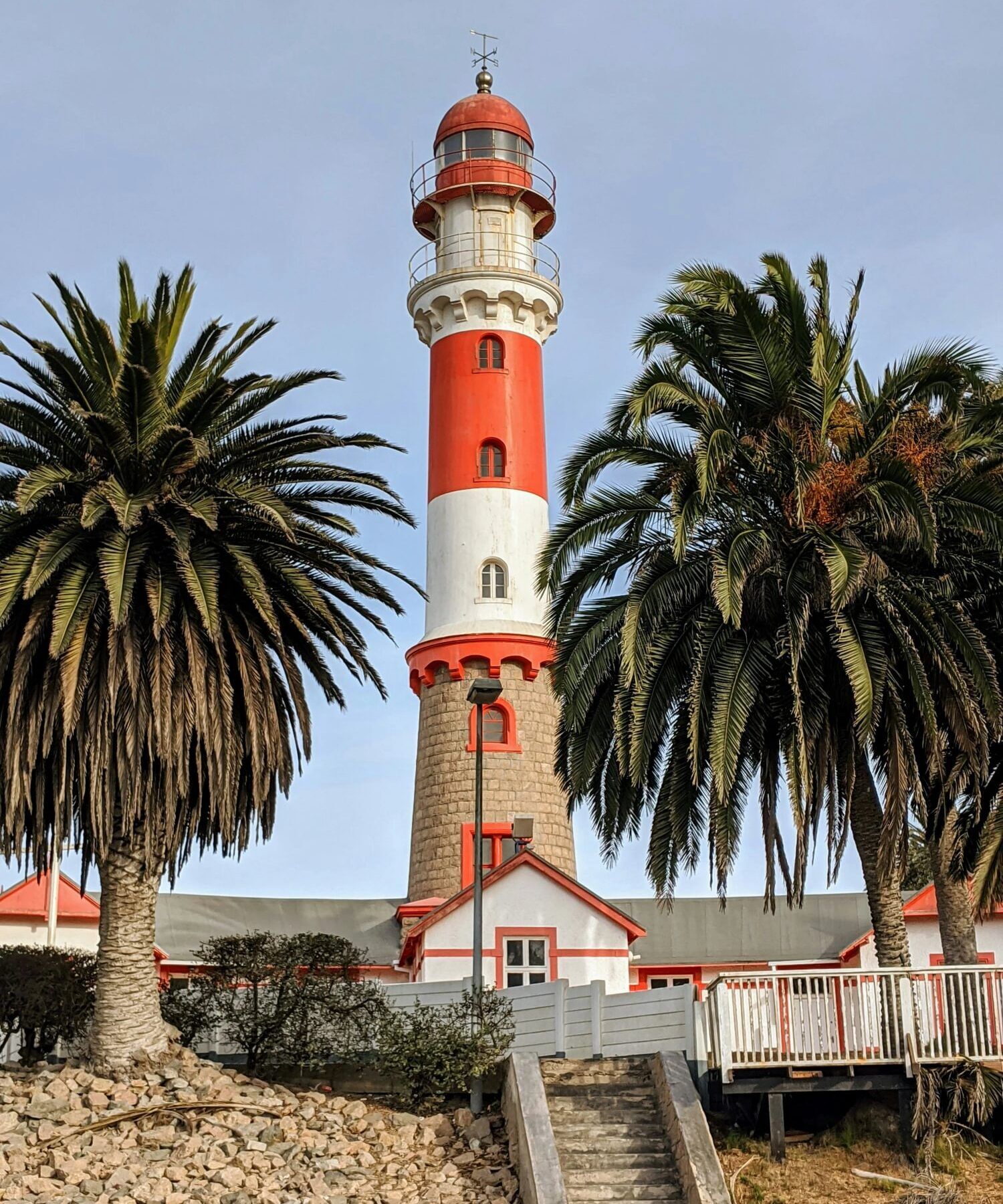

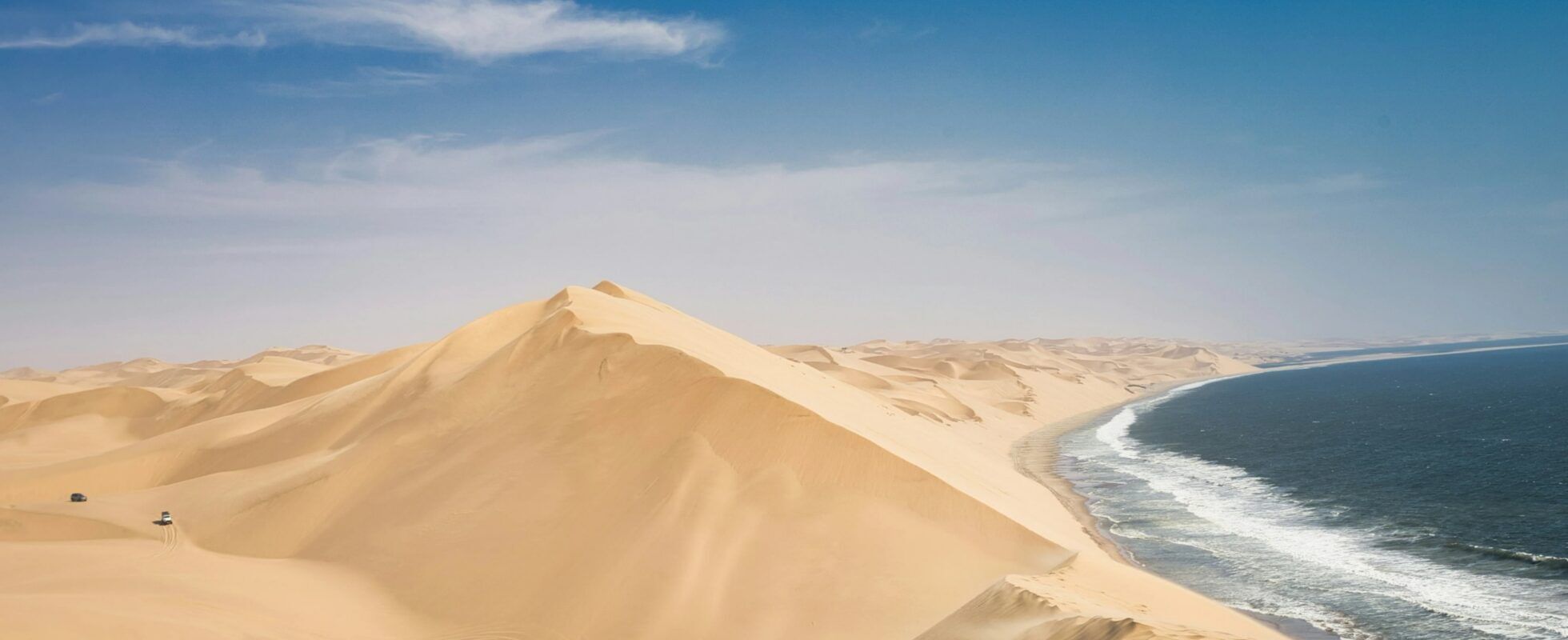

Take palm trees and German-inspired houses, slice them between a glistening Atlantic Ocean and majestic dunes, and add a cool breeze contrasting with Namibia’s interior heat: welcome to Swakopmund! This is the largest and most touristic coastal town in Namibia. Wedged between Namibia’s desert and the beautiful Damaraland region, it serves as a gateway to several of the country’s marvels. The town itself is full of history AND adventure, the latter mostly found on the massive dunes surrounding the city.


A German touch
From colourful houses to street names and school systems, this historic town has strongly retained its colonial German character. The name itself is German and means ‘mouth of Swakop’, referring to the Swakop River that flows into the ocean at this location. Founded in 1892 as the main harbour for the newly acquired German colony, the town soon became a favourite holiday town (while neighbouring Walvis Bay became the port due to its deeper waters).
A city tour and the various museums tell about the history of Swakopmund and Namibia, and explain why, up to this day, German influences are dominant here. There is also another side, though, and if you want to learn more about the Apartheid era of Namibia, step away from German architecture and visit Mondesa township. This is a suburb in the northeast that was created to segregate people of colour. Nowadays, it is home to approximately 17,000 people of different tribes, proud to offer a glimpse of their lives and traditions.
Hit the sand, Jack!
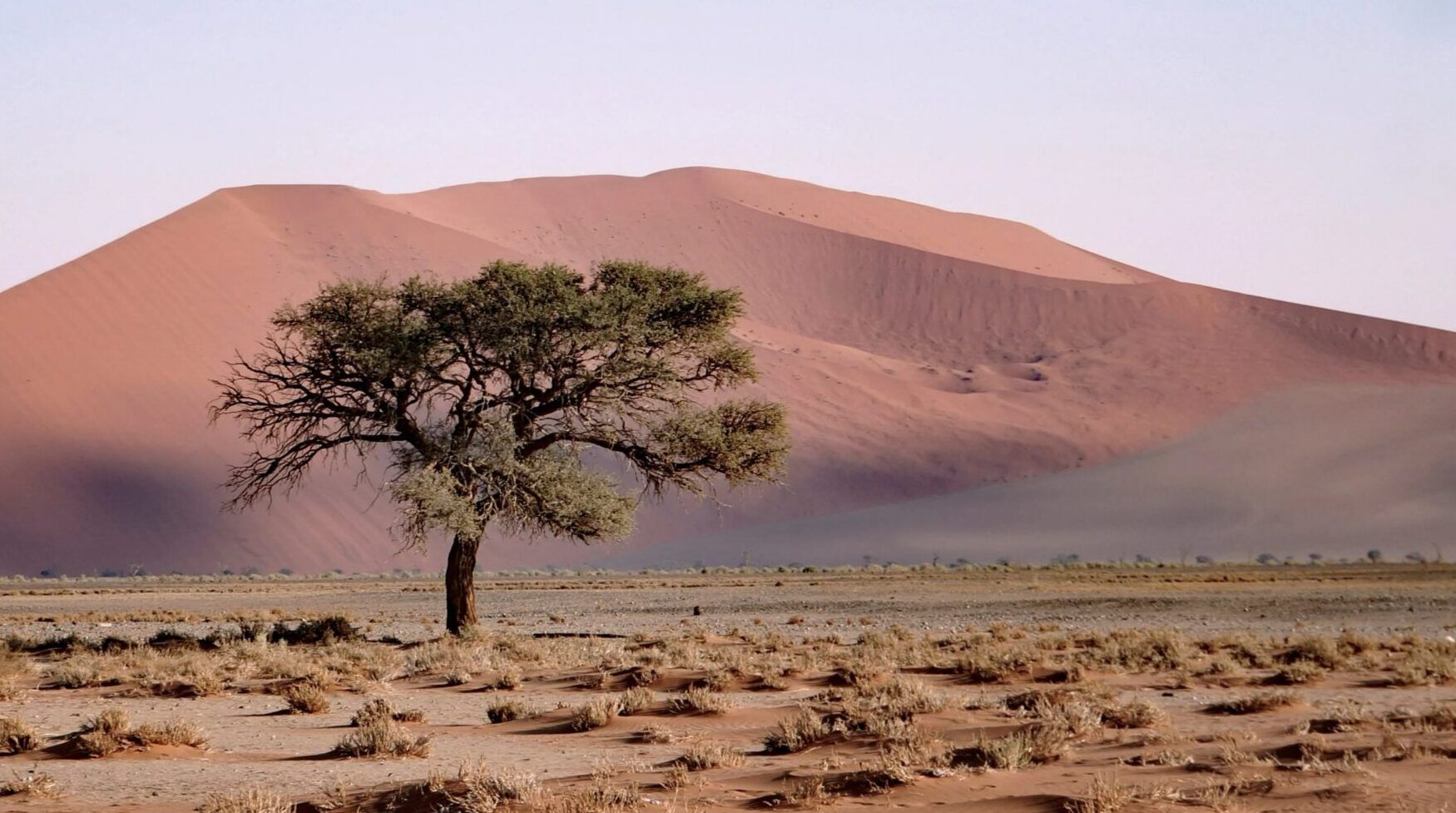
While the coast usually attracts surfers in its waters, in Swakopmund, you can find them hitting the sand as well as the waves! At less than 30 minutes from town, you can find yourself in the Namib Desert. Here, Dune 7 (the seventh of a series of dunes) rises to a height of 383 meters, making it one of the highest dunes in the world. The climb is steep, but the breathtaking views from the top are well worth it. From the top, you can hit the sand on a sandboard, fatbike or quadbike , or even land on it after a skydive.
And don’t forget Sandwich Harbour, a lagoon where the dunes meet the ocean. Ride the sand by a 4×4 (with a professional driver) or hit the water to see the dunes from another perspective… And dolphins, sea lions, pelicans, or cormorants at the same time!




Skeletons in the water
But Swakopmund holds your entry ticket to more of Namibia’s wonders. One of the country’s most fascinating sites, the Skeleton Coast, lies north of the town. This 500-kilometre-long and 40-kilometre-wide coastal stretch is well-known for its inhospitability. Many whales and boats end their lives here due to the strong Benguela current of the ocean and the winds in the area. This makes it the largest ship cemetery in the world (hence the chilling name!). More inland, the rocky desert region of Damaraland impresses with its vast golden savanna, red cliffs, escarpments and deep gorges.
Information and facts
As Namibia’s most touristic coastal town, Swakopmund is tucked between a bright Atlantic Ocean on one side and golden dunes on the other. There are museums and libraries retracing the German history of the town, but also the lively Mondesa township illustrating the Apartheid era of Swakopmund. Out of town, the options for adventure are plenty: sandboarding, 4×4 drives on the dunes, quadbiking, skydiving and more!
Facts about Swakopmund
- The town was founded in 1892 by German settlers and boasts well-preserved German colonial buildings.
- Swakopmund is tucked between the impressive Namib Desert and the Atlantic Ocean.
- Adventure capital of Namibia, where you can hit the dunes for a 4×4 drive, quadbiking, sandboarding or skydiving!
- Close to the Skeleton Coast, the longest whale and shipwreck graveyard in the world.