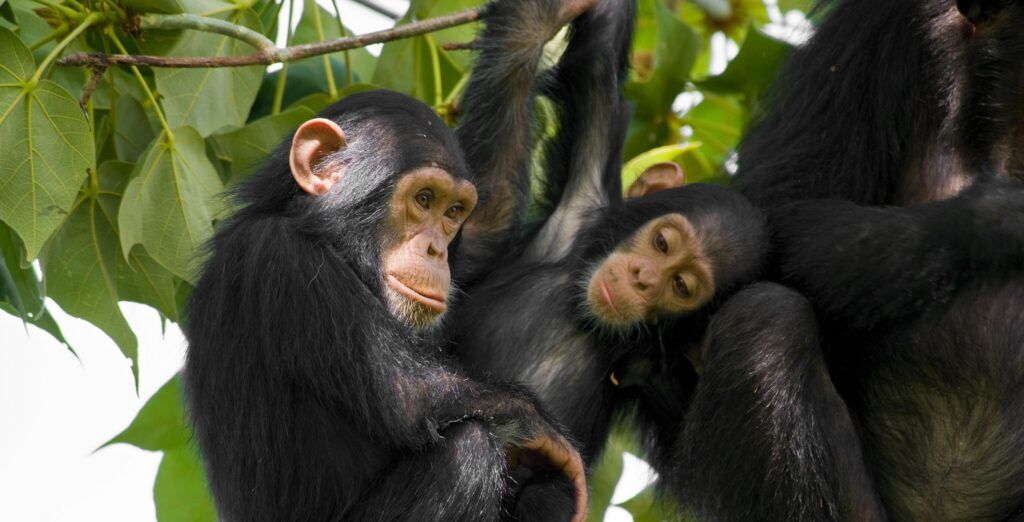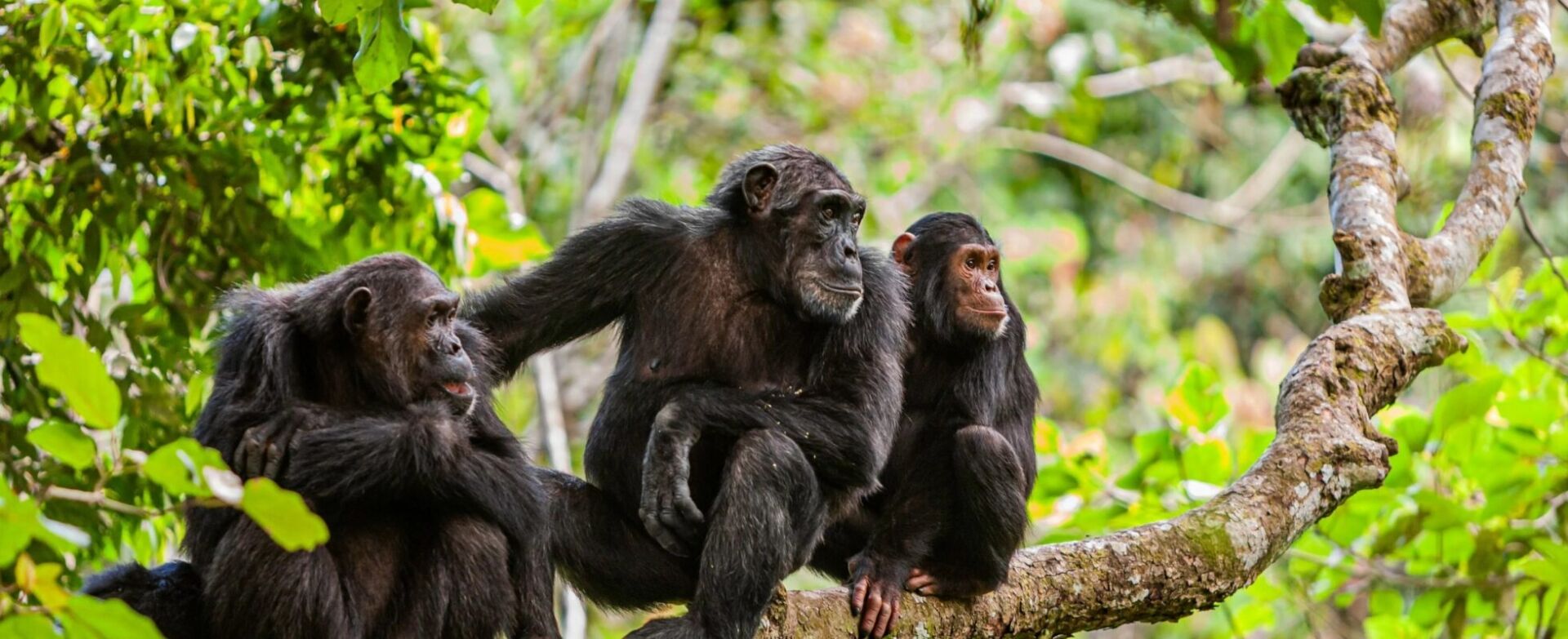
A group of wild chimpanzees resting and interacting together on a branch in the lush forest of Mahale Mountains National Park

Mahale Mountains National Park

TripAdvisor Travellers' Choice

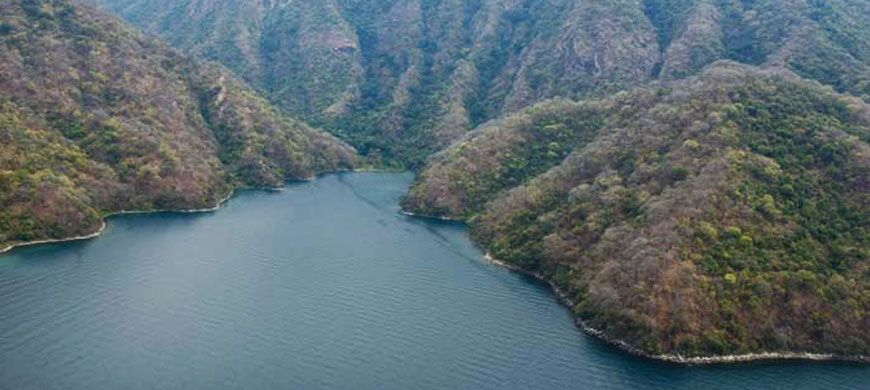
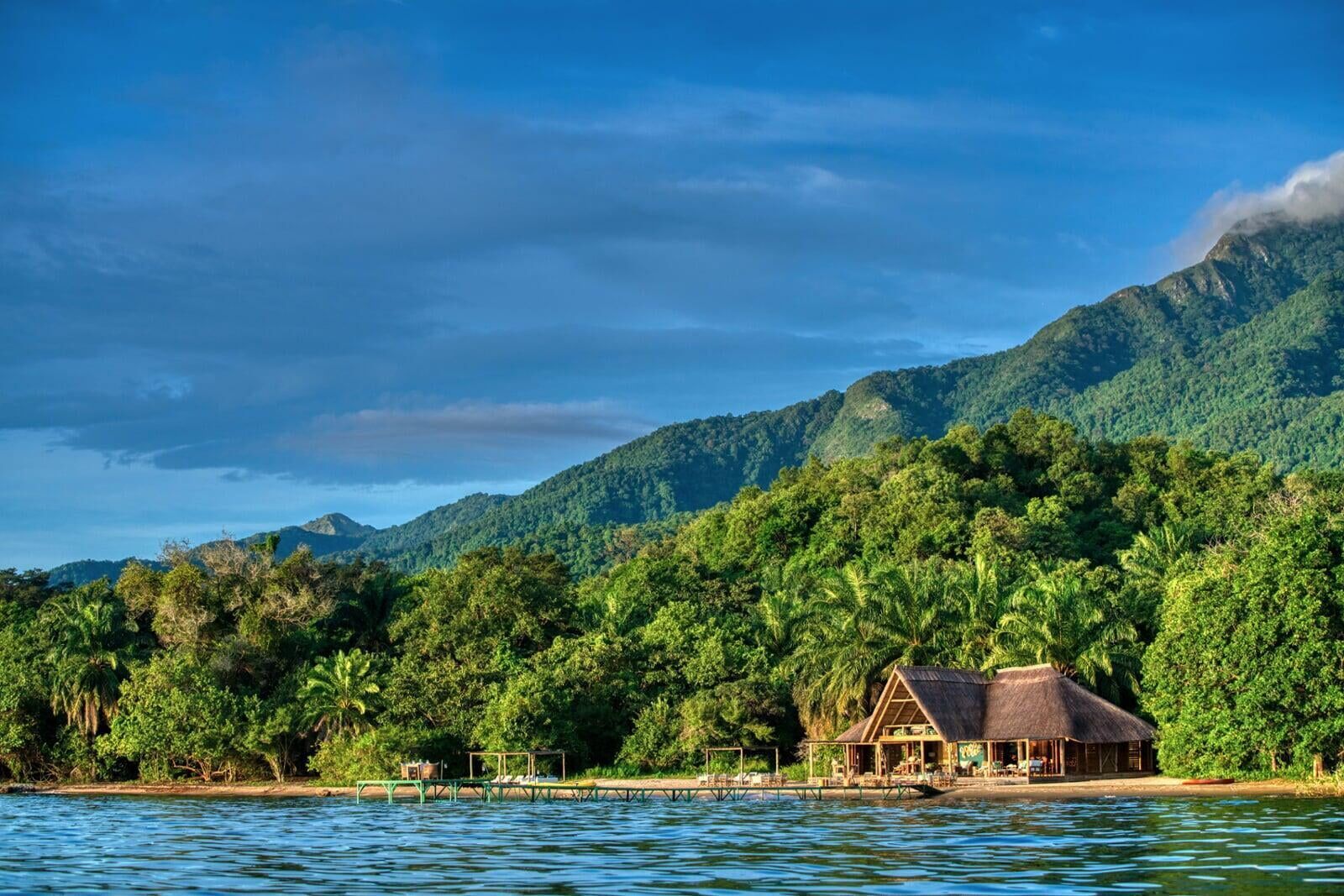
Forested mountains run straight down into Lake Tanganyika at Mahale Mountains National Park, deep in the far west of Tanzania. Jungle covers the slopes and pale sand lines the shore. High in the canopy, wild chimpanzees go about their day (usually loudly!).

Mornings start on the trail, following trackers uphill through the forest to find a chimpanzee family. Afternoons are slower: a swim in the clear water, then sunset over the longest freshwater lake in the world. No roads reach the park, only boats and light aircraft, which keeps Mahale remarkably quiet.
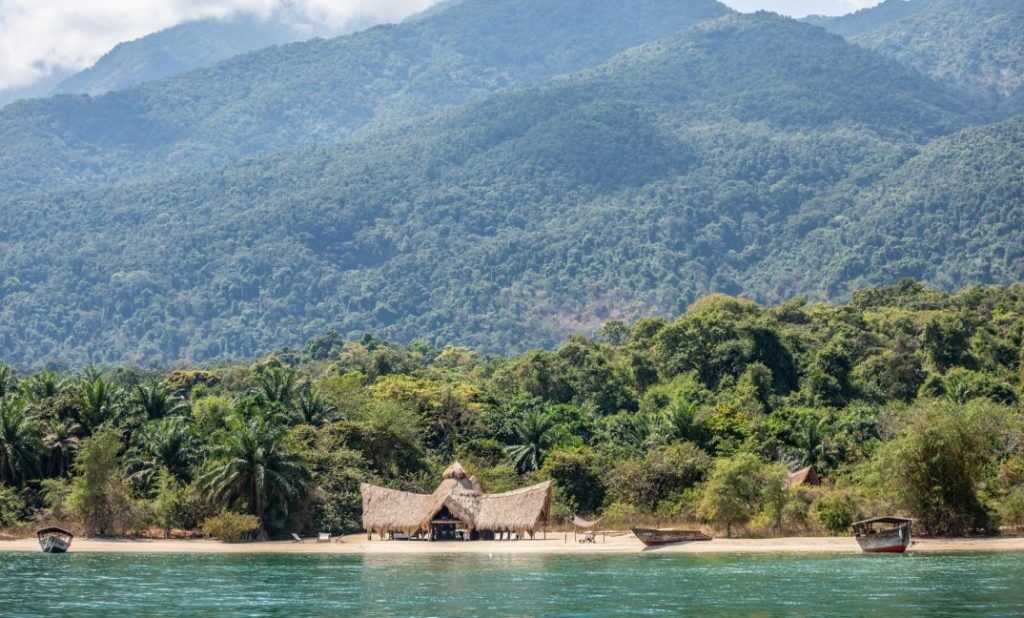
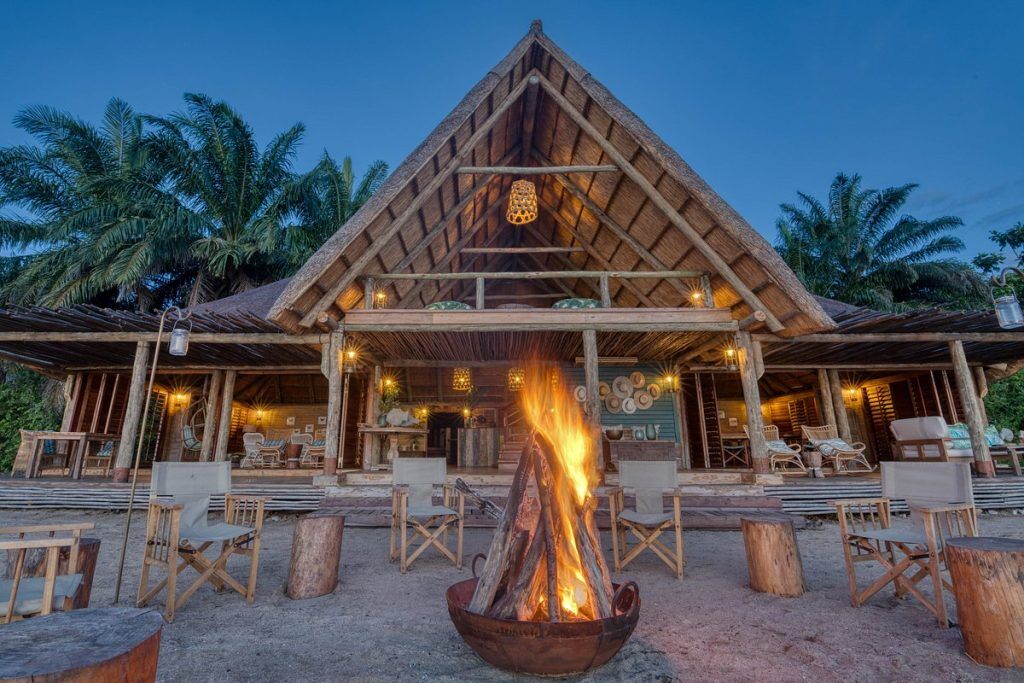
Mbali Mbali Mahale lodge with thatched roofs on a golden sand beach backed by dense forested mountains and Lake Tanganyika

Discover the Forest Slopes & Primate Trails of Mahale

Mahale Mountains is known for its primate populations and remote geography. Forested mountain slopes protect around 900 wild chimpanzees, with walking trails leading to habituated groups.

Along the clear waters of Lake Tanganyika, more than a hundred fish species live beneath the surface, and Mahale is also one of the few places where chimpanzees and lions share the same park.

Set in Tanzania’s remote western circuit, Mahale offers a clear contrast to the open savannahs of the north, combining forest treks with quiet time along the lake shore.

Information and facts

Mahale Mountains National Park is located in western Tanzania, south of the city of Kigoma. Founded upon forested mountain slopes and ancient ecosystems, this protected area protects one of the largest known wild chimpanzee populations in Africa.

Must-visit landmarks & spots

  • Lake Tanganyika: The world’s longest, second-deepest, and least polluted freshwater lake, harbouring countless unique fish species.
  • The Forest Slopes: Misty, dense mountain canopies where wild yet habituated chimpanzee families roam.
  • The Sandy Beaches: Pure white shores along the lake, offering a rare place to relax after a trek through the jungle.
  • The Western Ridges: Dramatic high points providing sweeping views across the lake toward the Democratic Republic of Congo.
  • The Remote Creeks: Quiet waterways winding through lush vegetation and rich forest flora.
  • Mount Nkungwe: At about 2,462 metres, the highest peak in the park offers challenging ridge hikes and wide views across Lake Tanganyika towards the Democratic Republic of Congo.

Highlights of Mahale

  • Protected area spanning 1,650 km² of pristine western wilderness.
  • Home to one of Africa’s last remaining wild chimpanzee populations, numbering roughly 900.
  • One of the only places where chimpanzees and lions co-exist.
  • Entirely foot-based safaris with no roads within the park boundaries.
  • Accessible exclusively by boat across the crystal-clear waters of Lake Tanganyika.
  • Guided chimpanzee trekking on foot (minimum age 12).

Most Common Animals

  • Chimpanzees
  • Angola colobus
  • Red colobus
  • Red-tailed monkeys
  • Blue monkeys
  • Forest birds

Dive into the Mahale Wilderness

Discover a curated safari itinerary that combines the adventure of chimpanzee trekking with the tranquil beauty of Lake Tanganyika. Naturally, you can tweak this route to suit your wishes and add more highlights of Tanzania. Simply get in touch and we will turn your ideas into reality.

How to get to Mahale Mountains National Park

Most travellers reach the Mahale region by a scenic flight to Kigoma, followed by a boat ride across Lake Tanganyika. As a result, it makes an exclusive and rewarding addition to a bespoke safari itinerary.

If you come from Arusha or Dar es Salaam, domestic connections bring you closer to the west. For those travelling by boat, the journey across the world’s second-deepest lake offers a fascinating glimpse into remote shorelines and crystal-clear waters.

Whether you prefer a direct bush flight or a scenic boat transfer along the coast, Mahale rewards every traveller with untouched wilderness. Ultimately, your ideal route simply depends on your schedule and your sense of adventure.

Best time to visit Mahale Mountains National Park

While Mahale can be visited year-round, the dry season brings optimal conditions for forest trekking and wildlife viewing.

If you want to focus on comfortable hiking trails and sunny beach relaxation, the long dry months are ideal. Meanwhile, the greener months offer lush scenery and vibrant forest life.

July–October (Long Dry Season & Optimal Trekking)

The dry weather makes forest hiking comfortable and clear, while chimpanzee groups are often spotted in larger numbers along the lower slopes.

November–June (Green Season & Lush Slopes)

Tropical showers refresh the mountain forests, creating dramatic cloudscapes, vibrant flora, and a remarkably peaceful atmosphere away from the crowds.

The wilderness is naturally dynamic and weather patterns can vary slightly. Nevertheless, for a first visit, timing your stay with the dry season ensures ideal trekking conditions.

Climate in Mahale

Mahale experiences a tropical climate influenced by the vast waters of Lake Tanganyika. Consequently, it balances warm, humid forest days with cooler mountain evenings. The primary green season runs from November to June with regular tropical rains. Meanwhile, the popular dry season (July to October) features sun-drenched days and clear skies ideal for trekking and swimming.

Whichever month you visit, it is worth packing lightweight, breathable, long-sleeved clothing to protect against branches and insects during forest hikes. Additionally, bring sturdy, broken-in walking boots and a waterproof jacket for tropical downpours. Overall, dressing in layers will keep you comfortable throughout your journey.

Where to stay in Mahale

Mahale offers a small number of lakeside camps and lodges built to sit quietly in the forest along the shore, giving direct access to chimpanzee trekking and time on the water.

Frequently asked questions about Mahale Mountains National Park