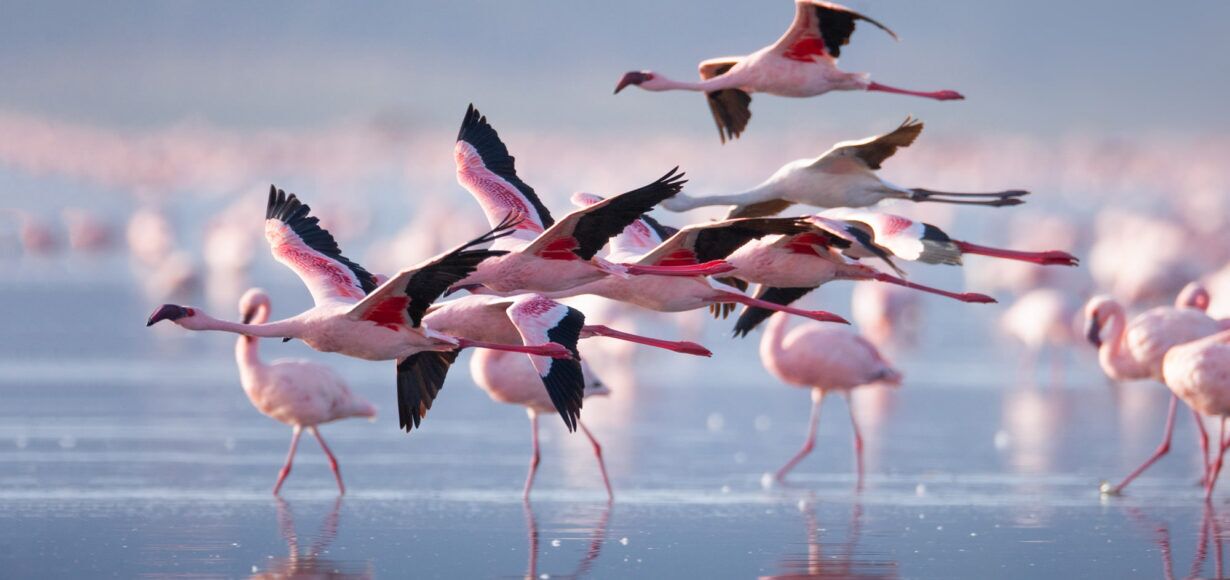


Large flock of pink flamingos gathered along the shores of Lake Natron, with flamingos flying overhead and mountains in the background.

Lake Natron

TripAdvisor Travellers' Choice

Where flamingos meet volcanic landscapes

Tucked away in northern Tanzania, near the Kenyan border, Lake Natron is a special speck of land. This shallow, alkaline lake shimmers in extraordinary red and pink colours and is famous for its thousands of flamingos and the dramatic Ol Doinyo Lengai volcano rising above the landscape.

Here, you don’t find the typical savannah scenery of Tanzania’s national parks. Instead, expect vast salt flats, rugged volcanic mountains, Maasai villages and a sense of remoteness that’s increasingly hard to find. Lake Natron is a fascinating addition to a northern Tanzania safari, especially for travellers looking to explore beyond the beaten path.

Wildlife at Lake Natron

Tanzania’s Lake Natron may not be a traditional safari destination, but it’s a hotspot for birdwatching. Flamingos and other waterbirds gather around and in the lake, while the surrounding landscape is home to a variety of wildlife.

Flamingos at Lake Natron

Lake Natron is the most important regular breeding site for lesser flamingos in East Africa. When conditions are right, thousands of these beautiful pink birds gather along the shallow waters, creating a spectacular picture against the volcanic backdrop.

Flamingo numbers vary throughout the year, depending on rainfall and water levels. But no matter if you spot a few small groups or enormous flocks, watching them in this beautiful setting is an unforgettable experience.

What other animals live here?

Besides flamingos, you may spot pelicans, herons, egrets and other waterbirds around the lake. Specially adapted tilapia fish also survive in some of its less alkaline waters.

The surrounding plains and hills are home to other wildlife, although sightings are less predictable than in Tanzania’s famous national parks. What makes this area so special is the unusual combination of birds, landscapes and remote surroundings.

Information and facts

Lake Natron is one of Tanzania’s most unusual natural wonders. Its highly alkaline waters can turn striking shades of red and pink, while thousands of flamingos gather along its shores. And with an active volcano rising in the background, the scenery is truly one of a kind!

Most common animals

  • Lesser flamingos
  • Greater flamingos
  • Pelicans
  • Herons
  • Egrets
  • Other waterbirds
  • Tilapia fish (in suitable waters)

Facts about Lake Natron

  • Located in northern Tanzania, near the Kenyan border
  • One of the world’s most important breeding sites for lesser flamingos
  • Famous for its red and pink waters, caused by salt-loving microorganisms
  • Only specially adapted species can survive here
  • Surrounded by volcanic landscapes, including the active Ol Doinyo Lengai volcano
  • A unique destination for birdwatching, photography and exploring the Great Rift Valley

Unveiling the mystery behind Lake Natron’s red waters

Imagine standing beside a vast lake that shimmers pink, orange or even deep red, surrounded by white salt deposits and volcanic mountains in the background. This kind of landscape seems unreal, and yet it is.

What tints the waters of Lake Natron?

The striking colours come from salt-loving microorganisms that thrive in the lake’s highly alkaline waters. Some produce natural pigments that turn parts of the lake red or pink, especially with high salt concentrations.

The colours change throughout the year depending on water levels, salinity and environmental conditions. So while Tanzania’s Lake Natron is famous for its red waters, don’t expect the entire lake shimmering bright red during every visit.

What makes this lake so unusual?

Lake Natron has no outlet, so water is mainly lost through evaporation, leaving behind high concentrations of salts and minerals. This creates an extreme environment where only specially adapted aquatic species can survive. Surprisingly, these harsh conditions also make the lake an important refuge for lesser flamingos – nature works in mysterious ways. The alkaline waters support the microorganisms they feed on, while the isolated nesting areas help protect their eggs and chicks from predators.

It’s a fascinating example of how animals can thrive in one of Tanzania’s harshest environments.

Things to do at Lake Natron

Besides enjoying the view at Lake Natron, you can explore remarkable landscapes, discover local culture and experience a quieter side of Tanzania.

Watch flamingos along the lakeshore

Join a local guide for a walk towards the lake, who will bring you near to the flamingos feeding in the shallow waters without disturbing them. The combination of pink birds, salt-covered shores and volcanic scenery is a must-see for nature lovers and photographers.

Visit the Engare Sero waterfalls

Craving a fancy shower? Follow a local guide through the rocky gorge near Engare Sero to discover waterfalls hidden among the surrounding cliffs. The walk can involve uneven ground and wading through water, but this is all part of the experience. Swimming may be possible in suitable pools, depending on conditions.

activity
activity

Discover Maasai culture

The Lake Natron region is home to Maasai communities whose traditions are closely intertwined with the surrounding nature. During a community-led visit of a Maasai village you learn more about local customs, daily life and the cultural significance of the area.

Admire Ol Doinyo Lengai volcano

Ol Doinyo Lengai is one of Tanzania’s most remarkable volcanoes and towers above the southern end of the lake. Its name means “Mountain of God” in the Maasai language, reflecting its spiritual importance.

The volcano is known for its unusual lava and dramatic setting within the Great Rift Valley. Whether you admire it from a distance or arrange a guided excursion, goosebumps and several wow moments are guaranteed.

Explore Lake Natron on your Tanzania safari

Looking to explore beyond Tanzania's famous national parks? These Tanzania safari itineraries are a great starting point for adding a visit to Lake Natron. Combine unforgettable game drives in the Serengeti or Ngorongoro with the lake's colourful waters, flamingos and volcanic landscapes.

How to get to Lake Natron

Lake Natron is located in northern Tanzania, close to the Kenyan border and northeast of the Ngorongoro Highlands. Most visitors reach the area by car as part of a longer northern Tanzania safari.

The journey takes you through increasingly remote landscapes, with dry plains, volcanic hills and sweeping Rift Valley views along the way. Some sections of the road are rough, and travel times can vary considerably depending on your route and the weather.

You can combine a visit to Lake Natron with destinations such as the Serengeti and Ngorongoro. The only thing to consider in your planning is the additional driving time.

Our travel experts can help you find the most practical route and decide how Lake Natron fits into your Tanzania itinerary.

Climate and weather

Lake Natron has a hot, relatively dry climate. Located on the floor of the Great Rift Valley, the area can experience intense sunshine and temperatures exceeding 40 °C.

As with many landscapes, this also changes with the seasons. During drier periods, the surroundings can appear dusty and almost desert-like, while rainfall brings greener vegetation and makes the lake’s water levels rise.

The region generally experiences two rainy periods: the shorter rains around November and December and the longer rains from approximately March to May. Since, however, weather is notoriously unpredictable, these rainfall patterns can vary.

If you’re planning to explore the region on foot, it’s best to start early in the day and bring plenty of water, sunscreen, and a hat.

Best time to visit Lake Natron

Lake Natron is a fascinating destination throughout the year, and the best time solely depends on what you want to experience.

June to October: generally the easiest time to travel

The drier months are usually the most convenient for visiting Lake Natron. Roads tend to be more accessible, making it easier to explore the surrounding landscape, visit the waterfalls and enjoy guided walks.

This is also a popular period for flamingo watching, although the number of birds you see always depends on conditions at the lake.

November to May: changing landscapes and wetter conditions

Rainfall can turn the surrounding scenery green and change the lake’s appearance. The roads may become muddy, though, or difficult to navigate, particularly if it rains a lot.

Flamingo breeding is closely linked to rainfall, water levels and food availability, so it doesn’t follow a fixed schedule but only Mother Nature’s rhythm.

Our tip: If you want to combine Lake Natron with a northern Tanzania safari, June to October is generally a practical choice. If flamingos are your main reason for visiting, ask about current conditions before planning your trip.

Where to stay near Lake Natron

Staying near Lake Natron means waking up to breathtaking volcanic landscapes. Choose from simple camps to comfortable lodges, and enjoy easy access to the lakeshore and nearby waterfalls. Our travel experts can help you find the perfect accommodation for your Tanzania safari.

Frequently asked questions about Lake Natron

Curious about Lake Natron? From its striking red waters to the flamingos that call it home, we’ve answered some of the most frequently asked questions to help you plan your visit.