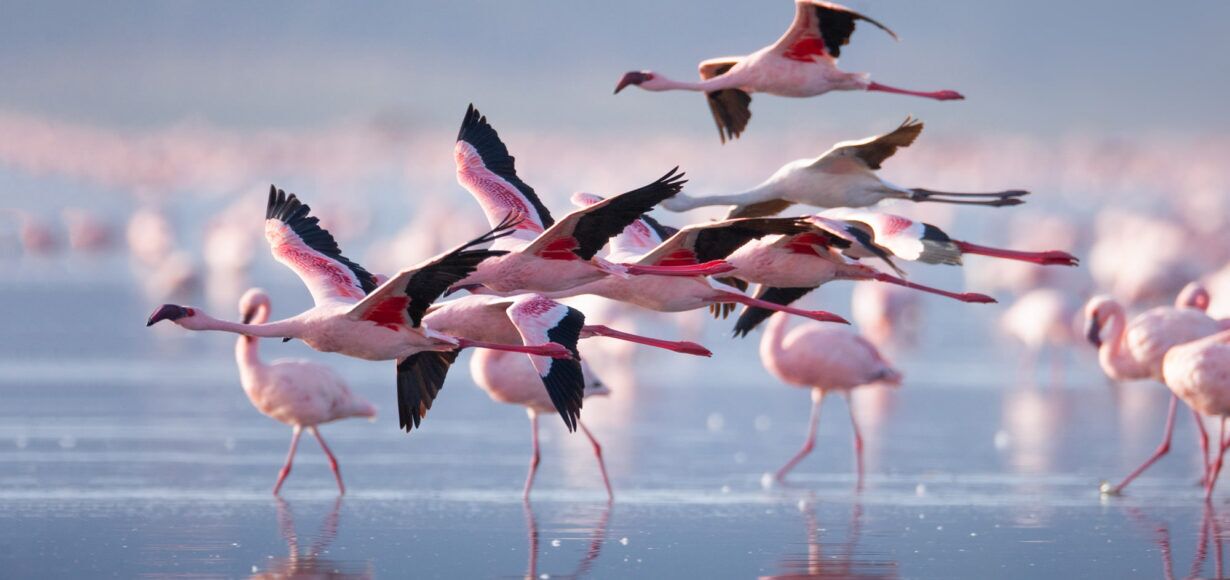


Flamingos flying above a large flock in Lake Manyara, with other waterbirds along the shore.

Lake Manyara National Park

TripAdvisor Travellers' Choice

Lake Manyara National Park is painted by a forest, open grassland and a shimmering soda lake beneath the Rift Valley escarpment. So much variety brings lots to discover – from baboons jumping through the trees to elephants marching across the plains. One of the park’s biggest highlights is its tree-climbing lions, although spotting them takes a little luck (crossing our fingers). Add abundant birdlife and striking scenery to the mix, and you’ve got yourself an exhilarating stop on a safari through northern Tanzania.

Wildebeest and grey crowned cranes grazing beside Lake Manyara, with flamingos in the water behind them.

Wildlife in Lake Manyara National Park

Lake Manyara’s forest belongs to large troops of baboons and beautiful blue monkeys moving elegantly through the canopy. Further into the park, look out for elephants, giraffes, buffaloes, and zebras as woodland gives way to more open landscapes. The park’s tree-climbing lions are on many must-see-lists, so keep your eyes open and your camera close. Since sightings are never guaranteed, encountering these big cats is an especially memorable bonus.

Birdlife often doesn’t get the same attention, even though it should. The stars in Lake Manyara are pink flamingos, pelicans, hornbills, and African fish eagles, plus many smaller colourful winged friends. From the forest canopy to the lakeshore, there’s plenty to keep your binoculars busy.

Rift Valley Escarpment

Rising steeply above Lake Manyara, the Rift Valley escarpment creates a dramatic backdrop to the park and for your pictures. Below its slopes, forest and woodland share the ground with open grassland along the lakeshore, creating striking contrasts within a relatively small area. The escarpment is part of the East African Rift, where movements in the Earth’s crust have shaped the landscape over millions of years. So, while the wildlife may first catch your attention, take a moment to let the scenery sink in, too.

Information and facts

Set beneath the Rift Valley escarpment, Lake Manyara combines lush forests, open grassland and a soda lake. Together, these landscapes are home to diverse wildlife and striking birdlife.

Wildlife highlights

  • Elephants
  • Baboons
  • Blue monkeys
  • Giraffes
  • Zebras
  • Buffaloes
  • Wildebeest
  • Impalas
  • Tree-climbing lions

Facts about Lake Manyara

  • Located in northern Tanzania
  • Established as a national park in 1960
  • Set along the Rift Valley escarpment
  • Known for its soda lake and hot springs
  • More than 400 bird species recorded

Activities in and around Lake Manyara National Park

Visit the lush forest and its inhabitants, head out on a night game drive, or discover local life in nearby Mto wa Mbu. Lake Manyara excites in many ways.

How to get to Lake Manyara National Park

Lake Manyara National Park is approximately 2.5 hours’ drive from Arusha, making it an easy stop on Tanzania’s northern safari circuit. The entrance is close to Mto wa Mbu, at the foot of the Rift Valley escarpment.

From here, you can continue towards the Ngorongoro Conservation Area or combine your visit with Tarangire National Park. We arrange transport as part of your itinerary, so you can simply lean back and enjoy the scenery along the way.

Best time to visit Lake Manyara National Park

Lake Manyara is a great wildlife hotspot throughout the year, so the best time simply depends on what you’d like to experience. While it’s easier to spot larger animals during the drier months, the greener season transforms the landscape into a lush paradise attracting colourful birdlife.

June to October

As the vegetation thins, larger animals become easier to spot, making this a good period for game drives – even though wildlife sightings always require a bit of luck. Conditions are generally drier too, so no rain poncho needed.

November to February

The shorter rains, especially in November and December, freshen up the landscape and migratory birds add colour to the park. This is the ideal time for (hobby) ornithologists and for travellers who enjoy greener surroundings.

March to May

While the longer rains bring particularly lush scenery, some tracks may become difficult to manoeuvre. However, birdlife remains a highlight if you don’t mind wetter conditions.

Discover our Lake Manyara safari itineraries

Explore Lake Manyara as part of your Tanzania safari, then continue to more of the country’s remarkable parks. Find inspiration in our itineraries and start creating your own.

Climate in Lake Manyara National Park

Lake Manyara has warm days and cooler mornings and evenings, so light layers are useful for early game drives. Meanwhile, the shaded forest can feel very different from the more exposed grassland and lakeshore. Rainfall follows two main seasons: shorter rains generally arrive between October and December, while the longer rains usually fall from March to May. June to October is typically drier, although the timing varies each year.

Where to stay near Lake Manyara National Park

Stay close to Lake Manyara’s wildlife and scenery, then unwind after a day of exploring. Discover our favourite lodges and camps near the park.

Frequently asked questions about Lake Manyara National Park