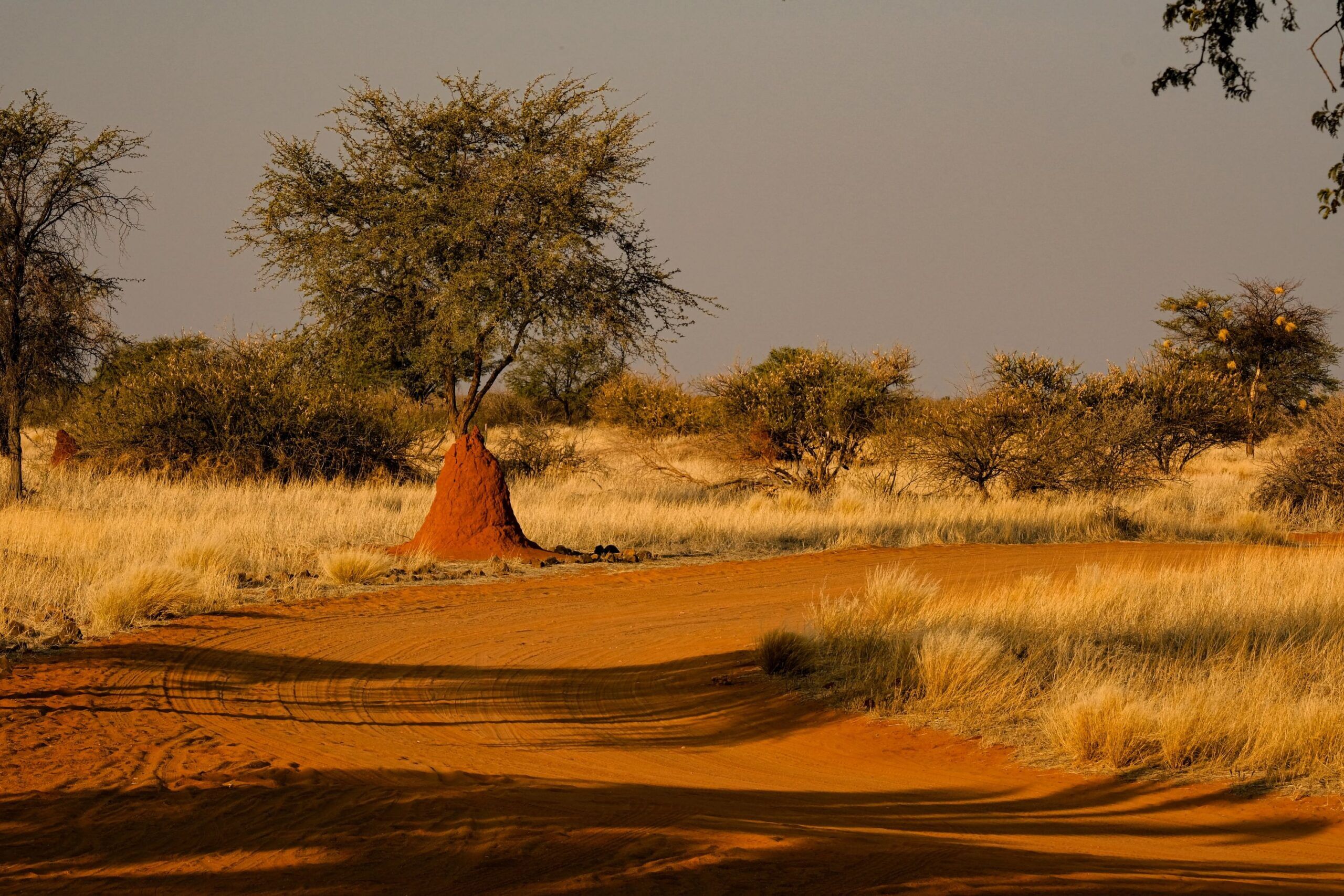


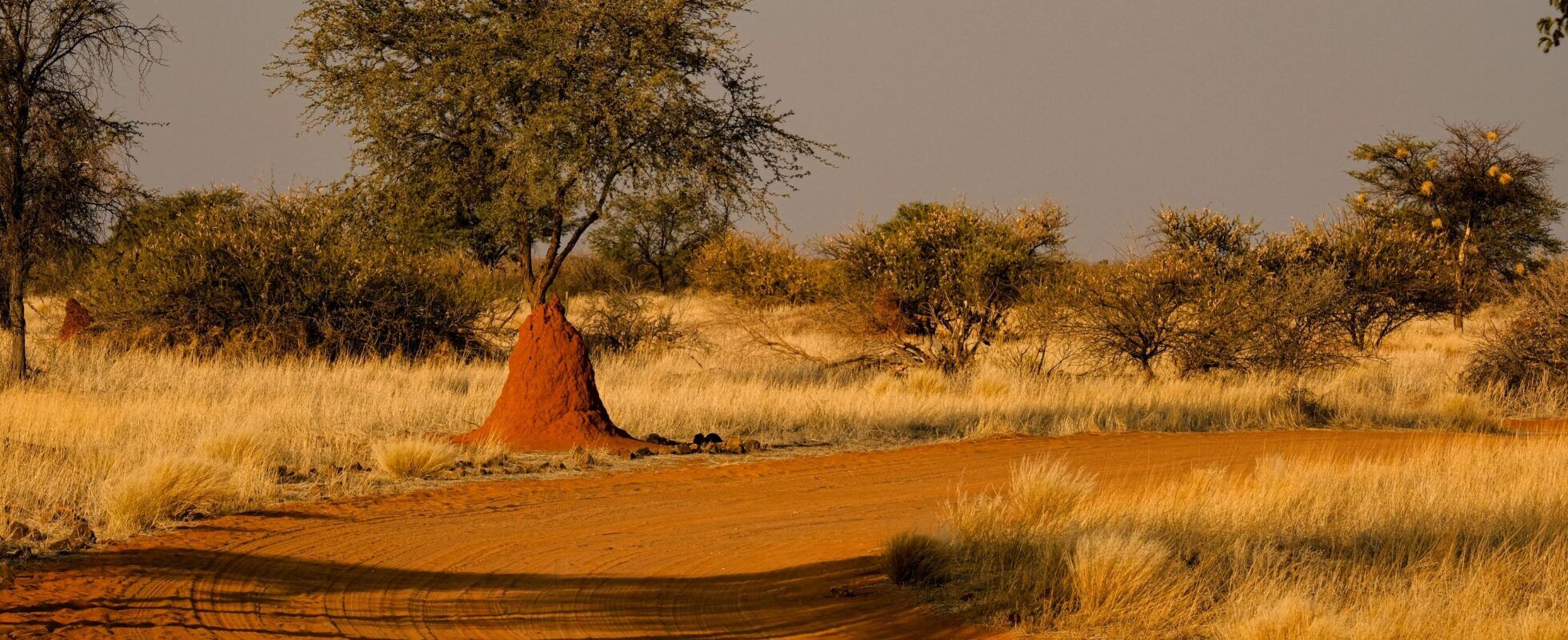

The Namibian part of the Kalahari lies in the east of the country, where the landscape is a patchwork of private reserves, ranches and communal conservancies, divided into a central and northern part. And that is precisely what makes the Kalahari in Namibia so interesting: it feels intimate, wild and wonderfully far from the crowds. This is no single desert that stops at the border either – this vast semi-arid landscape with its characteristic red sands stretches across southern Africa, reaching into Botswana and South Africa.


Red sand, green bush
The Kalahari gets its famous colour from iron-rich sand that has slowly oxidised over millions of years. The dunes have quite literally rusted. Unlike the towering dunes of Sossusvlei, these dunes are generally low, long and softened by grasses, shrubs and scattered trees. Forget the image of a completely barren desert. After the rain, the red landscape can turn surprisingly green, creating a striking contrast of colours and bringing a whole new energy. It’s a landscape shaped by limited water, where plants make the most of every precious drop.
Wildlife with a desert twist
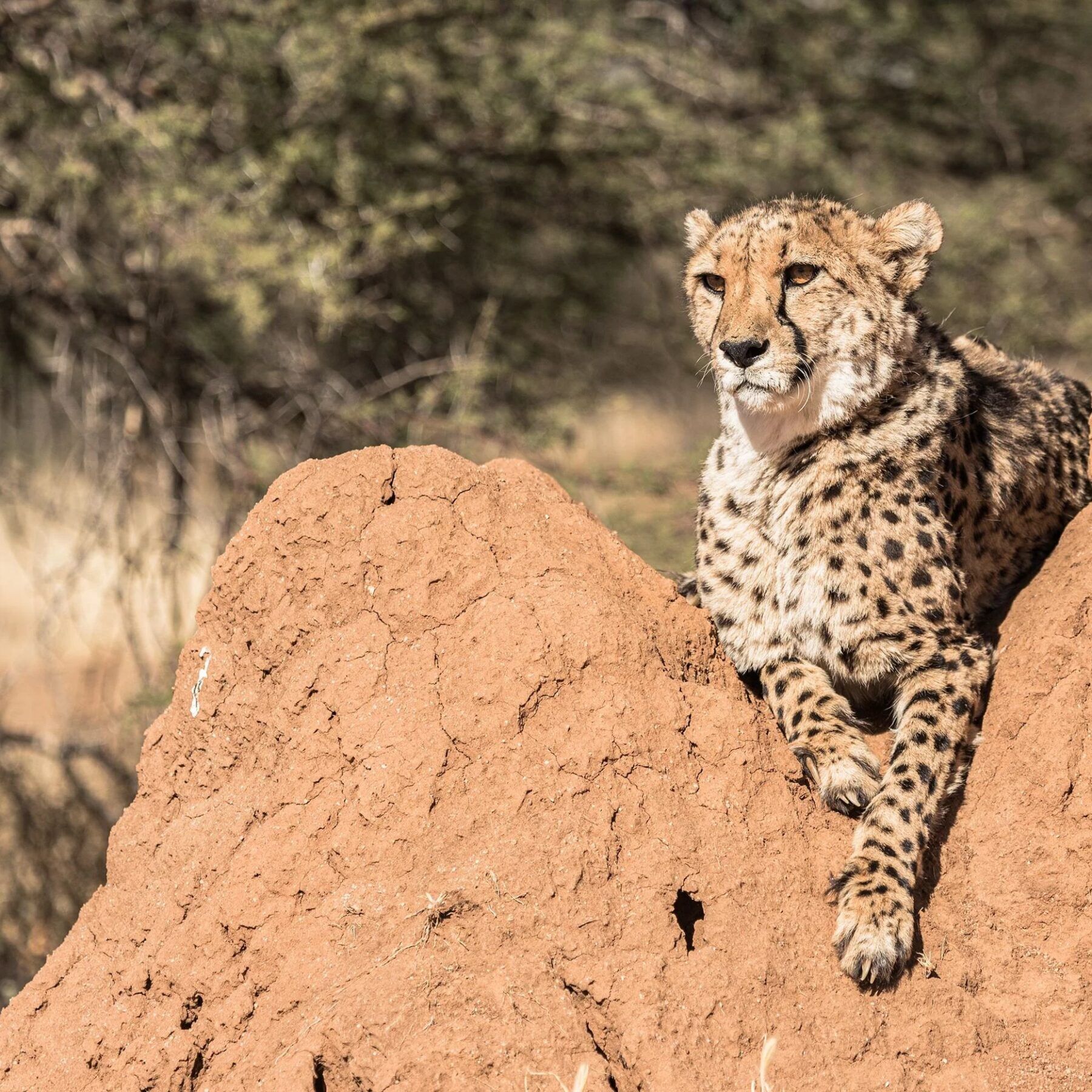
When the going gets tough, the tough gets going! Gemsbok and springbok are perfectly at home among the red dunes, while wildebeest, hartebeest, giraffe and zebra roam happily across the grassy plains. Predators including cheetah, leopard and brown hyena are also present, although sightings are never guaranteed – desert survivors have a mind of their own. They have developed their own clever ways of coping with the heat, and feast on hardy shrubs. The result? An ecosystem that looks deceptively harsh and quiet but is buzzing beneath the surface.


A landscape shaped by people
San communities have lived in Namibia’s eastern regions for thousands of years. The Juǀ’hoan language, spoken by the San people of north-eastern Namibia, uses several different click sounds, written as ǀ and ǃ. Try pronouncing a San name, and you’ll quickly realise that a Kalahari greeting comes with its own little language lesson. But the San legacy goes far beyond speech. Their skills have refined over generations in one of Africa’s most demanding environments. Today, many communities are actively involved in conservancies, helping to protect the landscape while keeping their heritage the headline of the Kalahari story.
Information and facts
Created 40 to 60 million years ago and covering the eastern third of the country, the Namibian portion of the Kalahari is a vast semi-desert of striking red dunes, open grasslands and surprisingly resilient animals and plants. After the rain, the landscape turns green, attracting a burst of life. The region is also home to San communities, offering fascinating insights into their traditional knowledge, culture and changing way of life.
Most common animals
- Gemsbok
- Springbok
- Wildebeest
- Hartebeest
- Meerkat
- Giraffe
- Zebra
- Warthog
- Cheetah
- Leopard
- Brown hyena
- Kalahari lion
Facts about the Kalahari
- The Kalahari covers approximately 900,000 km² across Namibia, Botswana and South Africa.
- In Namibia, it stretches mainly across the eastern parts of the country, where it’s divided into a central and northern part.
- The Namibian part of the Kalahari has been home to San communities for 20,000 years.
- Don’t expect the Big Five, but prepare to see oryx, springbok, giraffe, meerkat, warthog, and predators such as leopards, cheetahs, and black-maned Kalahari lions.
- It’s technically not a true desert: The Kalahari receives enough rainfall to support grasses, shrubs and woodland, so geologists describe it as a fossil desert.