
For many travelers, Uganda may still feel a little unfamiliar, simply because they’re not quite sure what to expect. If that sounds like you, rest assured: Uganda is a welcoming and rewarding destination to explore. The country is known for its friendly people, diverse landscapes, and extraordinary wildlife experiences. To help you travel with confidence, we’ve put together a few practical tips for both first-time visitors and seasoned travelers. That way, you can board your flight feeling relaxed and excited, ready to enjoy the incredible scenery, wildlife, and adventures that await you in Uganda.
Frequently Asked Questions Uganda


Travel Advice
Visa
To enter Uganda, you need a valid visa, for which you can apply on the official Uganda immigration website. Below, we will tell you everything you need to know.
The visa for Uganda is single entry, valid for three months and costs 51.50 USD.
The government of Uganda requires most international travelers to apply for their visa online before arrival. Applying in advance is straightforward and offers several important advantages:
- The application process is clear and easy to follow, especially with the step-by-step guidance provided when booking with Africa Safari Trips.
- You start your trip with peace of mind, knowing your visa has already been approved and paid for.
- Upon arrival in Uganda, you can proceed directly through immigration without needing to complete additional visa paperwork or make payments at the airport.
Visa applications must be submitted through the official Ugandan government eVisa portal. We strongly advise against using third-party websites, as these often charge significantly higher fees and may not be reliable. Unfortunately, some travelers have lost money through unofficial platforms, so applying directly via the government website is the safest option.
Guests traveling with Africa Safari Trips receive a practical visa guide to support them throughout the application process, and our travel consultants are always available to answer any questions. While we cannot apply for the visa on your behalf, our guidance ensures the process remains simple, secure, and stress-free.
Once submitted, online visa applications are typically processed within a few working days. Be sure to print your approved eVisa or save a digital copy and bring it with you when traveling. Upon arrival in Uganda, your visa will be verified and stamped, after which you can collect your luggage and begin your safari without delay.
No. Uganda does not offer visas on arrival. All travelers must obtain an electronic travel authorisation (eTA) before departure. Entry into the country without an approved eTA is not permitted.
The eTA must be arranged online before your travel. Make sure you have your approved eTA readily available, either printed or stored on your mobile device, when you arrive in Uganda, as it will be checked by immigration officials.
For travel to Uganda, the best, and only, option is to apply for the electronic travel authorisation (eTA) online before departure via the official Uganda immigration website. As visas on arrival are no longer available, applying in advance ensures you are fully prepared and permitted to enter the country.
To avoid last-minute issues, we recommend submitting your eTA application at least two to three weeks before departure. Before starting the application, make sure you have the following ready:
- A valid passport with at least six months’ validity beyond your return date
- A recent passport-style photo in digital format
- A clear digital copy of your passport’s biodata page
- Your flight details and accommodation information
- A credit or debit card to complete the payment
- If a child is traveling with only one parent: a written consent letter in English from the other parent (if applicable)
Once approved, remember to print your eTA or save a digital copy to present upon arrival.
As entry requirements may change, we always recommend checking the latest immigration guidelines before traveling. Guests booking with Africa Safari Trips receive clear instructions to ensure they are properly prepared and avoid unnecessary delays.
Travel Insurance
Embarking on an African safari is an adventure of a lifetime, but don’t forget to pack one of the most important things: travel insurance! Whether you’re dodging a curious elephant or navigating bumpy roads, travel insurance ensures that medical mishaps, unexpected detours, and lost luggage won’t spoil your wild adventure.
A good travel insurance plan provides peace of mind by covering medical emergencies, trip cancellations, and other unforeseen events. It’s essential to have a reliable safety net, especially in remote areas where access to medical facilities and other services can be limited. Comprehensive travel insurance lets you focus on the thrill of the safari, knowing that you’re protected against the unexpected.
We recommend Chapka Travel Insurance for your African journey. Chapka offers tailored coverage that meets the unique needs of your trip, ensuring you only pay for what you need. From 24/7 medical teleconsultation to handling lost baggage claims, Chapka’s services are designed to keep your safari experience smooth and worry-free.
Their personalized plans mean you’re fully covered both before and during your trip, allowing you to immerse yourself in the beauty and excitement of Africa without any added stress. Knowing that in the most unfortunate situations (cancellation, immediate return, hospitalization, legal fees, trip interruptions, rescue operations, and medical expenses) are covered.
With Chapka Travel Insurance, you can embrace the adventure with confidence, knowing that help is just a call away whenever you need it.
Vaccinations
Uganda is a tropical destination, and certain vaccinations may be required before entry. We’re happy to guide you through the most important recommendations, so you can travel well-prepared and with peace of mind.
For up-to-date and country-specific advice, we recommend checking official sources such as the World Health Organization or your local health authority (e.g. GGD). They provide the latest information on required and recommended vaccinations, as well as general health advice for your trip.
As we are not medical professionals, we always advise consulting your doctor or travel clinic for personal guidance based on your health and travel plans.
In addition to standard vaccinations such as MMR and Tdap, the Center for Disease Control and the World Health Organization recommend further vaccinations for Uganda, such as Hepatitis A and Hepatitis B. Rabies, meningitis and typhoid vaccinations are also recommended depending on your activities and the season.
Unfortunately Malaria is present in the whole country. Thankfully there is preventive treatment, which you should make use of. Also, make sure to pack some long-sleeved tops and trousers in case you want to be outdoors at night. All lodges are equipped with mosquito nets to protect you from these little buggers.
General Tipping in Uganda
Tipping in Uganda is not mandatory, but it is appreciated, particularly within the tourism and hospitality sector. Tips are a meaningful way to show appreciation for good service and are an important supplement to income for many people working in tourism.
Of course, tipping is a personal decision and should always reflect your satisfaction with the service you received. Guests traveling with Africa Safari Trips are welcome to ask their guide for local tipping advice during the trip.
For safari guides and drivers, a tip of approximately 10 to 15 USD per person per day is common, depending on the level of service, group size, and length of the trip. In Uganda, where many safaris include longer drives and more personalized guiding, guests often choose to tip at the higher end for exceptional service.
At lodges and camps, tips are usually shared among staff members such as housekeeping, kitchen, and maintenance teams. Many accommodations provide a general tip box, where 5 to 10 USD per person per day is considered appropriate.
For porters, hotel staff, or local helpers, small tips are customary when they assist with luggage or provide helpful service.
Currency & Money
The Ugandan shilling (UGX) is the official currency of Uganda and is widely used throughout the country. While many hotels, lodges, and some tour operators accept US dollars, everyday expenses are usually paid in Ugandan shillings.
If you bring US dollars, make sure the notes are issued from 2009 onwards and in good condition, as older or damaged bills are often not accepted.
The amount of money you’ll need depends on your travel style and what is already included in your safari. Safaris booked with Africa Safari Trips include accommodation, meals, activities, and transportation. Additional expenses are usually limited to tips, drinks, souvenirs, and optional/extra activities.
As a general guideline, bringing 200 to 400 USD per person in cash is sufficient for tips and personal expenses. Credit cards are widely accepted at lodges, hotels, and larger shops, while cash remains useful for tips and smaller purchases.
US dollars are commonly accepted, but please ensure bills are clean, undamaged, and issued after 2009, as older notes may not be accepted.
Credit and debit cards are accepted at some hotels and larger establishments, mainly in cities and tourist areas. However, card facilities are limited in more remote regions, and network outages can occur. For this reason, we strongly recommend carrying some cash in Ugandan shillings for small purchases, tips, and local expenses.
Language & Culture
Before traveling to Uganda, you may be curious about the local language, culture, and daily life. Learning about these small but meaningful details adds an extra layer to your journey and helps you connect more easily with the people you meet along the way.
English is the official language and is widely spoken throughout the country, especially in cities, lodges, and within the tourism industry. In addition, many local languages are spoken, with Luganda being one of the most commonly used.
Ugandans are known for being warm, welcoming, and hospitable. People are generally open and happy to start conversations with visitors. Sharing food is an important cultural custom, and it’s not uncommon to be invited to join a meal.
Street vendors are usually friendly and enthusiastic, though generally not overly pushy. Greetings play an important role in daily life, and it’s polite to greet someone before asking a question or starting a conversation.
English is widely spoken, especially in cities and tourist areas, alongside local languages such as Luganda.
Fun fact: telling time in Uganda
In Uganda, many people traditionally tell time using a local system based on sunrise and sunset, similar to systems used across East Africa. The day is considered to start at 6am, when daylight begins.
This way of telling time is most commonly used in Luganda, the most widely spoken local language in central Uganda, though the same concept is also understood in Swahili.
- 7am = 1 o’clock (one hour after sunrise)
- 12pm = 6 o’clock
- 1pm = 7 o’clock
- 6pm = 12 o’clock (sunset)
In everyday travel situations – hotels, safaris, flights, and schedules – Western clock time is always used, so travelers don’t need to worry about confusion.
What to Bring
Packing for a safari in Uganda is all about balancing comfort, practicality, and flexibility. From game drives to nature walks, you’ll spend plenty of time outdoors and in safari vehicles, often in changing weather conditions. Being well-prepared will help you fully enjoy every part of your journey.
Below, we answer some frequently asked questions about what to pack for your safari, so you can travel to Uganda feeling confident and well-equipped for the adventure ahead.
When packing for a safari in Uganda, opt for lightweight, breathable clothing in neutral tones such as khaki, sand, or olive to stay cool and blend naturally into your surroundings. Comfortable walking shoes are important, as are a sun hat, sunglasses, and sunscreen to protect against strong sunlight. Since weather conditions can change, a light rain jacket or windbreaker is also recommended.
Be sure to bring a camera or smartphone, along with spare batteries or charging equipment, so you don’t miss any memorable wildlife encounters along the way.
Yes, wearing the right clothing will make your game drives more comfortable and enjoyable. Temperatures can vary during the day, so dressing in layers is ideal. Early mornings are often cool, while afternoons can be quite warm. Clothing in neutral tones is recommended, as it blends better with the natural surroundings and minimizes disturbance to wildlife. Sturdy, closed-toe shoes are practical for short walks and for getting in and out of the safari vehicle.
Besides suitable clothing, it’s important to pack a few personal essentials. Think of any prescription medication you may need, insect repellent, sunscreen, after-sun care, lip balm, and a reusable water bottle. Binoculars are very useful for spotting wildlife at a distance, and a small daypack comes in handy for carrying your essentials during game drives and short walks.
Brightly colored clothing and strong fragrances are best avoided, as they can attract insects and distract from wildlife viewing. High heels or very heavy footwear are unnecessary. Comfortable walking shoes are far more practical. Additionally, bulky luggage can be inconvenient in safari vehicles, so packing light is strongly recommended.
Yes. Be sure to keep all essential travel documents easily accessible during your journey. This includes your passport, approved visa, travel insurance details, and copies (digital or printed) of your flight information.
For day-to-day expenses, it’s useful to carry a small amount of cash in USD, along with a credit card, for items such as tips, souvenirs, or optional extras. As always, store valuables and important documents safely while traveling.
Safari costs in Uganda
For many travelers, a safari in Uganda is a true bucket-list experience. Safaris are often associated with high costs and are sometimes seen as trips reserved for retirees or once-in-a-lifetime occasions. But is that perception really accurate? The good news is that Uganda offers safari experiences across a wide range of budgets, making this unforgettable adventure far more accessible than many people expect.
The price of a safari in Uganda varies depending on comfort level, travel style, and itinerary. As a general guideline, private safaris typically start at around 350 to 400 USD per person per day.
This usually includes full-board accommodation, a private 4×4 safari vehicle with an experienced guide, national park entrance fees, and bottled water during game drives. Safaris that feature luxury lodges, remote destinations, or domestic flights between parks will come at a higher cost, reflecting the added comfort and exclusivity.
Several factors determine the overall cost of a safari in Uganda. Key elements include the travel season, the type of accommodation you choose (mid-range or luxury), the length of your safari, and the national parks you visit. Park fees can have a significant impact, especially in popular areas such as Bwindi Impenetrable National Park or Queen Elizabeth National Park.
Other factors include the level of comfort, whether you travel privately or in a shared safari, transportation (road safari versus domestic flights), and any additional activities such as gorilla trekking or boat safaris. Together, these choices shape the final price of your Uganda safari.
Safari prices in Uganda vary depending on the season. The high season, generally from June to September and December to February, comes with higher prices due to favorable weather conditions and increased demand. This is a popular time for wildlife viewing and gorilla trekking.
During the low and shoulder seasons, typically from March to May and October to November, prices are often more attractive. While these months can be wetter, wildlife viewing remains rewarding, landscapes are lush, and there are fewer visitors, making this a great option for travelers seeking better value and a quieter safari experience.
Most Uganda safari packages include accommodation on a full-board basis, park entrance fees, a private safari vehicle with an experienced driver-guide, and drinking water during game drives. International flights, visas, travel insurance, tips, drinks, and optional activities, such as gorilla trekking permits, boat safaris, or cultural visits, are usually not included and should be budgeted separately.
Yes. One of the advantages of a tailor-made safari is flexibility. The cost can be adjusted by choosing different accommodation categories, traveling outside peak season, shortening or extending your itinerary, or selecting parks with lower entrance fees. By balancing comfort, travel pace, and season, it is possible to design a Uganda safari that matches both your expectations and your budget, without compromising on the overall experience.
Flights
Planning your trip to Africa begins with selecting the right flights. Domestic flights within Africa are fully arranged as part of your safari package, while international flights can be chosen independently to match your personal schedule and travel preferences.
Yes, we can help you arrange international flights if needed. These flights are not included in the package prices displayed on our website and are booked separately based on your preferred travel dates, departure airport, and airline choice.
All domestic flights within Africa are included in your safari package and will be organized as part of your itinerary.
If you would like assistance in selecting suitable international flights, our team will be happy to support you and book them for you.
We have clients travelling from many different airports at different times of the year. As international airfares vary significantly, we do not include flights in our itineraries. Booking your own international flights also gives you the flexibility to search for the best fares, as we cannot guarantee the best price when booking for you.
If you book your tickets yourself, first check the distance and driving time information in your proposal PDF. Depending on your time of arrival or departure, you might have to book an extra night before the start of your program or arrange a late check-out. In addition, make sure that your flight arrives where the program starts and departs where your program ends. This is not always the same airport! When in doubt, please contact your travel consultant.
You can if you have to, but we recommend avoiding that. Even if we book the international flight tickets on your behalf, it remains your responsibility to ensure all personal details are filled in correctly. Once you have confirmed and booked the tickets, any change costs at least EUR 175 per ticket (and, worst-case scenario, the price of a new flight ticket).
In Uganda, the baggage allowance on these flights is 15 kilograms. They only allow soft case bags, and no trolleys are allowed for hand luggage. It is possible to pay for extra kilos directly at the check-in desk, for 3 – 5 USD per extra kilogram.
Transfers & Pickups
From the moment you arrive in Africa, we take care of every detail to ensure a seamless and worry-free experience. All transfers and pickups – whether from the airport, your hotel, or between safari destinations – are carefully arranged in advance. Our team provides reliable, comfortable, and timely transportation, allowing you to relax and fully enjoy your journey through Africa.
Yes. All required transfers and pickups are planned and included as part of your Africa Safari Trips itinerary.
Upon arrival in Uganda, you’ll be personally welcomed by a member of our team and escorted to your accommodation.
Absolutely. All transfers between lodges, camps, and safari areas are arranged in advance to ensure a smooth and comfortable journey throughout your trip.
Accommodations
A restful night is an important part of any safari experience, which is why we carefully select our accommodations. We collaborate only with trusted lodges and tented camps that meet our quality standards and are regularly reviewed by our team. By working directly with our accommodation partners, we can ensure consistent service and excellent value. Whether you prefer a comfortable lodge or an exclusive luxury camp, each option comes with its unique atmosphere and facilities, allowing you to choose the level of comfort that fits your travel style.
We offer various accommodation options, from well-appointed mid-range lodges to refined luxury lodges and camps, allowing you to choose the style that best matches your tastes and budget. We call them silver, gold and platinum.
Our team regularly inspects and reviews each accommodation in person to ensure high standards of comfort, service, and reliability.
Yes. We collaborate directly with all the lodges and camps we feature, allowing for clear communication, efficient coordination, and a seamless experience for our guests.
Yes! If you have a request for a specific hotel or town that are not in our system, we are always happy to check the availability and arrange a booking for you.
Food
Good food plays an important role in the overall safari experience. While traveling through Uganda, you can expect fresh, well-prepared meals that cater to a variety of tastes and dietary requirements. During your safari with Africa Safari Trips, all meals are included, allowing you to fully focus on enjoying your journey without having to think about food planning or extra expenses.
Yes. All meals are included during your safari in Uganda. This usually includes breakfast, lunch, and dinner, whether you are staying at a lodge or tented camp, or enjoying a packed lunch during a full day of game drives.
Safari cuisine in Uganda typically combines international flavors with local influences. Breakfasts are usually extensive, lunches may be served at the lodge or enjoyed as picnic lunches, and dinners are often multi-course meals prepared by experienced chefs. Vegetarian options are commonly available, and dietary requirements can be accommodated when communicated in advance.
Yes. Most lodges and camps in Uganda are well-equipped to accommodate dietary requirements such as vegetarian, vegan, gluten-free, or allergy-related needs. Simply inform us of your preferences in advance, and we will ensure these are clearly communicated to the accommodations so they can prepare accordingly.
During longer game drive days, lunch is usually provided as a packed picnic or bush lunch, so you can remain in the park and make the most of your time wildlife viewing. <strong”>Drinking water is always included in the safari vehicle to keep you refreshed throughout the day.
Meals are included during your safari, but drinks are generally not, unless explicitly stated otherwise by the accommodation. Soft drinks, alcoholic beverages, and specialty coffees are usually charged separately and can be paid directly at the lodge.
Guides
A knowledgeable guide truly elevates the safari experience. In Uganda, our guides are highly trained, passionate professionals who share deep insights into the wildlife, landscapes, and local culture. An experienced safari guide is always included in your itinerary. Special requests, such as language-specific guides, can often be arranged upon request and may involve an additional cost, depending on availability.
Our safari guides are experienced local professionals with deep knowledge of Uganda’s wildlife, national parks, and cultural heritage. Many have grown up in or worked for years within the regions they guide, allowing them to expertly track animals, interpret wildlife behavior, and share engaging stories that bring each safari day to life.
All safari guides speak English as standard, and English-speaking guides are included at no extra cost. Some guides are also fluent in languages such as French, German, or Spanish. Requests for a guide speaking a specific language can be made in advance and are subject to availability. Please note that guides in languages other than English may involve an additional supplement.
Yes. Our guides are fully qualified and operate according to strict professional standards. Their training focuses on wildlife identification, conservation awareness, guest interaction, and safety procedures in the field. Regular refreshers and on-the-job experience ensure they remain knowledgeable, responsible, and confident while guiding safaris throughout Uganda.
Yes. Your safari includes a private driver-guide assigned exclusively to your vehicle, ensuring a personal and flexible experience throughout your journey. This allows you to set the pace of your game drives and focus on the wildlife and interests that matter most to you.
If you would like an additional specialist, such as a guide speaking a specific language or with particular expertise, this can be arranged in advance, subject to availability and at an additional cost.
Yes. Our guides are very flexible and enjoy tailoring the safari experience to suit different travelers. Whether you’re traveling with children, prefer a slower pace, or have a special interest such as photography, bird watching, or conservation, the guide will adapt the program where possible to make the safari engaging and enjoyable for everyone. Letting us know your wishes in advance helps us prepare accordingly.
Activities and excursions
Uganda offers much more than classic game drives alone. Thanks to its diverse landscapes, ranging from dense rainforests and savannas to lakes and rivers, it’s an ideal destination to enrich your safari with unique activities. Whether you’re looking for close encounters with primates, active adventures, cultural experiences, or moments of pure relaxation, there are plenty of ways to tailor your journey and make your time in Uganda even more memorable.
Uganda offers a wide range of extensions that combine wildlife, nature, and authentic cultural experiences. Popular additions to a safari in Uganda include:
- Gorilla trekking in Bwindi Impenetrable National Park or Mgahinga Gorilla National Park
- Chimpanzee trekking in Kibale National Park
- Boat safaris on the Kazinga Channel in Queen Elizabeth National Park
- Walking safaris & nature hikes in select parks
- Cultural visits to local communities and villages
- Relaxing beach extensions at Lake Victoria or as a combined trip with Zanzibar via our sister company.
These extensions are ideal for travelers looking to add depth, adventure, or relaxation to their Uganda safari. Here you’ll find an overview of all Uganda activities.
Animals
Uganda is one of Africa’s most diverse safari destinations, offering a remarkable mix of savanna wildlife and rare forest species. From classic game drives in open national parks to unforgettable encounters with primates in lush rainforests, the country offers wildlife experiences that are both varied and unique. Below, you’ll find answers to common questions about the animals you can see during your safari in Uganda and where to find them.
Uganda is home to an incredible variety of wildlife across its diverse landscapes, from savanna plains to lush rainforests. On safari, you may encounter elephants, buffalo, giraffes, zebras, hartebeest, various antelope species, and a rich array of predators including lions and leopards. Uganda is also a birdwatcher’s paradise, with hundreds of bird species adding color and sound to your journey.
Read more here about all the animals you can see in Uganda and which tours you can take.
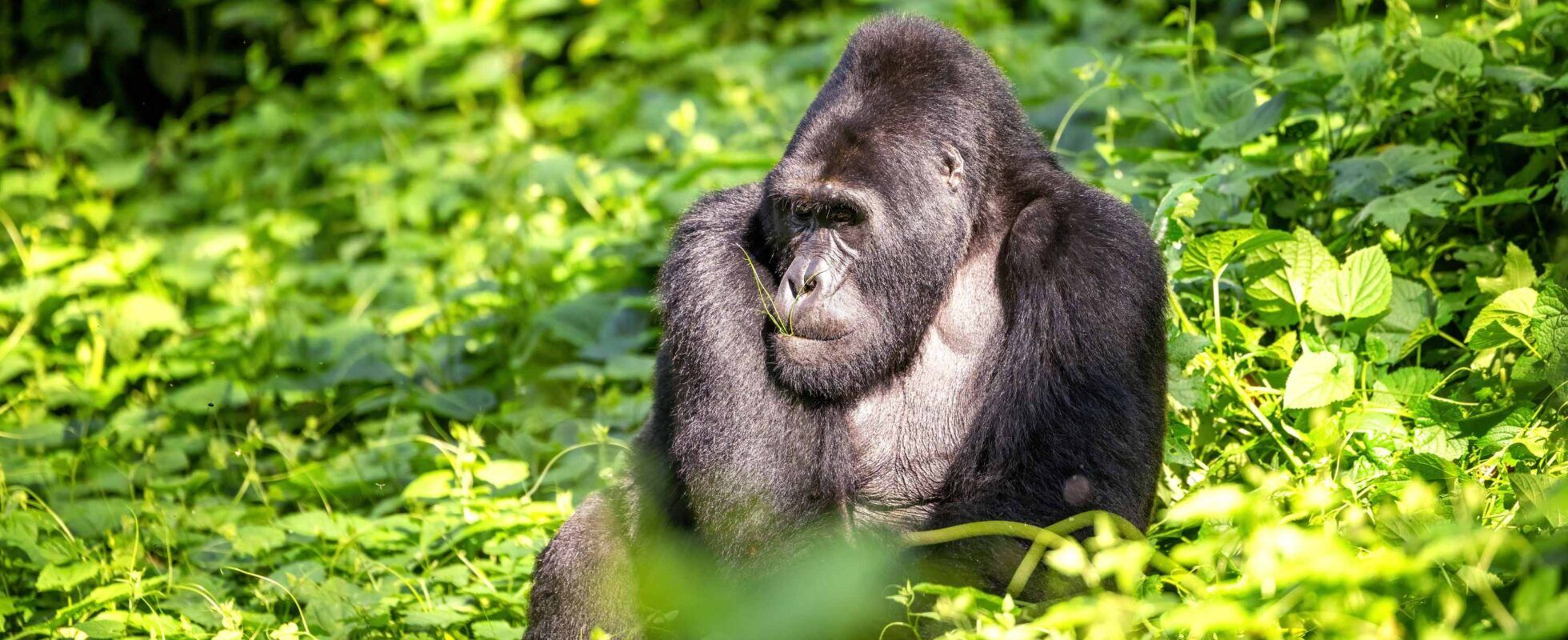
Yes! One of Uganda’s most iconic wildlife experiences is mountain gorilla trekking in Bwindi Impenetrable National Park or Mgahinga Gorilla National Park. These remarkable primates live in family groups and can be observed at close range with a permit and trained guide.
For more information on where and how to see gorillas in Africa, see our gorilla-trekking overview.
Absolutely. Uganda is rich in primate diversity. In addition to mountain gorillas, you can often spot chimpanzees in places like Kibale National Park, as well as various monkey species including colobus monkeys, blue monkeys, and vervet monkeys. These lively creatures add excitement and charm to forest walks and game drives.
Some of the top wildlife-viewing destinations include Queen Elizabeth National Park, known for its tree-climbing lions and varied game; Murchison Falls National Park, where the Nile roars through a dramatic gorge; and the forests of Kibale and Bwindi, famed for primates. Each park has its own unique ecosystems and animal highlights.
Yes, binoculars are highly recommended. Many animal sightings happen at a distance, and binoculars allow you to appreciate details you might otherwise miss. They’re especially useful for birdwatching and spotting wildlife in open savanna or dense forest canopies.
Best time to visit Uganda
Many travelers ask us when is the best time to visit Uganda. The truth is: the best time is always! Thanks to its stable and constant temperatures, it’s possible to visit Uganda all year round. Nevertheless (of course there’s a nevertheless), some seasons are better for specific activities than others. So the best travel time really depends on what you want to do.
The best time to visit Uganda is during the drier periods, which generally run from June to September and December to February. During these months, rainfall is lower, roads are in better condition, and wildlife viewing is excellent, making it an ideal time for both classic safaris and gorilla trekking.
That said, Uganda can be visited year-round. The wetter months, March to May and October to November, bring greener landscapes, fewer visitors, and exceptional bird watching opportunities. While short rain showers are more common, safaris remain very rewarding and often offer better value and a more tranquil experience.
Uganda is also the home to several unique events and festivals that are worth planning your trip around. Read more in our article “When to visit Uganda”.
In Uganda, you can see tons of wildlife all year round. During the dry seasons, however, the grass is short and dry, making it easier to spot animals flocking to lakes and rivers shores and waterholes to quench their thirst under the scorching sun. Another plus: the roads are dry and easier to access.
The rainy seasons present unique animal spotting opportunities as well. The parks enchant you with vibrant greenery and blooming flowers, providing a picturesque backdrop for observing many herbivores grazing peacefully (keep your camera close!). Furthermore, when the sun and rain meet, we all know what happens: rainbows appear, which add a magical touch to your safari adventure instantly.
Another highlight of the rainy season: it’s a birthing period for most animals. If you have a soft spot for adorable four-legged babies (who doesn’t?), this is undoubtedly a great time to explore Uganda’s wildlife. And should you love birds, you’ll be in paradise thanks to the many migratory birds flocking to and nesting in Uganda during these months.
If you want to lace up your hiking boots and visit the majestic mountain gorillas or the playful chimpanzees in their home, you best travel during one of the dry seasons. In these months, the forest trails are less slippery, and it’s easier to get to the animals. Bear in mind, though, that these activities are among the most popular ones in Uganda and that you need a permit for your hike. So if you want to put this on your to-do list, you’d better plan everything as early as possible.
Yes. Traveling to Uganda during the rainy seasons (mainly from March to May and in November) can be a rewarding experience. Rain usually falls in short showers rather than all day, and the countryside becomes beautifully green and lush.
Wildlife viewing remains good, especially in national parks, while birdlife is at its peak during these months. In addition, there are generally fewer visitors and more availability at lodges, often at reduced rates. This makes the rainy season an appealing choice for travelers looking for a quieter safari with excellent value.
No, there is no bad time to visit Uganda, only different travel experiences. Each season has its own advantages, whether that’s drier conditions, greener landscapes, fewer crowds, or lower prices. The best time to travel ultimately depends on your interests, priorities, and travel style, and we’re happy to help you decide what suits you best.
Weather Uganda
Uganda has a tropical climate with alternating wet and dry seasons that vary by region. Located along the equator, the country does not experience traditional summer or winter months; instead, temperatures remain fairly consistent throughout the year, while rainfall patterns change. Weather conditions can differ noticeably between lowland savanna’s, forested areas, and higher-altitude regions. Below are some common questions to help you understand what to expect when planning your Uganda safari.
Uganda has a tropical climate with clear wet and dry seasons throughout the year. Thanks to its location near the equator, temperatures remain fairly consistent year-round. Lowland areas tend to be warmer, while higher-altitude regions, such as the southwestern highlands, are cooler and more temperate. Daytime temperatures generally range between 20 °C and 30 °C, depending on the region and season.
The dry seasons run from June to August and from December to February. The most popular months for a safari or trekking are the dry months of June, July and August, which for a big part coincides with summer holidays in the Northern Hemisphere.
The rainy seasons, or wet seasons, run from September to December and from March to May, with the heaviest rainfall usually happening in April and October. Since the northern region are out of the tropical belt, it experiences only one rainy season, from March to October. In the northeast though, the climate is semiarid, and the region can even witness some droughts.
Yes, the weather in Uganda varies by region and altitude. Lowland areas and savanna regions, such as Murchison Falls National Park, tend to be warmer and drier, while higher-altitude areas like Bwindi Impenetrable National Park and the southwestern highlands are cooler and can receive more rainfall. Temperatures are generally mild year-round, but mornings and evenings can feel noticeably cooler in elevated regions.
In this article we tell you more about the weather in Uganda.
What you pack for Uganda depends on the regions you visit and the time of year:
- Dry seasons (June to October, January & February): Pack lightweight, breathable clothing, sun protection, and a light jacket or fleece for cooler mornings and evenings, especially during game drives.
- Rainy seasons (March to May & November): A lightweight rain jacket, quick-drying clothes, and waterproof walking shoes are recommended.
- Highland and forest areas: In places such as Bwindi or Kibale, temperatures can be cooler, particularly in the early morning and evening, so an extra warm layer is useful.
Dressing in layers ensures comfort throughout the day as temperatures and conditions change.
Safety in Kampala & Entebbe
Kampala and Entebbe are the main cities travelers visit at the start or end of their journey through Uganda. Like in any major city worldwide, it’s important to stay aware of your surroundings and follow basic safety precautions. With sensible behavior and local guidance, both cities can be explored comfortably and safely.
Kampala is generally safe for travelers, especially in central areas, reputable hotels, and business districts. Like in any large city, it’s important to stay aware of your surroundings and follow basic safety precautions. We recommend using trusted transportation, avoiding walking alone at night, and following advice from your guide or hotel staff. Most visitors experience Kampala without any safety issues.
Entebbe is the main gateway to Uganda, as this is where the international airport is located. Entebbe is considered very safe and relaxed, particularly around hotels, the lakeside, and near the international airport. As with any destination, it’s wise to keep valuables secure and remain alert in public places. Staying in reputable accommodations and using arranged transport ensures a smooth and worry-free stay.
Taking a few common-sense precautions will help ensure a smooth and enjoyable trip. Keep personal belongings secure, make use of hotel safes where available, and choose official taxis or pre-arranged transfers for getting around. Following local advice and guidance from your lodge or guide allows you to explore Uganda comfortably and with peace of mind.
Flying Doctors in Uganda
When traveling through Uganda’s more remote safari regions, medical facilities may be far away. AMREF Flying Doctors provide a vital safety service, with 24/7 emergency medical support and air evacuation throughout the country. Their presence offers added peace of mind when exploring Uganda’s national parks and wilderness areas, where quick access to advanced care may otherwise be limited.
AMREF Flying Doctors operate a 24/7 air ambulance and emergency medical support service across Uganda. In the event of a serious medical situation, they can provide immediate assistance and arrange evacuation from remote safari areas to a suitable medical facility, often in Entebbe or Kampala, depending on the situation. This service offers valuable peace of mind when traveling through Uganda’s more isolated regions.
Flying Doctors coverage focuses exclusively on emergency medical assistance and evacuation. It does not cover hospital treatment, medical expenses, medication, or any related costs. For this reason, Flying Doctors services should always be used in combination with comprehensive travel and health insurance, which remains essential for your trip.
Many safari areas in Uganda are located far from major towns and medical facilities. Having Flying Doctors coverage provides added reassurance while traveling through remote national parks and wilderness areas, knowing that professional medical evacuation support is available at any time should an emergency arise.
Let us create your tailor-made trip
Receive a free, no obligation quote
Start planning your dream trip