
Travel Advice

It is completely natural to wonder what to expect when traveling to Namibia. Located on Africa’s southwest coast, this country is welcoming, safe, and easy to explore, renowned for its grand desert landscapes and spectacular wildlife.

To help you prepare with complete peace of mind, we have gathered answers to the most frequently asked practical questions. Whether you are a seasoned road trip enthusiast or discovering Africa for the first time, these guidelines will ensure you are ready to fully enjoy the incredible adventures ahead. For those who cannot wait, please note that our tailor made Namibia itineraries are currently being finalized and will be online very soon. In the meantime, you can already find comprehensive answers to universal travel topics in our general FAQ to start planning your journey.

Namibia is a very safe destination, especially when traveling with professional guides. As in any country, enjoying it to the fullest simply means practicing a few smart habits in main cities.

To keep your journey worry-free:

  • Opt for private transfers or a personal rental vehicle.
  • Avoid driving after dark due to wildlife on the roads.
  • Keep your personal belongings secure and leave flashy jewelry at home.
  • Store your official documents in your lodge’s safe.

Following these simple guidelines ensures complete peace of mind throughout your adventure!

Visa

To enter Namibia, you will need a valid tourist visa. You can easily apply for an eVisa online via the official immigration website before you fly, or obtain a Visa on Arrival at the airport.

Below is everything you need to know to prepare for your entry smoothly:

The standard tourist visa is a single-entry visa, valid for a stay of up to 90 days, and costs approximately 85 USD.

The Namibian government allows international travelers to apply for a tourist visa online before arrival. While you can obtain it upon landing, applying in advance for an eVisa is highly recommended for two main reasons:

  • Bypass the queues: you can head straight to passport control, completely skipping the long payment lines at the airport.
  • Peace of mind: you land knowing your visa is already approved and paid for.

Applications must be submitted exclusively through the official Namibian government eVisa portal. Avoid third-party websites to prevent hidden fees or unreliable processing.

To support you, we provide a step-by-step visa guide, and our consultants are always here to help. Once submitted, online visas are typically processed within a few working days. Simply print your approved eVisa or save a digital copy to present upon landing.

Namibia offers Visas on Arrival directly at Hosea Kutako International Airport in Windhoek. The cost is 1,600 NAD (approximately 85 USD).

While convenient, payment lines at the airport can back up significantly after international flights.

To ensure a smoother arrival, we still recommend securing your eVisa online before departure so you can bypass these queues.

For the smoothest entry, we recommend applying for your eVisa online via the official website before departure. While visas on arrival are available at the airport, securing yours in advance ensures you skip the payment queues and enjoy a more peaceful arrival.

To ensure a smooth entry into the country, we recommend submitting your eVisa application at least two to three weeks before departure. Before you begin the online process, gather your core essentials: a passport valid for at least 6 months beyond your return date with 3 blank pages, a clear digital scan of your passport’s biodata page, a recent passport-style photo, and a credit or debit card for the online fee. You will also need to have your confirmed flight itinerary and accommodation details close at hand, as the application requires you to list your destinations.

If you are traveling with minors under the age of 18, Southern African border regulations require careful preparation to prevent delays. You must carry a full unabridged birth certificate in English (or with an official certified translation) displaying the details of both parents. Furthermore, if a child is traveling with only one parent, a certified parental consent letter from the non-traveling parent is strictly mandatory.

Once your eVisa is approved, remember to print a hard copy to sign in front of the immigration officer upon arrival, and always double-check the latest immigration updates before you fly.

Travel Insurance

We highly recommend securing comprehensive travel insurance before departing for Namibia.

Having the right coverage ensures that unexpected events (such as flight delays, medical emergencies, or luggage issues) won’t disrupt your journey. Taking out insurance allows you to explore the country with complete confidence and peace of mind.

Comprehensive travel insurance is essential for a Namibian safari, particularly when exploring remote wilderness areas where access to immediate medical facilities can be limited. A reliable plan protects you against the unexpected by covering medical emergencies, medical evacuation, and trip cancellations, allowing you to travel with peace of mind.


We highly recommend Chapka Travel Insurance for your trip.

Chapka offers comprehensive, tailored coverage designed for safaris, ensuring you are protected both before and during your journey.

Their plans cover major unforeseen events with clear benefits:

  • 24/7 medical assistance: access to a round-the-clock medical teleconsultation service (with French-speaking doctors) and full coverage for emergency medical expenses and hospitalization.
  • Complete travel protection: coverage for trip cancellations, interruptions, immediate repatriation, search and rescue operations, and lost baggage.

With Chapka, expert support and reliable solutions are always just a quick call away.

Vaccinations

While Namibia stands as one of the healthiest and safest countries to visit in Africa, taking a few proactive health precautions will ensure total peace of mind for your journey.

Because health requirements vary based on your specific itinerary, we strongly advise consulting your doctor or a specialized travel clinic at least 4 to 6 weeks before departure to receive personalized guidance tailored to your medical history.

Since travel regulations can shift, it is also best practice to cross-reference your plans with official resources like the World Health Organization (WHO) or your local health authority for the most accurate, up-to-date entry guidelines.


A yellow fever vaccination certificate is not required if you are traveling directly from Europe or North America.

However, it is strictly mandatory for all travelers aged 9 months or older arriving from (or having transited for more than 12 hours through) a country with a risk of yellow fever transmission. If this applies to your itinerary, you must bring your official yellow vaccination booklet.

Keeping your health on track starts with a quick review of your standard medical record, ensuring your routine vaccinations like MMR and Tdap are fully up to date.

For a journey to Namibia, health authorities generally recommend securing protection against Hepatitis A and B, while additional vaccines for Typhoid and Rabies might be suggested by your doctor depending on how long you stay and whether your adventures take you deep into remote rural areas.

When it comes to malaria, the risk is not nationwide; it is highly seasonal and almost entirely confined to northern regions like Etosha and the Zambezi Region during or just after the rainy months. If your itinerary brings you to these specific northern zones, taking preventive medication is highly recommended, alongside packing long-sleeved clothing to wear during the cooler evenings. You can travel with peace of mind knowing that northern lodges are fully equipped with mosquito nets, whereas the arid southern regions of the country are virtually risk-free and require no such precautions.

General Tipping in Namibia

While tipping in Namibia is entirely optional and a personal choice based on your satisfaction, it is a highly appreciated custom across the tourism sector and a rewarding way to thank lodge staff, trackers, and drivers for outstanding service. Navigating local etiquette is effortless, as your private guide is always available throughout the journey to share tailored advice and help you handle any specific situation with confidence on the ground.

For safari guides and drivers, a tip of approximately 10 to 15 USD per person, per day (around 200 to 300 NAD/ZAR) is standard.

This amount can naturally fluctuate depending on your group size and the level of service provided. Guests often choose to tip at the higher end to reward exceptional service, local expertise, and fluid navigation throughout their journey.

When it comes to thanking the team at your accommodations, most lodges and camps provide a communal tip box at reception. This collective contribution is shared among the entire team behind the scenes, including housekeeping, kitchen staff, and maintenance, with a gratuity of 5 to 10 USD per person, per day (about 100 to 200 NAD/ZAR) considered standard.

For porters or local helpers who handle your luggage directly or offer a personal service, it is customary to show your appreciation with a small individual tip of 20 to 50 NAD/ZAR.

Currency & Money

Namibia’s currency system is highly convenient, as the official Namibian Dollar (NAD) is pegged 1:1 with the South African Rand (ZAR), meaning both currencies are accepted interchangeably everywhere you go.

While credit and debit cards like Visa and Mastercard are widely used at most lodges, shops, and fuel stations, it is always wise to keep some cash on hand for tipping and small roadside purchases.

If you plan to bring US Dollars or Euros to exchange locally, just make sure your banknotes are crisp, clean, and printed from 2013 onwards, as local banks routinely reject older or damaged bills.

As a general guideline, bringing 200 to 400 USD per person in cash is recommended for your journey.

Since your safari already includes accommodations, meals, transport, and scheduled activities, your additional expenses will mostly be limited to drinks, souvenirs, tipping, and optional extra adventures.

Visa and Mastercard are widely accepted for shopping and settling your bar tab at almost every lodge, but cash remains essential for tipping and local craft markets.

You can easily exchange your foreign currency at the airport into Namibian Dollars (NAD) or South African Rand (ZAR), which is highly recommended as standard shops and markets do not accept foreign cash directly.

Yes, credit and debit cards, primarily Visa and Mastercard, are widely accepted across Namibia, allowing you to easily pay at most lodges, restaurants, larger shops, and fuel stations.

While the payment network is generally highly reliable, minor signal interruptions can occasionally occur in remote, deep wilderness areas. Because of this, we always recommend carrying a small amount of local cash (NAD or ZAR) as a reliable backup to handle tipping, park entry fees, or unexpected roadside artisan purchases.

Language & Culture

Namibia’s vibrant identity is shaped by a rich tapestry of diverse African traditions and European historical influences.

Taking a moment to familiarize yourself with local customs and histories before you depart will completely transform your journey, allowing you to connect authentically with the people you meet and enrich every daily interaction along the way.

English is the official language of Namibia and is widely spoken throughout the country, particularly within hotels, lodges, and the tourism industry.

In daily life, Namibia is highly multilingual. Depending on the regions you visit, you will frequently hear:

  • Oshiwambo (the most widely spoken local language),
  • Afrikaans and German (reflecting historical influences),
  • Indigenous click languages, such as Nama and Damara.

Namibians are generally incredibly polite, open, and helpful, and you will find that vendors in local markets and craft villages are remarkably relaxed and never pushy, allowing you to browse completely at your own pace.

The true secret to smooth daily interactions lies in understanding that greetings are a fundamental pillar of daily life; it is considered a basic sign of respect to always take a brief moment to say a warm hello and ask how someone is doing before asking for directions or starting a transaction.

Communicating across the country is completely straightforward, as English is the official language and is widely and fluently spoken across all major towns, lodges, and safari destinations.

Time difference

Wondering about the time difference? Here’s what to expect when traveling to Namibia.

Namibia operates on Central Africa Time (CAT) and does not observe daylight saving time. It shares this same time zone system with Botswana and South Africa.

For European travelers, there is little to no time difference: Namibia is 1 hour ahead of Central European Time (CET) in winter, and at the exact same time during the rest of the year (European summer).

For travelers from the United States, Namibia is 6 to 9 hours ahead, depending on your location. This minimal time difference for most visitors means you can enjoy your safari straight away with virtually no jet lag!

What to Bring

Packing for Namibia requires balancing comfort, practicality, and layers.
While days are warm and sunny, desert temperatures drop sharply, leading to cold mornings and chilly evenings.

Below are the frequently asked questions to ensure you are fully prepared and correctly equipped for your safari.

Dressing for a successful safari is all about adapting to the desert environment, which is why we recommend choosing lightweight, breathable clothing in neutral tones like khaki, sand, or olive to blend into the landscape and naturally hide the inevitable desert dust.

The golden rule for Namibian weather is layering: while days are hot, early morning game drives and coastal cruises are remarkably cold, making it essential to pack a warm fleece, a windproof jacket, and a beanie. To protect yourself from the intense African sun, always carry high-protection sunscreen, polarized sunglasses, and a wide-brimmed hat, paired with comfortable, closed-toe walking shoes for any stops along the way.

When it comes to your electronics, keeping your camera and phone safe requires just a bit of forward planning. We highly recommend bringing a dust-proof case or bag to shield your sensitive gear from the omnipresent, fine desert sand that can easily compromise lenses and charging ports. Finally, because those crisp, chilly desert mornings tend to drain power much faster than usual, always make sure to pack spare batteries and portable power banks so you never miss a single wildlife moment.

Yes, dressing correctly is absolutely essential to comfortably navigate Namibia’s sharp temperature swings, which transition rapidly from crisp, cold mornings to hot afternoons.

The ultimate strategy for a game drive is the layering method, wearing a warm fleece and a windproof jacket over light t-shirts so you can effortlessly adapt as the sun rises.

For your palette, stick to neutral colors like khaki, tan, or olive, which serve the triple purpose of blending into the environment, avoiding attracting unwanted insects, and hiding the fine desert dust.

Finally, skip the sandals in the vehicle and opt for sturdy, closed-toe shoes so you can step safely in and out of the safari 4×4 and remain fully prepared for spontaneous short bush walks.

When preparing your personal items, safeguarding your health and comfort in the desert should be your first priority, starting with packing all necessary prescription medications in your hand luggage so they are always secure. Namibia’s exceptionally dry, windy climate and intense sun require a proactive approach to skincare, so you will want to have high-protection SPF 50+ sunscreen, a nourishing lip balm, and hydrating moisturizing eye drops close at hand to quickly counter the omnipresent desert dust. Rounding out your daily essentials with a reliable insect repellent will ensure you remain completely comfortable from morning drives to evening sundowners.

Beyond health care, a few targeted safari accessories will completely elevate your viewing experience on the ground. A pair of high-quality binoculars is highly recommended, as they allow you to spot elusive wildlife across the vast, shimmering horizons of Etosha’s plains. To keep everything organized, pack a small, dust-resistant daypack to carry with you in the vehicle, keeping your camera gear, a reusable water bottle, and your personal items fully protected from the sand and instantly accessible throughout the day.

For a smooth safari experience, skip the bright colors and strong fragrances, as they easily attract unwanted insects and can distract the wildlife.
Similarly, high heels and heavy, rigid boots are best left at home; comfortable, sturdy walking shoes are all you need for the desert terrain.

A critical rule to remember is that drones are strictly prohibited in all Namibian national parks and private reserves to protect both animals and guest privacy. Flying one without a formal government permit will result in heavy fines and immediate confiscation.

Lastly, packing logistics require a specific choice of luggage. Please avoid hard-shell suitcases and opt for lightweight, soft-sided duffel bags, which are essential to fit into the compact storage spaces of safari vehicles and light aircraft.

Yes. Please ensure all essential travel documents are organized and easily accessible. This includes your passport, travel insurance details, and copies of your flight and safari itinerary. Crucially, your passport must be valid for at least 6 months beyond your departure date and contain at least 3 completely blank pages. (Note: If traveling with children under 18, an unabridged multilingual birth certificate is required by Namibian customs).

For daily expenses, while credit cards are widely accepted, it is highly useful to carry a small amount of local cash (Namibian Dollars – NAD, or South African Rand – ZAR) for tipping, small roadside crafts, and minor expenses. As always, keep your valuables and original documents stored safely in your lodge room safes during your stay.

Safari costs in Namibia

While witnessing the towering dunes of the Namib Desert or tracking wildlife in Etosha is a definitive bucket-list dream, a Namibian safari is far more accessible and versatile than its exclusive reputation suggests.

The country beautifully accommodates a vast spectrum of travel styles, allowing you to design a journey that fits your precise pace and comfort level.
You can choose the freedom of a premium self-drive adventure staying in boutique desert lodges, or opt for the ultimate seamless convenience of an ultra-luxury fly-in safari utilizing private airstrips.

As a general baseline, a private mid-range to upscale safari in Namibia typically starts around 300 to 450 USD per person, per day. This rate is highly comprehensive, generally covering full-board boutique accommodations, a reliable private 4×4 vehicle, either for a self-drive adventure or accompanied by a professional guide, alongside national park entry fees and your daily activities.

It is worth noting that itineraries featuring ultra-exclusive desert lodges, private concessions, or remote fly-in transfers via light aircraft will command a natural premium, reflecting the exceptional luxury, ultimate privacy, and complex logistics required to operate seamlessly in these untouched landscapes.

The final investment for a Namibian safari is primarily shaped by a combination of timing, comfort choices, and logistics. Traveling during the peak dry season from June to October naturally commands higher rates due to optimal wildlife viewing conditions, while your choice of stay, ranging from charming character camps to ultra-luxury desert lodges, sets the core rhythm of your budget.

Beyond the baseline accommodation, the way you choose to bridge Namibia’s magnificent but immense distances plays a massive role in the overall cost. Opting for a classic, adventurous road safari keeps expenses more grounded, whereas integrating exclusive fly-in transfers via light aircraft will elevate the price while maximizing your time on the ground. Finally, choosing to stay within private concessions, which unlock exclusive privileges like night drives and off-road tracking, or adding premium experiences like hot-air ballooning over the dunes will naturally influence the ultimate scope of your itinerary.

The timing of your journey plays a massive role in travel costs, as Namibia’s safari prices directly mirror the dramatic shift between the dry and wet seasons of the Southern Hemisphere. The peak pricing window occurs during the dry winter months, from July to October, when the lack of rain forces wildlife to gather densely around permanent waterholes in Etosha. Because this offers the most effortless game viewing, premium lodges experience massive global demand, commanding their highest rates of the year and requiring bookings many months in advance.

Conversely, choosing to travel during the shoulder and low seasons between November and June opens up exceptional financial value. The spectacular “Green Season” from January to April brings brief afternoon showers that transform the parched desert into a vibrant, lush landscape filled with newborn animals and crisp, dust-free skies for photography. Exploring Namibia during these quieter months allows you to enjoy significant lodge discounts and excellent availability, all while experiencing the country’s iconic landscapes with a beautiful sense of exclusivity and fewer crowds.

To give you complete financial clarity before you travel, your private Namibian safari package is heavily inclusive, typically covering all boutique or luxury accommodations on a full-board basis, national park entrance fees, and your scheduled daily game drives. Your transport is also fully taken care of within the core price, whether you have opted for a dedicated private 4×4 vehicle with a professional driver-guide or a fully equipped self-drive rental tailored for the desert terrain.

Conversely, certain personal and logistical elements remain outside the standard package and should be factored into your travel budget. You will need to account for international flights, comprehensive travel insurance, and gratuities, alongside entry visa fees for the simple online eVisa or visa-on-arrival application. Depending on the luxury tier of your selected lodges, premium beverages and iconic, bucket-list activities (such as hot-air ballooning over Sossusvlei, scenic flights along the Skeleton Coast, or marine wildlife cruises in Walvis Bay) are usually billed separately as optional supplements.

Yes, absolutely. One of the greatest advantages of a tailor-made Namibian safari is its incredible structural flexibility, allowing the overall cost to be easily optimized to fit your financial comfort level.

Your budget can be adjusted by choosing between the ultimate ease of a fully guided journey or the freedom of a premium self-drive adventure, or by mixing and matching different categories of boutique and luxury lodges throughout your route.

Furthermore, scheduling your journey during the stunning “Green Season” allows you to unlock exceptional property rates, ensuring we can design a high-end itinerary that perfectly aligns with your goals without ever compromising on the magic of the experience.

Food & Dining on Safari

Exceptional cuisine is central to the entire experience, blending European culinary heritage with vibrant Southern African flavors. Throughout your journey, you will savor world-class, organic game meats cooked over an open flame, fresh Atlantic seafood along the coast, and highly creative, thoughtful options for vegetarians. At your boutique lodges, gourmet three-course dinners are traditionally served under spectacular, starlit desert skies around a crackling boma fire. Because all meals are fully included within your itinerary, you are free to indulge in Namibia’s rich gastronomic landscape without a single logistical thought.

Yes, absolutely. To ensure your journey is completely smooth and stress-free, all meals are fully included throughout your time in Namibia. This comprehensive coverage spans breakfast, lunch, and dinner, whether you are dining at your boutique lodge, staying in a luxury tented camp, or enjoying a high-quality, chef-prepared packed lunch provided by your hosts during a full day of wilderness exploration or travel between destinations.

Safari cuisine in Namibia is held to an exceptionally high standard, smoothly blending international gourmet techniques with rich, local Southern African flavors. Your days will begin with extensive breakfasts often featuring freshly baked artisanal breads and pastries, while your evenings culminate in elegant multi-course meals prepared by talented local chefs. These dinners are frequently served around a crackling open boma fire, allowing you to dine in style under a spectacular canopy of desert stars.

The menus themselves are a true highlight of the journey, proudly showcasing premium, organic local game meats like oryx, kudu, or springbok, alongside fresh, locally sourced produce. For those following alternative diets, vegetarian and vegan options are not an afterthought; they are highly creative, flavorful, and readily available. Furthermore, all specific dietary requirements or allergies can be effortlessly accommodated by the lodge culinary teams with just a bit of advance notice prior to your departure.


Yes, absolutely. Most lodges and desert camps in Namibia accommodate vegetarian, vegan, gluten-free, or specific allergy-related needs. Because many properties are located in remote areas, ingredients are ordered and delivered in advance. Simply share your dietary preferences with us before your departure so the kitchen teams can prepare your meals accordingly.

On full days inside the parks, your lodge provides a packed picnic lunch so you can stay out longer and maximize your wildlife viewing.

Morning game drives also include a short coffee and tea break in the bush, while afternoon drives typically conclude with a traditional “sundowner” (a stop at a viewpoint for drinks and snacks as the sun sets). Drinking water is always available in your safari vehicle to keep you hydrated throughout the day.

Meals are included during your safari, but drinks are generally not, unless explicitly stated otherwise by the accommodation. Soft drinks, alcoholic beverages, and specialty coffees are usually charged separately and can be paid directly at the lodge.

Guides

An experienced safari guide is included in your itinerary to provide insights into local wildlife, landscapes, and culture. If you have specific requirements, such as a language-specific guide, these can usually be arranged in advance, subject to availability and potential additional costs.

Our safari guides are experienced local professionals with deep knowledge of Namibia’s wildlife, national parks, and cultural heritage. Many have grown up in or worked for years within the regions they guide, allowing them to expertly track animals, interpret wildlife behavior, and share engaging stories that bring each safari day to life.

All of our safari guides speak English fluently as a standard, and an English-speaking guide-driver is always included in your private itinerary at no extra cost.

Due to Namibia’s unique history, many local guides and lodge staff are also completely fluent in Afrikaans and German. Furthermore, we work with a select team of professional guides who are fluent in European languages such as French, Spanish, and Italian.

If you prefer a guide who speaks a specific language, please let us know well in advance. While we will do our best to accommodate your request based on availability, please note that private guides speaking languages other than English may incur an additional supplement.

Yes. Our guides are fully qualified and operate according to strict professional standards. Their training focuses on wildlife identification, conservation awareness, guest interaction, and safety procedures in the field. Regular refreshers and on-the-job experience ensure they remain knowledgeable, responsible, and confident while guiding safaris throughout Namibia.

Yes. Your safari includes a private driver-guide assigned exclusively to your vehicle, ensuring a personal and flexible experience throughout your journey. This allows you to set the pace of your game drives and focus on the wildlife and interests that matter most to you.

If you would like an additional specialist, such as a guide speaking a specific language or with particular expertise, this can be arranged in advance, subject to availability and at an additional cost.

Our guides share their daily lives with genuine enthusiasm and naturally adapt to their passengers.

If you are traveling with children, they know just how to adjust the day’s pacing, offering interactive and fun bush lessons to keep young minds engaged.

If you carry a specific passion for landscape photography, birdwatching, or botany, let us know: your guide will take the extra time needed, position the vehicle for the perfect golden-hour light, and share deep, specialized knowledge to enrich your experience.

Animals

Wildlife viewing in Namibia is shaped by the sheer scale of its open landscapes. Far from the dense savannahs of East Africa, animals here move across vast, unobstructed horizons. From the salt pans of Etosha to the rocky valleys of Damaraland, wildlife has adapted in fascinating ways to this arid environment.

Below is an overview of the species you can expect to encounter along your itinerary and how they live in these wide-open spaces.

Namibia’s wildlife is defined by its unique adaptation to the climate.

In Etosha National Park, viewing centers around the permanent waterholes where large numbers of animals gather, including herds of springbok, zebra, blue wildebeest, and gemsbok (oryx). The park also supports populations of lions, cheetahs, elephants, and both black and white rhinos. A spectacular highlight here is watching wildlife gather at these waterholes after sunset, as many are softly backlit for night viewing.

In the more arid landscapes of Damaraland and the Namib Desert, you can encounter specialized wildlife. This includes desert-adapted elephants and desert lions that have learned to survive for days without fresh water by navigating dry riverbeds across Damaraland and the Skeleton Coast.

Along the Atlantic coastline, the environment changes entirely, hosting large colonies of Cape fur seals on the shores.


While Namibia’s arid climate does not support primates or gorillas, the country is a key destination for specific wildlife conservation. It holds the world’s largest population of free-roaming black rhinos, alongside unique desert-adapted elephants.

In Damaraland, you can join local trackers to look for these endangered black rhinos on foot, offering a direct perspective on field conservation. Additionally, Namibia’s private reserves serve as important strongholds for cheetah and leopard protection, providing opportunities to see these predators while learning about the ongoing balance between wildlife and local communities.

At the coast, where the desert meets the Atlantic Ocean, the environment supports a distinct marine ecosystem. Along the Skeleton Coast and at Cape Cross, you can visit one of the largest mainland colonies of Cape fur seals in the world, where thousands of seals gather along the shoreline and surf.

Moving into the dunes, guided walks reveal the desert’s smaller, specialized wildlife, often referred to as the “Little Five.” These include creatures like the translucent Palmato gecko, the shovel-snouted lizard, and the sidewinder adder, which have developed specific behaviors to survive in the sand.

Namibia’s wildlife viewing varies by region, with each area offering a distinct environment. The primary destination is Etosha National Park in the north, centered around a large salt pan and a network of waterholes that attract lions, elephants, rhinos, and various plains game.

Further west, Damaraland offers a different setting where free-roaming desert-adapted elephants and black rhinos move through rugged, rocky valleys and dry riverbeds.

In contrast to these arid zones, the Zambezi Region (formerly the Caprivi Strip) in the far northeast features rivers and wetlands, making it the place to spot hippos, crocodiles, and large herds of buffalo.

Bringing a pair of binoculars is recommended for a safari in Namibia. While you will often get close to wildlife, particularly at the Etosha waterholes, the open landscapes and vast horizons mean that many animals, such as a leopard in a tree or a desert elephant on a distant ridge, are best viewed from a distance.

Binoculars allow you to observe specific wildlife behaviors, spot local bird species, and appreciate the details of the terrain throughout your journey.

Activities & excursions

Beyond traditional vehicle safaris, Namibia offers a variety of activities that connect you to its diverse landscapes. The terrain allows for experiences ranging from climbing the coastal sand dunes to tracking wildlife on foot or learning about local cultural heritage.

This diversity makes it possible to pace and tailor your itinerary to your specific interests.

Namibia’s diverse regions offer several options to extend your journey, each focusing on a different aspect of the landscape, wildlife, or cultural heritage.

Popular additions include:

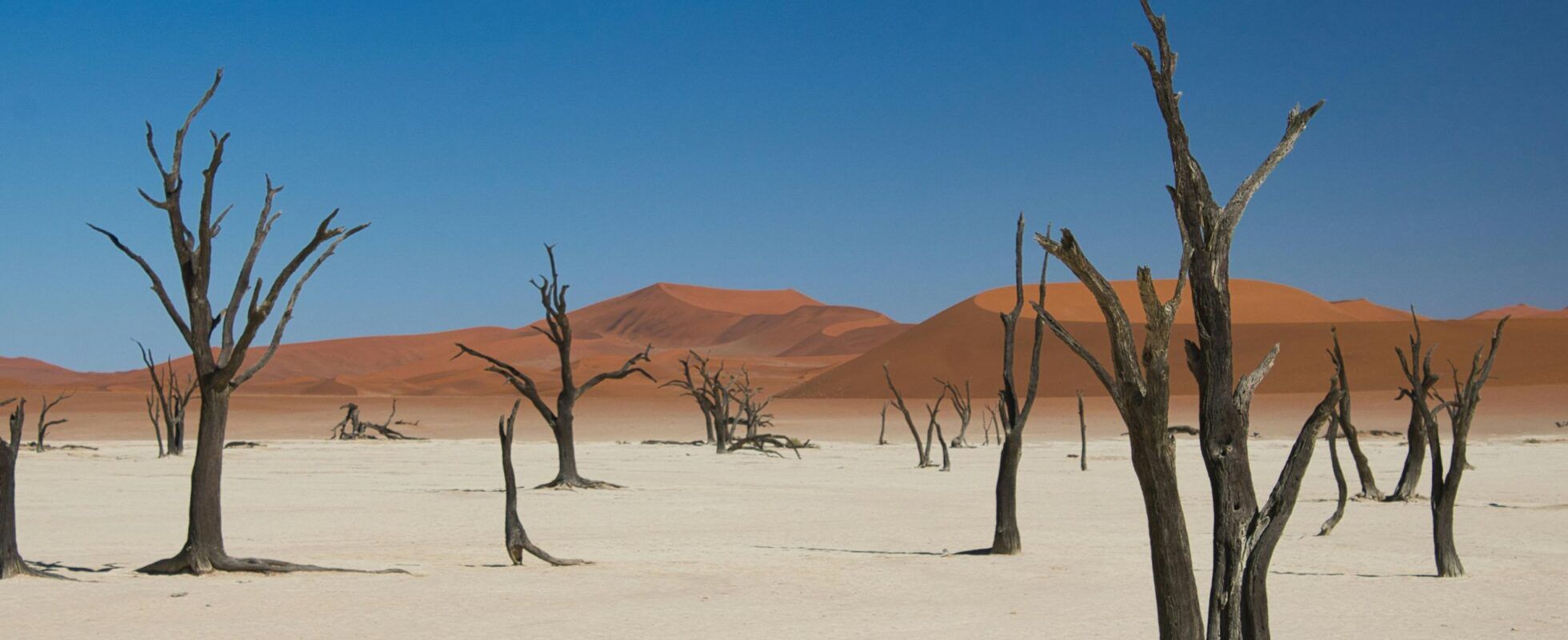
  • Sossusvlei & Deadvlei Dunes: a morning excursion to walk among the high sand dunes and explore the ancient clay pan with its characteristic dead camelthorn trees.
  • Marine Kayaking & Boat Cruises in Walvis Bay: a coastal excursion to see Cape fur seals, pelicans, and dolphins where the desert meets the Atlantic Ocean.
  • Desert-Adapted Rhino Tracking: a conservation-focused trek on foot in the valleys of Damaraland, accompanied by local rangers.
  • Living Desert Tour: a guided walk in the coastal dunes near Swakopmund to look for the specialized small fauna of the Namib Desert.
  • Cultural Visits: guided encounters with local communities, such as the Himba or the San, to learn about their traditions, history, and tracking skills.
  • Zambezi Region (Caprivi Strip): a river and wetland extension in the northeast, offering boat safaris and wildlife viewing distinct from the country’s arid zones.
  • Stargazing & Sleep-Outs: an overnight stay on an open-air platform in a private reserve to observe the night sky in a designated Dark Sky area.

Best time to visit Namibia

A question we are frequently asked is: when is the ideal time to travel to Namibia? Our honest answer is that there is no wrong time to go! Each season brings its own magic, making Namibia an amazing year-round destination. However (because there is always a “however”), certain months are better suited for specific experiences than others. Ultimately, the ideal time for your journey depends entirely on what you are most eager to discover.

The dry, cooler months from May to October are generally considered the peak period for wildlife viewing. As the vegetation thins, animals gather around permanent waterholes, making them easier to spot. Daytime temperatures are pleasant and road conditions are optimal for self-drive itineraries, though night temperatures in the desert can drop significantly.

The warmer months from November to April bring occasional rain and afternoon thunderstorms, which temporarily turn parts of the arid landscape green. While wildlife disperses away from the waterholes (making tracking more challenging) his season is well-suited for photography, birdwatching, and seeing newborn animals. Traveling during this period also means fewer visitors and lower seasonal rates.

For those interested in local culture, the calendar includes regional events like the Windhoek Karneval in April and traditional German-influenced festivals in October.

The dry season from May to October is the most practical time for wildlife viewing. Because water is scarce, animals are forced to gather in high concentrations around permanent waterholes, particularly within Etosha National Park. The thinning of the bush and low grass also provide much clearer visibility across the savannah. From a logistics standpoint, this period ensures that gravel roads and tracks remain dry, stable, and easily passable for self-drive vehicles.

Alternatively, the green season from November to April alters animal behavior and the safari experience. The arrival of rain prompts widespread birthing among plains game, making it the primary period to see newborn animals. This seasonal abundance of water and food also triggers the arrival of thousands of migratory bird species, which is ideal for birdwatching. While the resulting dense vegetation and scattered water pockets mean wildlife is much more dispersed and harder to track, the landscape offers distinctive green scenery and dramatic afternoon storm skies for photography.


The dry season from May to October is the most reliable period for tracking desert-adapted elephants and black rhinos in Damaraland. During these months, the lack of rain dries out the ephemeral riverbeds, making the sandy and rocky terrain stable for both vehicles and foot travel. Because water is scarce, these animals rely on specific, predictable springs and drainage lines, which makes locating them much more viable for trackers.

Because these excursions operate in fragile conservation areas, participant numbers are strictly limited to minimize the impact on the wildlife. Securing permits and tracking slots requires planning well in advance, particularly if traveling during the peak months of July and August.

Traveling to Namibia during the rainy season, which runs primarily from January to March, offers a distinct and practical alternative. Rainfall typically occurs as brief afternoon showers rather than continuous downpours, allowing the arid landscapes to temporarily turn green.

While wildlife disperses across new grazing areas (making animals less concentrated around specific points) birdwatching is at its peak. Additionally, this period sees fewer visitors and greater availability at lodges, often at lower seasonal rates, making it a suitable option for those seeking a quieter journey with good value.

There is no inherently bad time to visit Namibia, as each season simply offers a different experience.

The choice depends on your travel preferences, whether you prefer the clear skies of the dry season, the green landscapes following the rains, or a quieter journey with lower rates and fewer crowds.

The ideal period aligns with what you want to experience, and itineraries can be adjusted to match those priorities.

Weather Namibia

Namibia has a subtropical desert climate characterized by stark contrasts. Located in the Southern Hemisphere, its seasons are reversed compared to Europe and North America. The country experiences a distinct dry winter and a hot, partially wet summer.

Because Namibia is largely covered by the Namib and Kalahari deserts, temperatures can fluctuate dramatically between day and night. Below are some common questions to help you understand what to expect when planning your Namibia safari.

Namibia has a mostly arid and semi-arid climate with two main seasons: a dry, cooler winter and a warmer, wetter summer.

Unlike equatorial destinations, temperatures vary significantly depending on the region and the time of year. Summer daytime temperatures can easily exceed 35 °C (95 °F), while winter nights can drop below freezing (0 °C / 32 °F) in desert and inland areas.

The dry winter season runs from May to October. These months feature virtually clear blue skies and almost zero rainfall.

Daytime temperatures are very pleasant and sunny (around 20 °C to 25 °C), making it a highly popular time for safaris. However, mornings and nights can be extremely cold, especially in the desert and inland areas where temperatures frequently drop below freezing.

The rainy season, also referred to as the green season, typically runs from November to April.

This season brings warmer temperatures and occasional short afternoon thunderstorms, mostly affecting the central and northern regions. This is a beautiful time to travel if you want to witness green landscapes, excellent birdwatching, and newborn wildlife. Rainfall is generally low, meaning your trip will still feature plenty of sunshine.

Yes, Namibia’s geography creates extreme regional microclimates:

  • The Inland & National Parks (Etosha, Damaraland): These areas follow the classic desert pattern: intensely hot during summer afternoons and very dry and cold on winter nights.
  • The Atlantic Coast (Swakopmund, Walvis Bay, Skeleton Coast): Influenced by the cold Benguela Current, the coast experiences cool temperatures throughout the year. The most unique feature here is the dense morning fog, which commonly rolls in from the ocean and can last until midday before clearing.

Dressing in layers is the golden rule for a Namibian safari, especially during the dry winter months:

  • Dry Season (May to October): You need two wardrobes! Pack heavy winter layers for early morning game drives and desert sunrises (a warm fleece, windproof jacket, beanie, scarf, and gloves) because the desert morning chill is freezing. Pack lightweight, breathable summer clothes for the afternoons when the sun warms up.
  • Rainy/Green Season (November to April): Pack lightweight, quick-drying clothing, a light waterproof rain jacket for afternoon showers, and comfortable walking shoes.
  • Coastal visits (Swakopmund): Because of the cold Benguela Current and morning fog, always pack a warm jacket or windbreaker for the coast, even if you are visiting during the hot summer months!

Safety in Windhoek & Swakopmund

Windhoek and Swakopmund are the main hubs travelers visit during their journey through Namibia. Windhoek serves as the primary entry point, while Swakopmund offers a relaxed, secure coastal stopover with a wide range of activities and excellent accommodations. With sensible behavior and local guidance, both towns can be explored comfortably and safely.

Windhoek is generally safe for travelers, especially in central business districts, main tourist areas, and reputable hotels.

Like in any capital city, it’s important to stay aware of your surroundings, avoid walking alone at night, and keep your valuables secure. Most visitors experience Windhoek without any safety issues, enjoying its unique blend of African and European influences.

Swakopmund is considered exceptionally safe, relaxed, and tourist-friendly. It is a major, systematic step in our Namibian itineraries, allowing clients to enjoy a coastal break with total peace of mind. As with any coastal destination, remain alert in public spaces, keep your personal belongings secure, and follow the advice of your lodge or hotel staff.

Staying safe during a trip to Namibia involves practicing standard situational awareness and following basic precautionary habits. In urban centers like Windhoek or Swakopmund, it is important to keep valuables out of sight, avoid displaying signs of wealth, and utilize your accommodation’s room safes for original travel documents. When traveling around cities, using pre-booked transfers or registered taxis organized by your lodging is recommended over hailing unmarked vehicles on the street.

On the road and in remote areas, safety is primarily connected to route preparation. Avoid driving at night due to limited visibility and the high risk of wildlife or stray livestock on unpaved roads. Ensuring your vehicle is locked while parked and never leaving bags visible inside the cabin minimizes the risk of opportunistic break-ins. Following the explicit safety instructions of local guides and lodge hosts ensures a secure environment throughout your journey.

Emergency Medical Evacuation in Namibia

When traveling through Namibia’s remote desert regions and vast national parks, advanced medical facilities may be far away.

To ensure complete peace of mind, emergency medical air evacuation services operate 24/7 across the country. In the rare event of a serious medical situation, dedicated air ambulances can evacuate patients directly from remote bush airstrips.

Emergency air evacuation services operate specialized aircraft and helicopters staffed by medical professionals to provide rapid medical transport across Namibia.

In the event of a severe illness or injury in a remote desert or safari area, these services coordinate stabilized care on the ground and arrange transport to an advanced medical facility, typically located in Windhoek.

This operational framework provides necessary logistical backup when traveling through isolated regions where local clinics lack intensive care infrastructure.

Africa Safari Trips works directly with e-Med Rescue 24, the primary and widely preferred medical evacuation operator in Namibia.

Based in Windhoek, e-Med Rescue 24 operates a fleet of dedicated ground ambulances and air rescue aircraft. In an emergency, a medical flight is dispatched to stabilize the patient on-site and fly them directly to the best hospitals in Windhoek (Eros Airport), which serves as the main base for advanced medical care.

Emergency evacuation services focus exclusively on air ambulance transport, stabilization, and immediate transfer from remote areas to the hospital.

It does not cover long-term hospital treatment, medication, or related medical expenses. For this reason, emergency air evacuation services must always be used in combination with comprehensive travel and health insurance, which remains recommended for your trip.

Namibia’s beauty lies in its vast, isolated landscapes like Sossusvlei or the Skeleton Coast, which are located hours away from major towns. Having top-tier coverage with a trusted local operator like e-Med Rescue 24 provides absolute reassurance, knowing that professional medical evacuation support is available at any time, anywhere in the country.