
Travel advice for Botswana
You are about to embark on a remarkable journey to Botswana, one of Southern Africa’s most rewarding safari destinations. Renowned for its low-impact, high-quality wildlife experiences, Botswana protects vast tracts of pristine wilderness. Besides, Botswana is widely regarded as one of Africa’s safest and best-managed countries. It has a strong democratic tradition, low levels of corruption and a well-developed tourism infrastructure, even in its most remote regions. Read on for our expert tips that will help you step onto the plane peacefully and completely focused on the beautiful wildlife adventures that await you!
Take your pills (if you go to the north)
There are no compulsory vaccinations for Botswana. Also, there is no yellow fever disease in the country, and you can’t contract it there. All travelers should obviously be up-to-date on their routine vaccinations, but, to make it even easier, no documentation is needed when crossing the Botswana border (unless you arrive from a country with a risk of yellow fever transmission).
Malaria is present in Botswana, especially in northern areas such as the Okavango Delta and Chobe National Park. The transmission risk increases during the wet season (November to April) and drops significantly in the dry months (May to October) due to fewer mosquitoes. Nevertheless, it’s good to check with your physician if malaria medication is advisable. We also advise always wearing long sleeves and trousers after sunset and using insect repellents. Our lodges in malaria-prone areas are usually equipped with mosquito nets.
No visa needed
Coming from most European Union countries, the United States of America, the United Kingdom, Canada, Australia, New Zealand or South Africa, you don’t need a visa to enter Botswana. Your passport must be valid for at least six months after returning from Botswana, but other than that, you only need your flight tickets and (travel) insurance.
Learn Setswana (even though English takes you a long way)
Botswana has two official languages: English (used for government and business) and Setswana (Tswana). The latter is the dominant national language and is spoken by most people. While these two are primary, many people also speak one or more tribal languages, such as Kalanga, Ndebele, Herero or one of the Khoisan dialects. English is widely understood, especially in urban areas, but if you’re keen on communicating with the locals, we start you off with some magical Setswana phrases 😊
Hi – Dumela (to one person) or Dumelang (to more than one person)
How are you – O tsogile jang? (to one person) or Le tsogile jang? (to more than one person)
Thank you – Ke a leboga (pronounced “Kee-ah-leh-boh-gah”)
It’s a pleasure – Go itumetse
Think local!
Etiquette in Botswana comes with a gentle golden rule: slow down, greet properly, and don’t skip the fringes. Across this quietly gracious country, courtesy isn’t old-fashioned; it’s simply how things are done. A friendly “hello” is never optional. In fact, diving straight into a question without greeting first is the social equivalent of arriving uninvited and heading straight for the fridge.
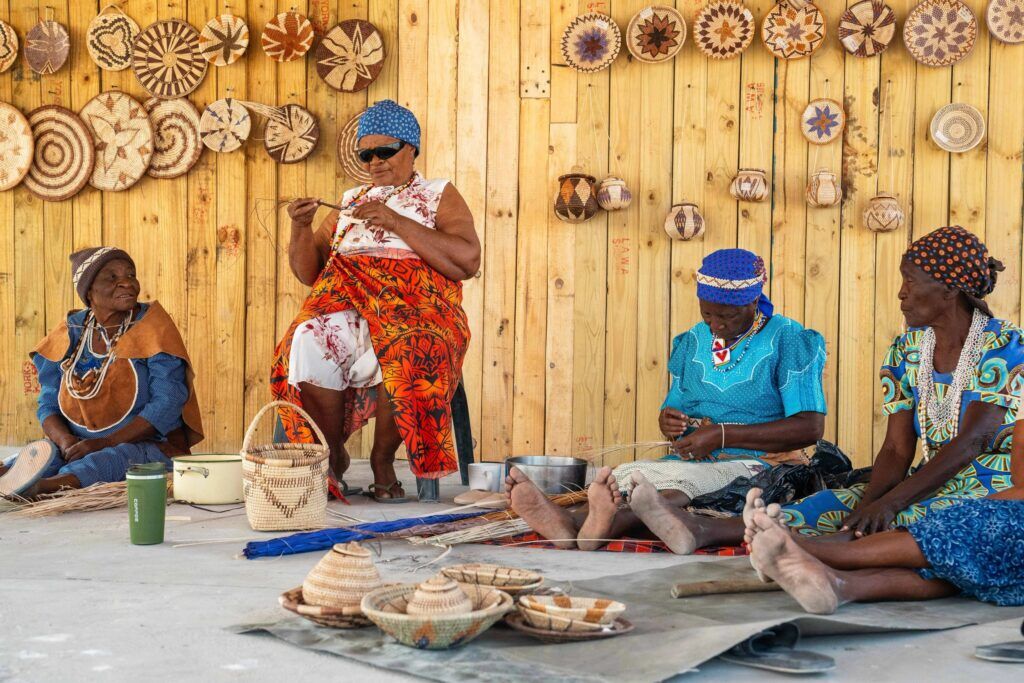
Respect, especially towards elders, sits at the heart of daily life. Greet older people first, keep things polite and unhurried, and you’ll fit right in. Public behavior is generally low-key – think understated rather than exuberant. Loud voices, pointing or staring won’t win you any points. Visiting local communities? A little cultural awareness goes a long way. Always ask before taking photos and remember that traditions are very much alive, particularly in rural areas.
Tipping in Botswana is customary for good service, particularly on safari, but it’s not mandatory. In restaurants, a 10% tip is standard, while in cities, small tips for petrol attendants and car guards are appreciated.
Dining etiquette is refreshingly relaxed. In lodges, you’ll dine much as you would at home; in local settings, meals may be more communal, sometimes enjoyed with hands or a spoon. The trick? Follow your host’s lead. In short, good manners, a bit of patience, and a warm smile will take you everywhere in Botswana.
Stay safe
Is Botswana safe to travel to? Our answer is clear: YES!
Botswana is even considered one of Africa’s safest countries. Of course, there are some urban areas to avoid in big cities like Gaborone, Maun or Francistown (especially at night) but that applies to any country in the world. And every traveler knows that it’s best not to leave valuables in the car. A good general rule is to ask your guide or your travel consultant about a place you’re interested in visiting – they’ll have a much better idea of its safety and can advise an alternative if necessary.
Money in hand
The official currency is the Botswana pula (BWP). Dollars are usually not accepted, only in some top-end safari lodges. To convert pula to euros, you can divide by 15 and be pretty close. But check the conversion rate before you leave because the currency is volatile.
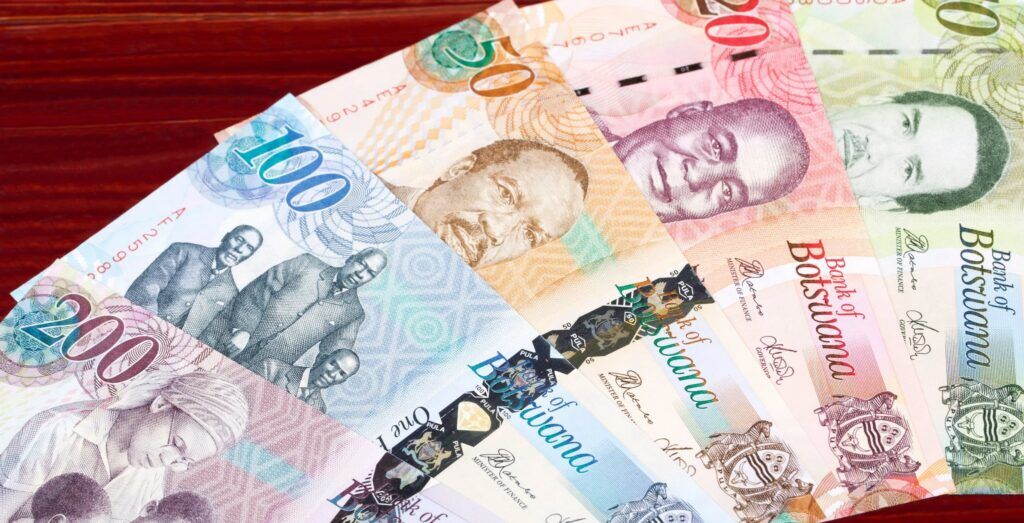
In Botswana, you generally pay cash using pula, or you pay by credit card. For small expenses and tips, paying cash with pula is preferred. The Botswana pula is not available or tradable outside the country, so it’s best to withdraw cash upon arrival. ATMs can be found in banks, at international airports and in larger towns. We recommend carrying enough cash and relying primarily on cards where possible. You can also use debit cards, just inform your bank to activate world coverage.
Know the time difference
The perks of travelling to Botswana if you come from Europe? No jet lag, and no need for an alarm clock to call the family back home! Europe and Botswana have equivalent time zones. Central Africa Time (CAT) is UTC+02:00, which is one hour ahead of Central European Time (and 2 hours ahead of the United Kingdom) from October to March. During the rest of the year, when daylight saving time applies in Europe, there is no time difference whatsoever. If you arrive from outside of Europe, the time difference will be more significant – but that’s part of the journey, right?
Safety First: Don’t forget your Travel Insurance
When it comes to embarking on your dream adventure to Botswana, your safety is our top priority! That’s why we urge all travelers to ensure they have comprehensive travel insurance in place before setting off. While Africa Safari Trips doesn’t provide travel insurance directly, we’re delighted to recommend Chapka Travel Insurance as your go-to provider for your upcoming trip.

With Chapka, you can rest assured that you’re fully covered for every aspect of your journey, from unexpected medical expenses to trip cancellations. Their personalized service means you only pay for what you truly need, giving you peace of mind to immerse yourself in the wonders of Botswana. So, before you pack your bags and set off on your safari, remember: safety first. Don’t forget your travel insurance with Chapka. Simply take out your policy directly on the Chapka website.
Let us create your tailor-made trip
Receive a free, no obligation quote
Start planning your dream trip