The San People
With eight officially recognized tribes, including the Bangwato, Barolong, and Bakwena, the Tswana form approximately 79 percent of Botswana’s population. The country is also home to a number of other ethnic groups, including the Kalanga, who at 11 percent form the second-largest group. Now we would like to focus on the San people and the BaBukakhwe, a San subgroup. Let’s explore their fascinating history, ancient traditions, and their deep commitment to conservation.



- Tailor-made safaris by true Africa specialists
- 5-star customer reviews
- Fair prices. Exceptional quality.

The San History
The San people, also known as San Bushmen, are among the world’s oldest cultures, dating back to around 44,000 BCE. They didn’t name themselves neither “San” nor “Bushmen.” While Dutch settlers came up with the latter for hunter-gatherer tribes, the first was established much later and means “foragers without cattle or other wealth”.
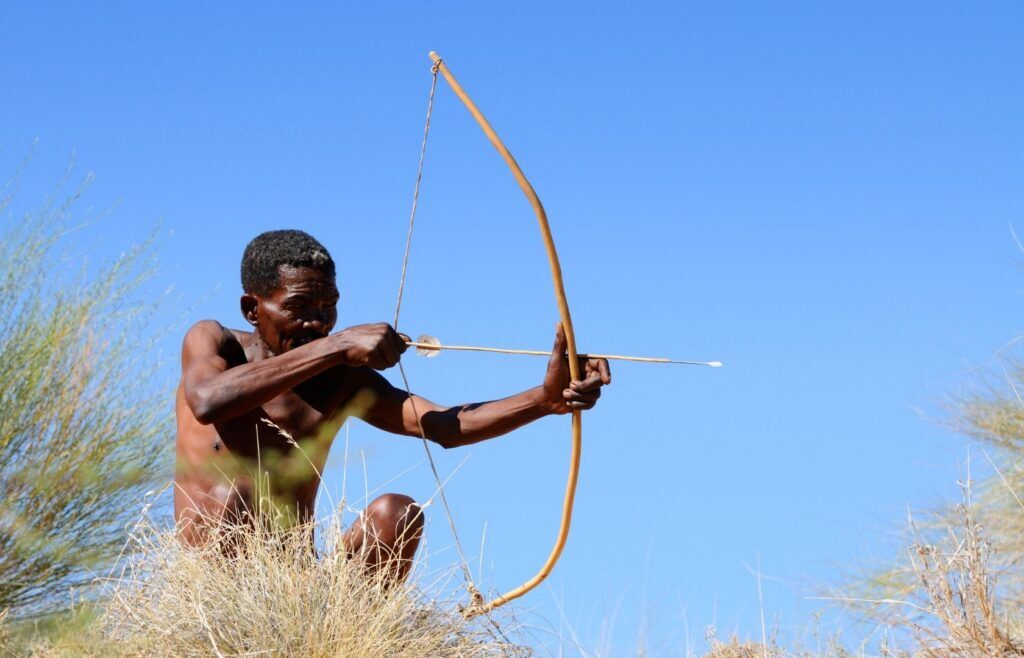
As hunters and gatherers, they’ve always had a deep connection to the local flora and fauna, relying on their profound knowledge thereof. Today, around 130,000 San live across six countries in Southern Africa, with approximately 63,000 living in Botswana. They don’t live as one people, though. They’re organized into clans and family groups in the northern and western parts of the country, for example, in the Kalahari or the Okavango region.
European colonization changed their way of life drastically, forcing them into smaller territories and causing loss of land, traditional food sources, and cultural identity.
Ancient Traditions Kept Alive
Today, fewer than 5% of the approximately 130,000 San still live as hunters and gatherers. Most San communities have adapted to the modern world but still uphold important traditions dating back centuries.
Trance Dance
This healing dance is still practiced by San communities in the Kalahari. Rhythmic dancing and hyperventilation lead to a state of altered consciousness. A spiritual energy called n/um takes healers into a state called !kia, used for healing sickness and resolving troubles in the community.
Plant Medicine
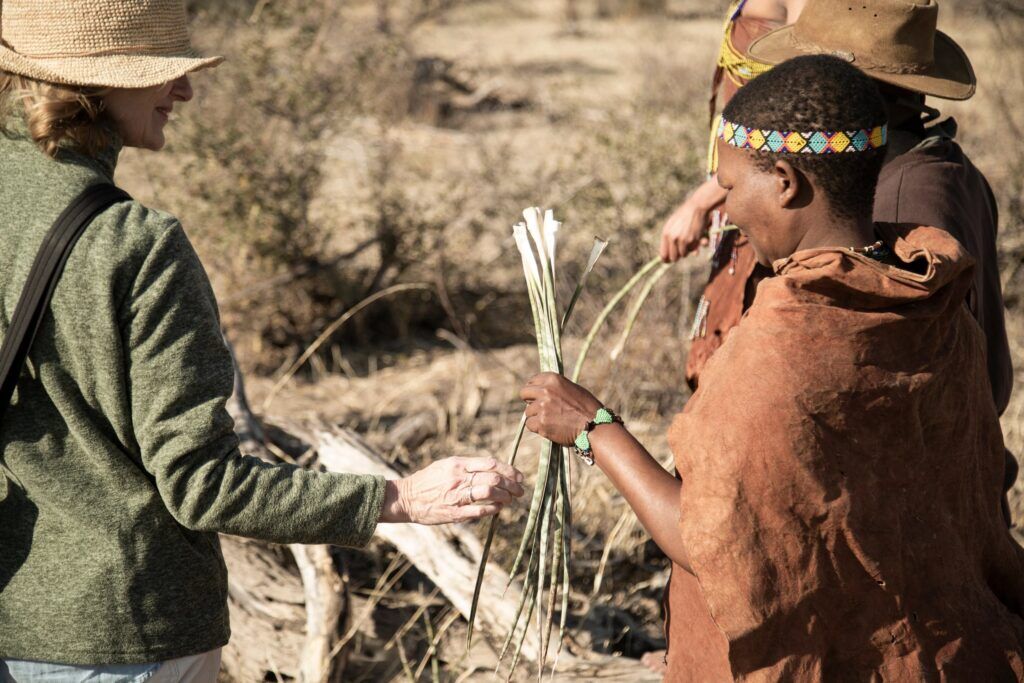
Due to their deep connection to nature, the San know their medicinal plants and still use them today. While the Hoodia plant supports suppressing hunger and thirst during long days in the bush, the Buchu plant helps with stomach ailments, fever, and infections.
Storytelling
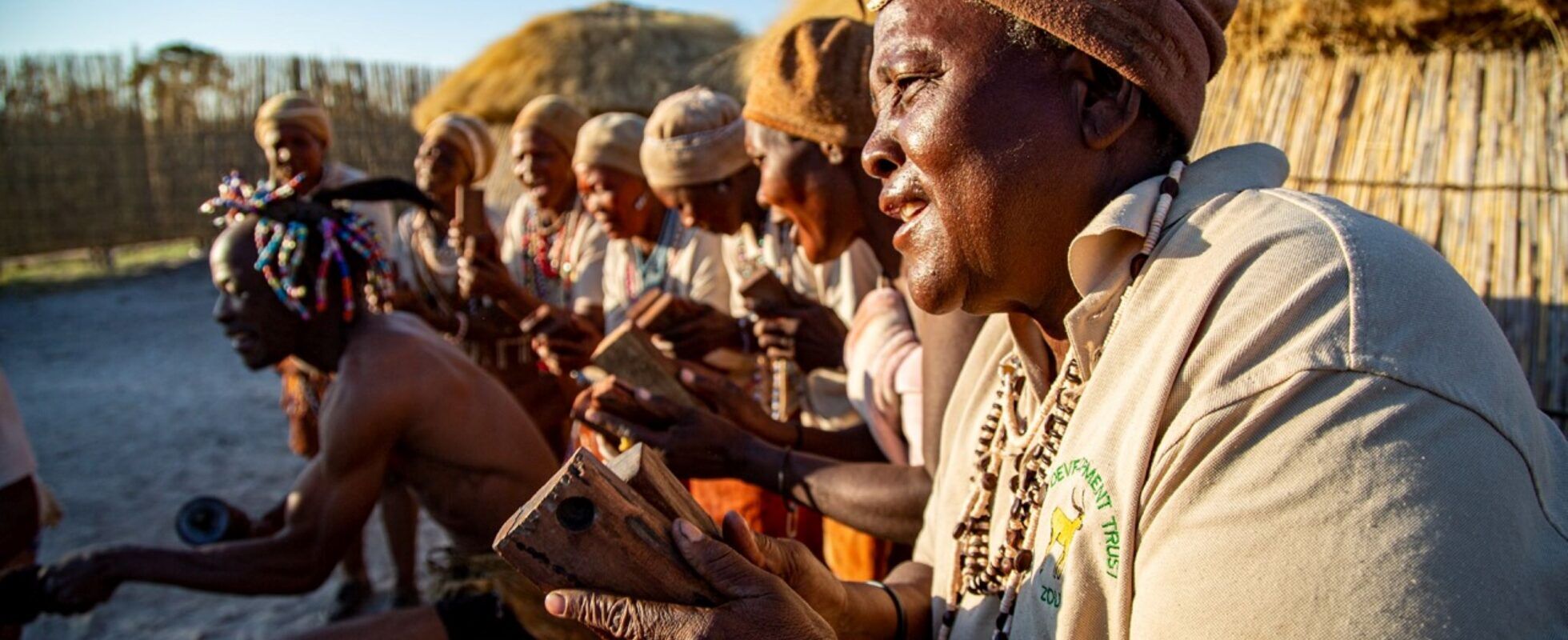
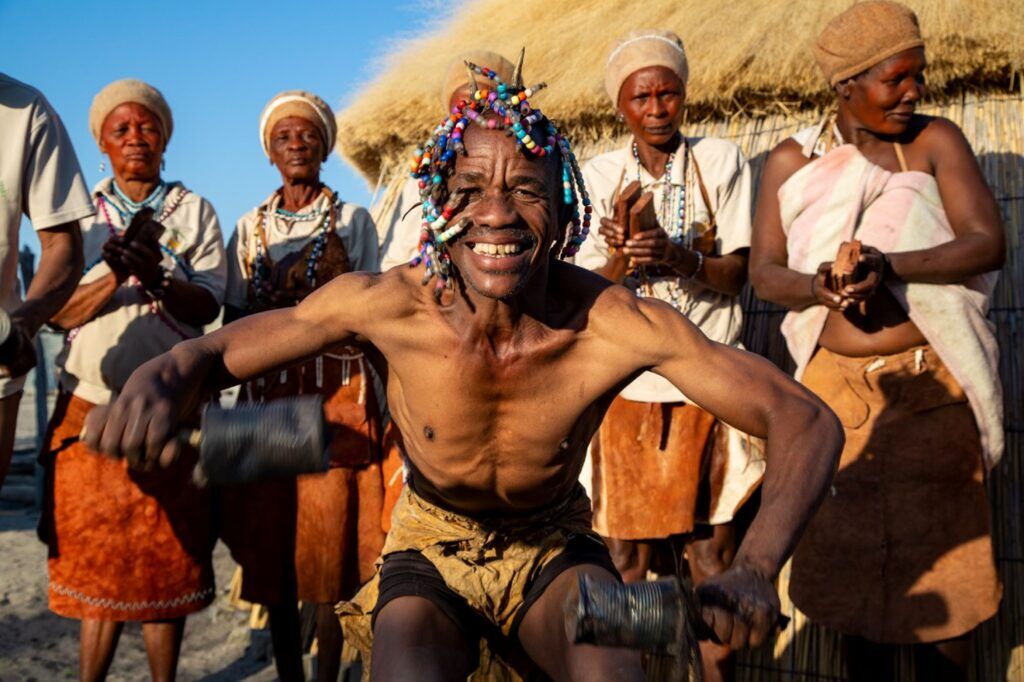
Through storytelling, music, and dance, the San pass down knowledge, strengthen social bonds, and preserve traditions. Stories about gods, animals, and the earth’s creation are believed to be tens of thousands of years old but are still told around the campfire.
Tracking
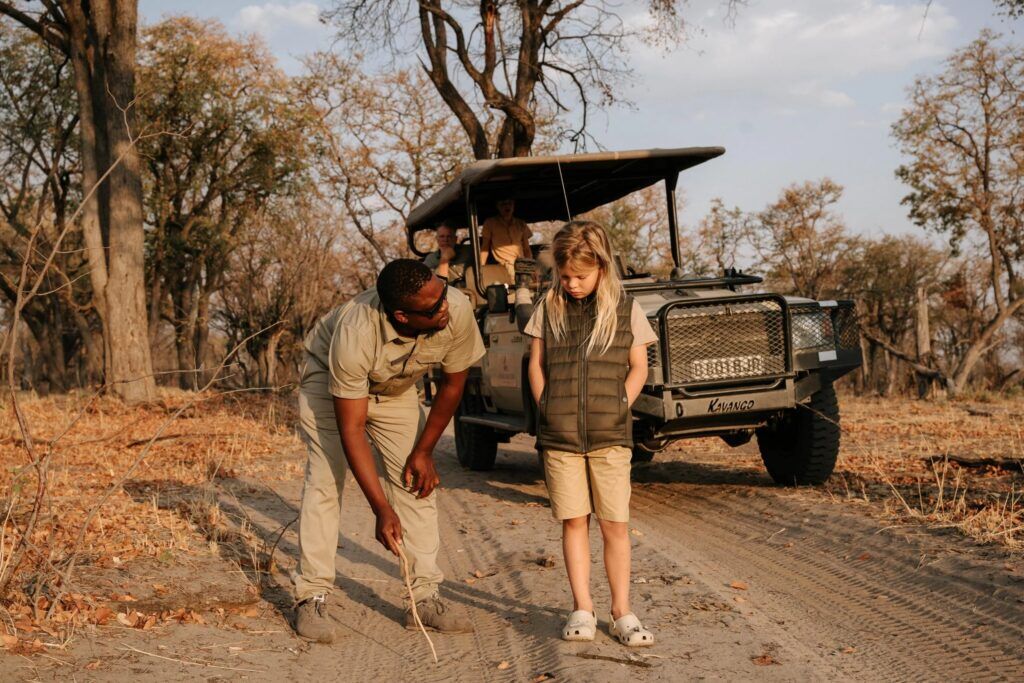
No matter if footprints, vegetation, or scent, the San have always relied on their senses, instincts, and knowledge to track down game. Today these skills are extremely valuable for conservation efforts, which is why they get hired by wildlife organizations or game reserves.
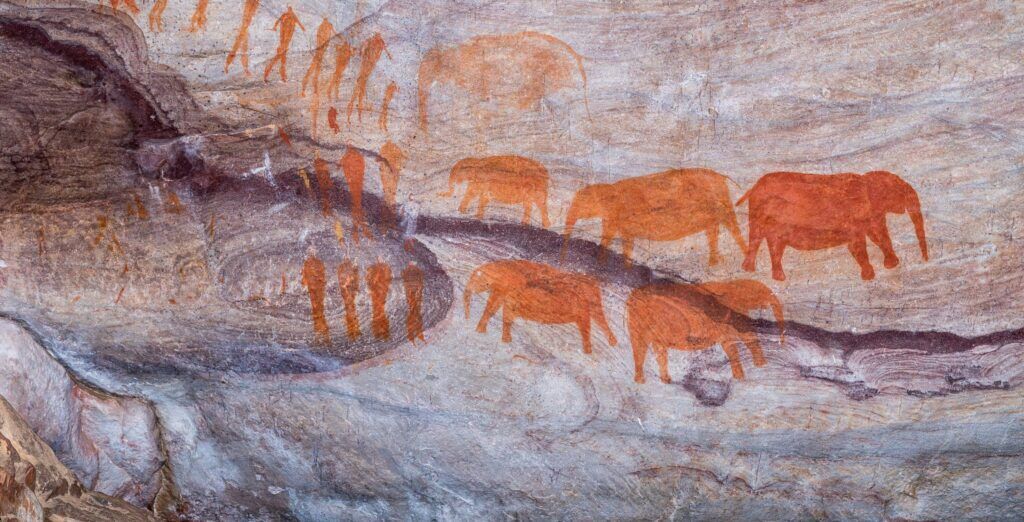
Rock Paintings
Back in the day, the San used rock paintings to pass on important messages and ideas to their descendants. Pictures of animals, figures, and geometric shapes are not just some of humanity’s earliest artistic expressions but also hold meanings only the San would know… and some impressive history buffs.
The Story of the BaBukakhwe
We move to one of the people’s subgroups, the BaBukakhwe. As one of the oldest inhabitants of the Okavango Delta, they’ve adapted to a life in the wetlands. Instead of following in the San’s footsteps as hunters and gatherers, they became fishermen and hunters of the waterways. This is also why they are named “River Bushmen”.
How do they live today?
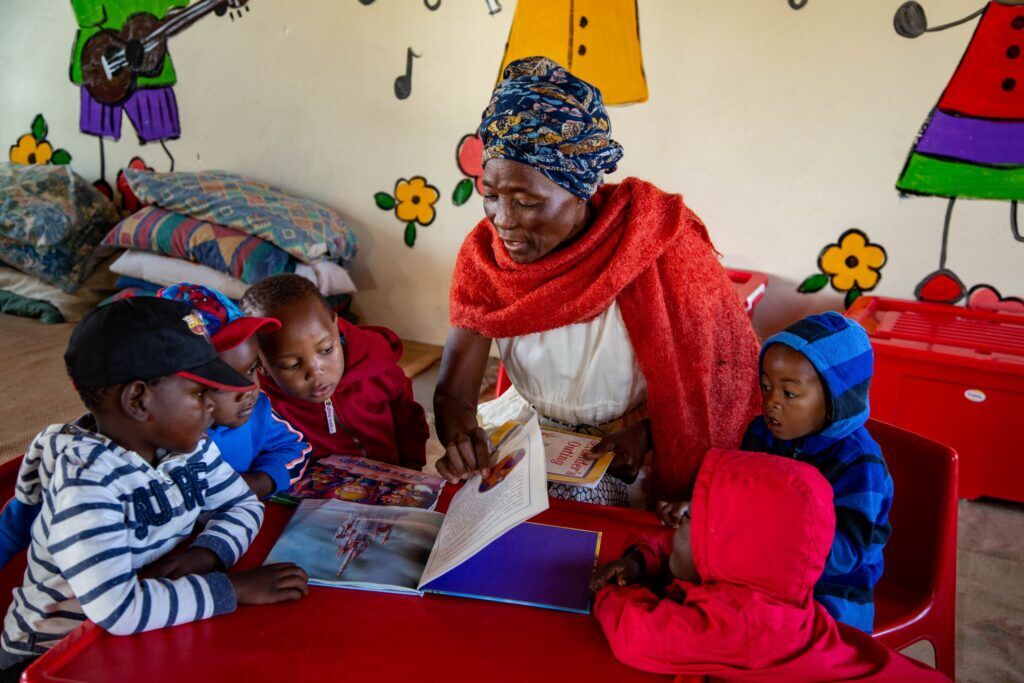
Not many BaBukakhwe still live the traditional way of life. The children attend school, where they learn reading, writing, mathematics, and sciences. Some smaller communities are at home in the eastern Delta or along the region’s waterways. Around 400 people live in the village of Khwai, one of their main settlements, in the north of Moremi Game Reserve. They have managed something extraordinary: they’ve forged a connection between their ancient way of life rooted in the knowledge of Botswana’s flora and fauna and the modern world.
Khwai Community Concession
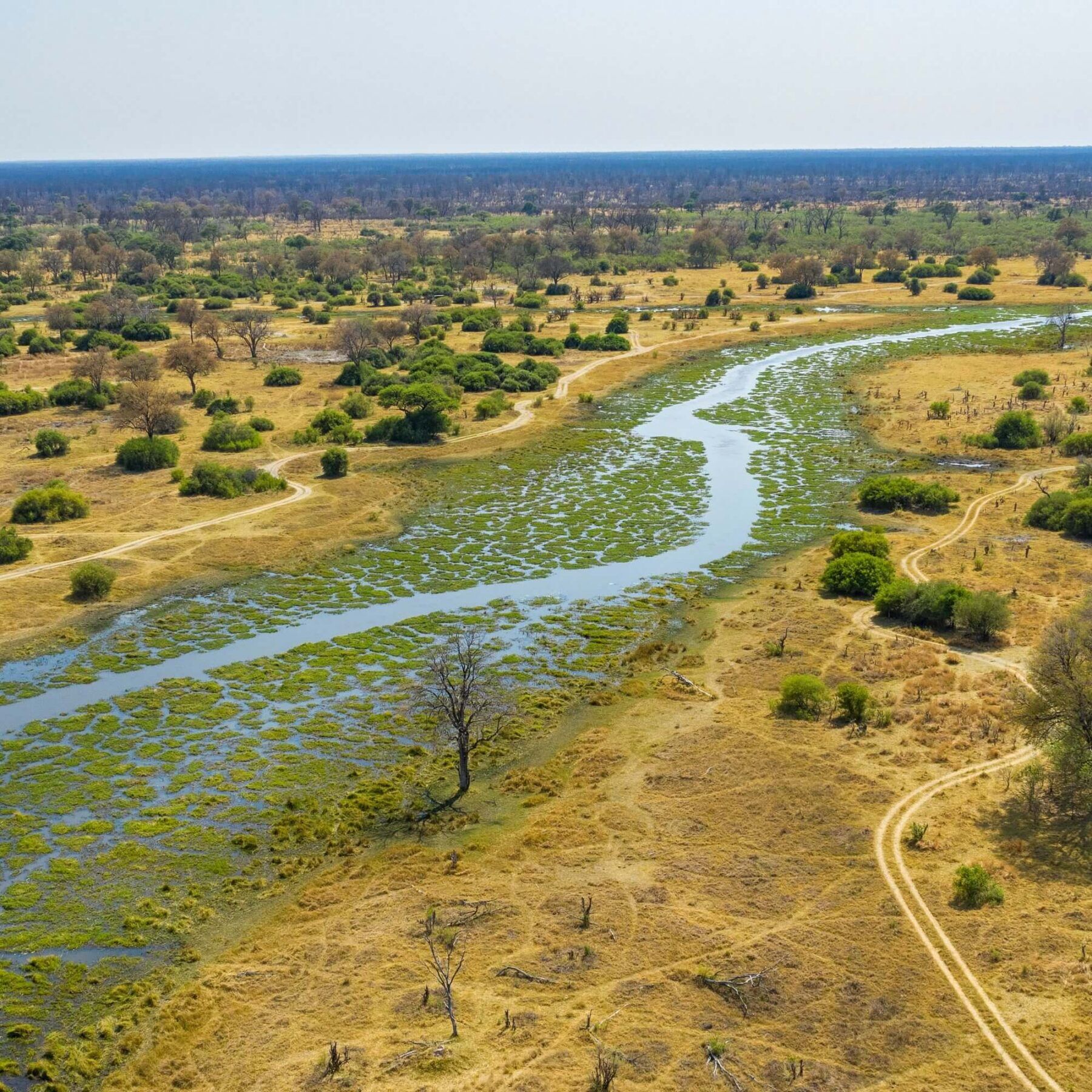
The Khwai villagers manage the Khwai Community Concession via the Khwai Community Trust. It’s a prime example that conservation, communities, and tourism can thrive together, with ecotourism proceeds flowing directly back to the villagers. The Concession, nestled between Chobe National Park and Moremi Game Reserve, comprises 1,800 square kilometers where countless animals can move freely.
Which animals roam the Khwai plains?
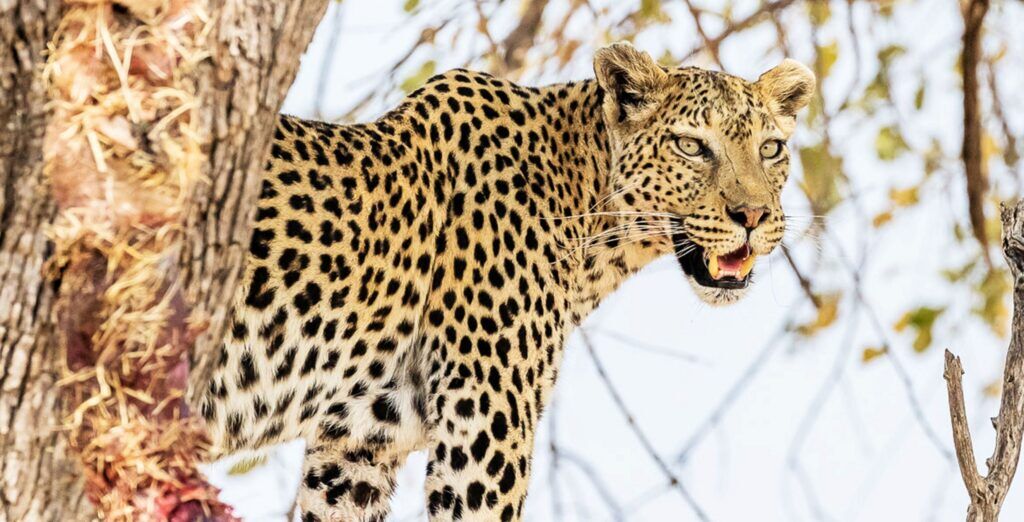
- Predators like lions, leopards, hyenas, and the endangered African wild dogs
- Herbivores like elephants, hippos, various antelope species, giraffes, zebras, and buffalos
- Birds like eagles, vultures, cranes, and the extremely rare slaty egret
Some animals only wake after the sun has long set: from the critically endangered pangolin and aardvarks to aardwolves and the spiky porcupine.
Activities in Khwai
Explore the floodplains, grasslands, and woodlands of the Khwai Community Concession and around the Khwai River. While doing so, you can meet diverse and fascinating animals that call this speck of land their home. Local guides take you to the perfect spots for wildlife sightings and tell you more about the BaBukakhwe’s culture.

Accomodation in Khwai Community Concession
Between safaris and cultural encounters, you can relax in lodges that are just as authentic as your experiences.


Let us create your tailor-made trip
Receive a free, no obligation quote
Start planning your dream trip