

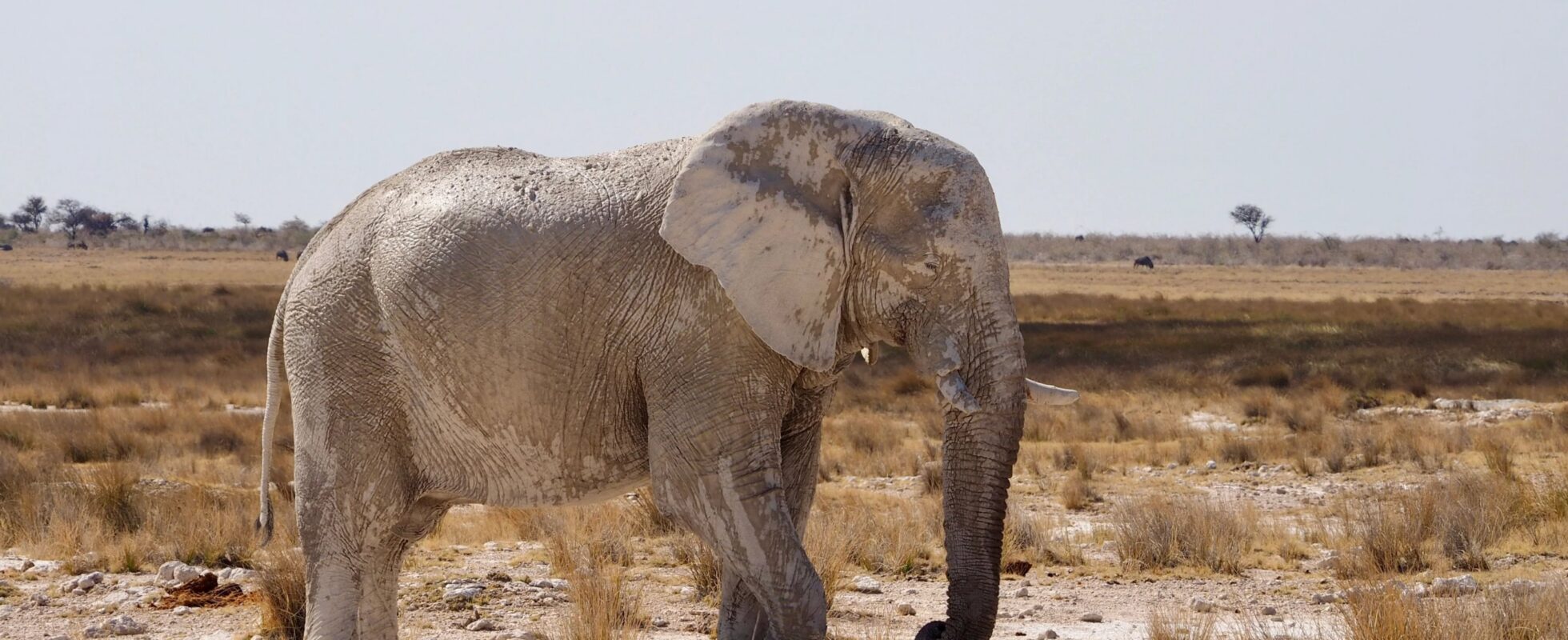

This is Namibia’s flagship wildlife destination! It centres around a vast salt pan that has been forming over millions of years, and the name Etosha comes from the Oshindonga language, meaning “great white place.” The park covers 22,270 square kilometres, holds 100+ mammal species, more than 300 bird species, and four of the Big Five – only the buffalo is absent. Last but not least, Etosha is one of Africa’s most important strongholds for the black rhino – over 70% of Namibia’s nearly 2,200 black rhinos can be found here.


Sectors
The park has four distinct sectors and, given the park’s size, most visitors explore only one or two sectors. The southern and central areas (Okaukuejo and Halali) form the busy core, known for dense wildlife and iconic floodlit waterholes. The eastern sector around Namutoni offers mopane woodlands, open savannah, and excellent birding. The remote western sector features rugged dolomite hills, quieter roads, and rarities like Hartmann’s mountain zebra.
The pan that stole the show
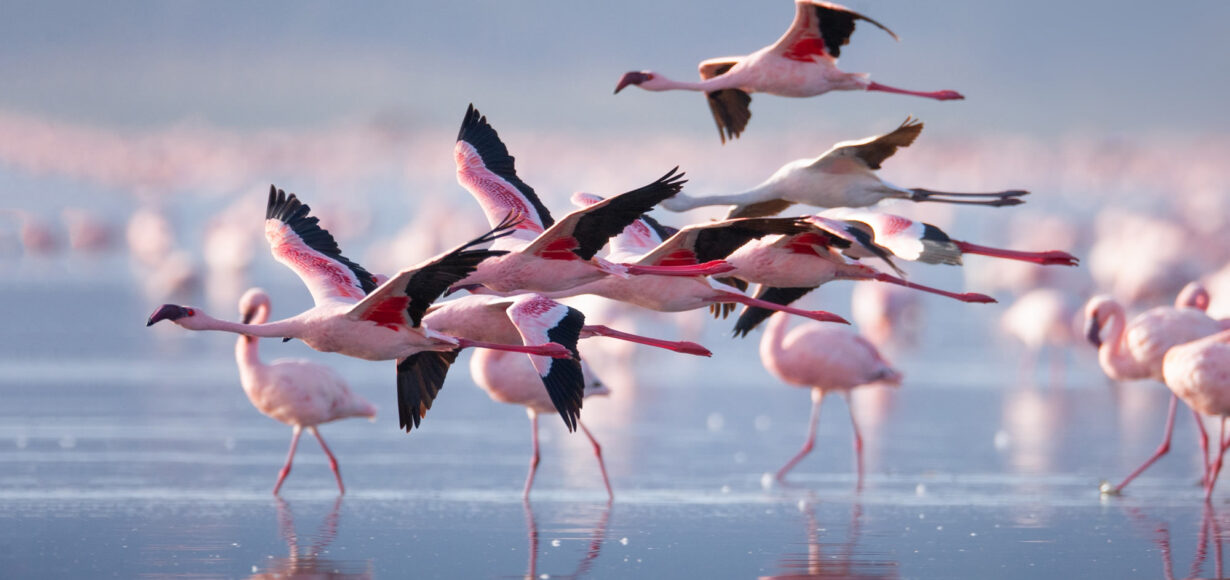
The Etosha Pan is the park’s centrepiece. This salt pan stretches 130 kilometres long and up to 50 kilometres wide, covering nearly a quarter of the entire park and three of the park’s four sectors (eastern, central, and southern regions). During the dry season (May to October), the pan becomes a blinding white wasteland of salt and dust, while in the wet season (November to April), parts of it fill with shallow water, attracting thousands of flamingos.


Waterholes game viewing
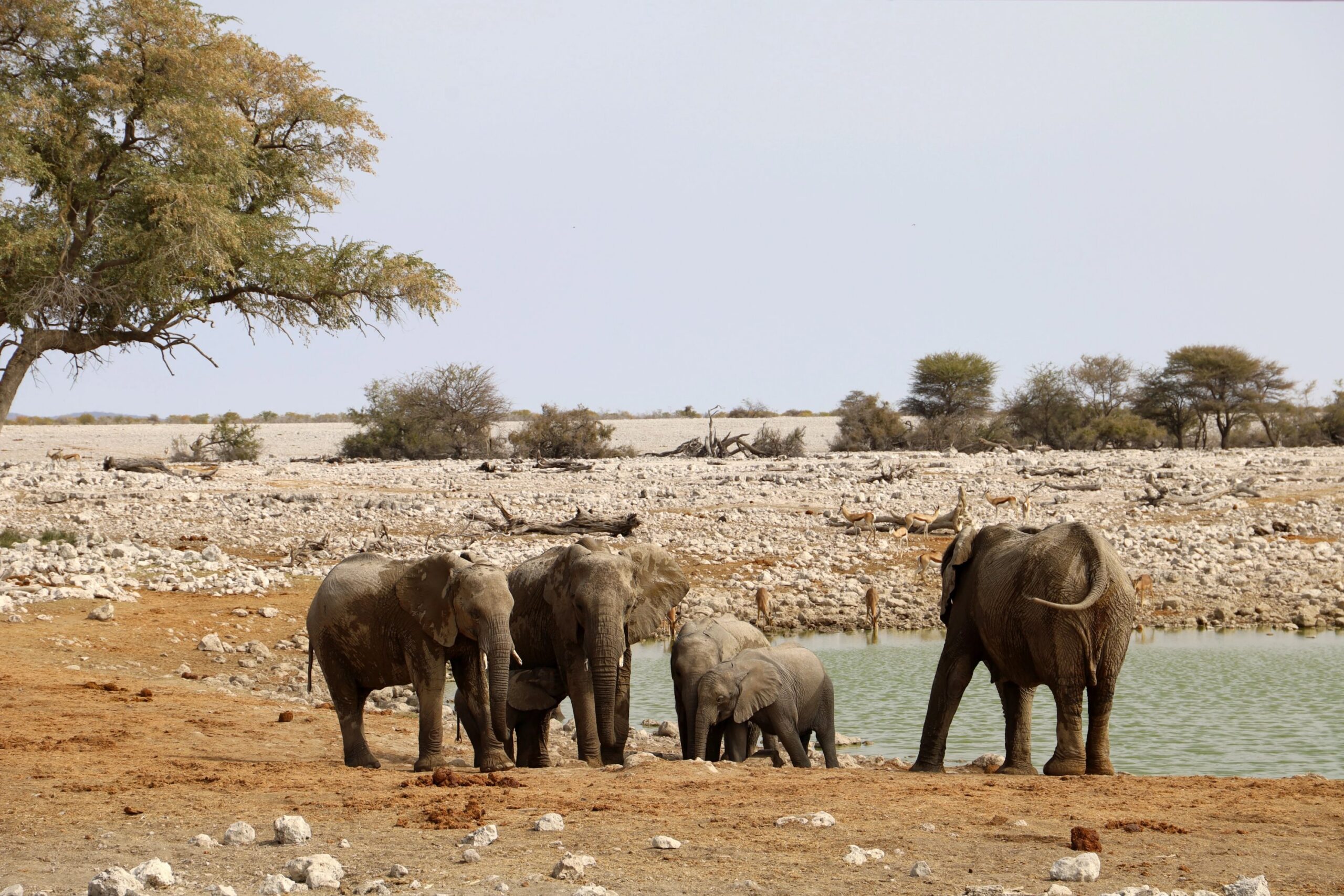
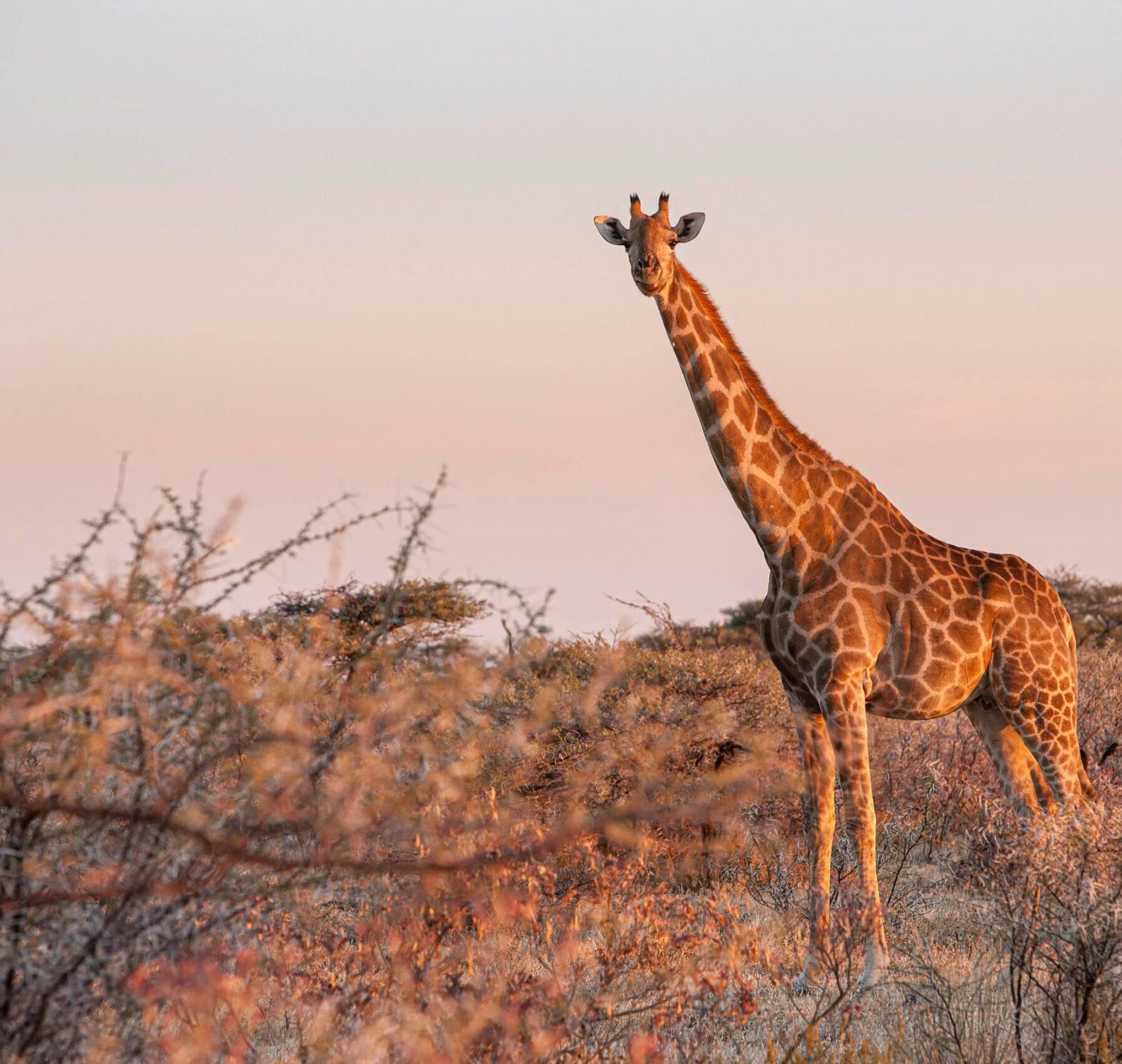
During the dry season, animals have no choice – they come to the waterholes in large numbers. This is where Etosha earns its reputation. At the Okaukuejo waterhole, for instance, animals gather day and night. To give visitors an even better view, floodlights illuminate the scene after dark, allowing you to watch elephants, lions, giraffes, and black rhinos share the same patch of water. Black rhinos appear here almost every night, a sight few other parks can match.
The Fairytale Forest
West of Okaukuejo lies a strange woodland known as Sprokieswoud, which translates to Fairytale Forest. African moringa trees, also called phantom trees, grow in bizarre, twisted shapes. Their pale, swollen trunks look more like something from a dream – or a nightmare – than any ordinary landscape. It’s the kind of place that makes you stop the car without quite knowing why, get out, and simply stare…!
Information and facts
Unlike many African parks where safaris involve tracking animals, Etosha National Park centres around its waterholes. With more than 40 scattered across the park, visitors often stop and wait as elephants, lions, zebras, and rhinos come to drink. The dry season (May–October) offers peak viewing, while floodlit waterholes at rest camps such as Okaukuejo and Halali provide rare opportunities to see nocturnal wildlife after dark.
Most common animals
- Elephant
- Lion
- Leopard
- Black rhino
- White rhino
- Giraffe
- Plains zebra (Burchell’s zebra)
- Springbok
- Oryx (gemsbok)
- Blue wildebeest
- Eland
- Kudu
- Black-faced impala
- Damara dik-dik
- Cheetah
- Black-backed jackal
- Ostrich
- Greater flamingo
- Kori bustard
Facts about Etosha National Park
- Covers 22,270 square kilometres.
- The Etosha Pan spans 130 kilometres in length and covers nearly a quarter of the park.
- Home to one of the largest stable black rhino populations in the world.
- Four of the Big Five are present, but well-known safari animals such as buffalo, hippo, and crocodile are absent due to the lack of rivers.